Reported by:

Cherry Meigh Timbol
News Content Editor
Published October 28, 2026
Reports that Russian satellite intelligence may have helped Iran-aligned forces target Saudi Arabia have raised concerns about the expanding role of space-based surveillance in Middle Eastern conflicts. An Associated Press investigation published on October 27, 2026, examined satellite-tracking data and accounts from officials suggesting that Russian reconnaissance capabilities may have supported attacks against Saudi energy infrastructure and military facilities.
The findings raise questions about whether information collected by Russian satellites was shared with Iran or allied armed groups and subsequently used to plan military operations. While the reported satellite activity suggests possible intelligence gathering around sensitive targets, the precise nature of any information transfers remains unconfirmed.
Satellite Activity Linked to Attacks on Oil and Military Facilities
Geneva-based AURORAH Geosignal Intelligence examined 40 missile and drone attacks against Saudi Arabia attributed to Iran-backed Houthi forces in Yemen and militias in Iraq between July 1 and October 19, 2026.
According to the firm, Russian government and military satellites repeatedly passed over areas surrounding the targets in the days before and after the attacks. AURORAH founder Nawaf Obaid said the company found a consistent pattern connecting satellite activity with the reported strikes.
The investigation cited three officials, including a Saudi official and a senior Houthi figure, as well as intelligence analysts, who said Iran-aligned groups had benefited from Russian intelligence capabilities. Chinese intelligence or commercial capabilities were also mentioned in the reporting.
However, the satellite tracking data does not independently establish that Russia directly transferred targeting information to the groups responsible for every attack.
Saudi Arabia’s East-West Oil Pipeline Hit
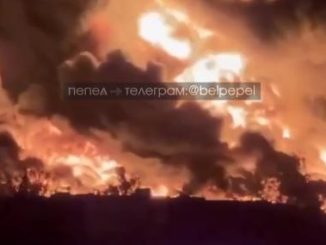
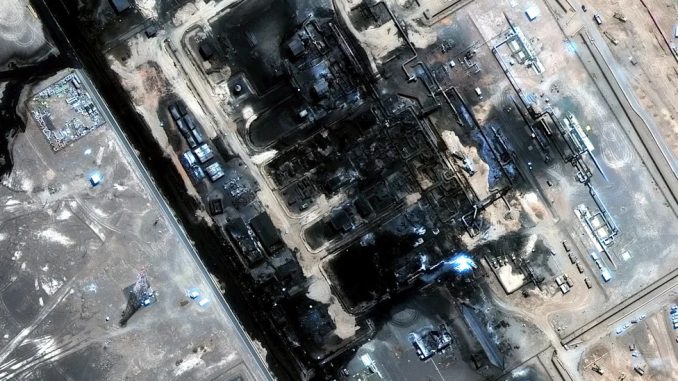
On September 10, 2026, drones launched from Iraq struck three pumping stations along Saudi Arabia’s East-West Pipeline, interrupting the flow of oil through the strategically important route.
The approximately 1,200-kilometer pipeline transports crude oil from eastern Saudi Arabia toward the Red Sea, providing an alternative export route that reduces the kingdom’s dependence on shipping through the Strait of Hormuz.
Obaid said his firm observed 11 Russian Cosmos 2600-series satellites concentrating on sections of the pipeline beginning in July. The company also reported increased satellite activity in the period surrounding the September attack.
The incident highlighted the vulnerability of critical energy infrastructure to precision strikes and the potential strategic value of satellite-based reconnaissance.
Damage to the pipeline could disrupt oil transportation and add uncertainty to global energy markets, particularly during periods of heightened regional tensions.
Attack on Saudi Air Base Damages Italian Fighter Jet
Approximately a week after the pipeline attack, Iran-backed Houthi forces struck King Fahd Air Base in Taif, Saudi Arabia.
The attack damaged hangars and an Italian Air Force Eurofighter Typhoon, according to Italy’s Defense Ministry.
AURORAH reported a roughly 50 percent increase in Russian satellite activity over the relevant target areas during the 72-hour periods surrounding the pipeline and air-base attacks, compared with activity recorded in July.
Obaid argued that the reported precision of the air-base strike suggested the possibility of specialized intelligence support. The targeting of a particular aircraft, however, does not by itself establish which intelligence sources the attackers used.
Officials Cite Possible Russian Intelligence Assistance
A Saudi official briefed on investigations into the attacks told the Associated Press that intelligence assessments indicated Russian satellites had helped Iran-backed groups target sensitive facilities.
The official also alleged that Russian satellite intelligence supported Iranian attacks in March on Prince Sultan Air Base in Saudi Arabia, where a U.S. surveillance aircraft was severely damaged, and on a CIA unit inside the U.S. Embassy compound in Riyadh.
A senior Houthi figure separately told the AP that Iranian advisers in Yemen provided targeting information derived from Russian satellite intelligence. According to the account, Iranian personnel analyzed information and passed it to allied groups operating in the region.
Saudi Deputy Foreign Minister for Public Diplomacy Rayed Krimly said Iran and the Houthis received intelligence from elements in Russia and China, including commercial sources. He also said Saudi Arabia regularly discussed these concerns with both countries.
These accounts suggest a possible intelligence-sharing network in which satellite observations are analyzed and passed through intermediaries before being used in military planning.
Satellite Surveillance and the Conflict in Yemen
The investigation also examined the possible role of satellite intelligence in Houthi operations within Yemen.
AURORAH reported satellite activity around targets associated with Houthi attacks, including a strike on the presidential palace in Aden and a nearby command center used by the Saudi-led coalition on October 15.
The company also identified activity around a government recruitment center in Shabwa province, where a strike reportedly killed 75 recruits, according to the investigation.
A senior Houthi figure told the AP that Iranian advisers supplied targeting information based on Russian satellite intelligence. The same source said the Houthis had received more advanced equipment for drone operations and systems intended to help missiles evade air defenses.
The accounts indicate that intelligence support could extend beyond attacks on Saudi Arabia to the wider conflict in Yemen. The full extent of the alleged assistance remains difficult to establish independently.
Russia’s Role Remains Under Scrutiny
Russia and Iran have developed extensive military cooperation, including the transfer of drone technology. Western officials have previously alleged that Moscow shared intelligence with Tehran.
The latest reporting adds to concerns that Russian space-based surveillance could provide Iran and its allies with information about military installations, energy infrastructure and other strategically important targets.
AURORAH said it had not intercepted direct transmissions of intelligence from Russian satellites to Iran or its partners. Its findings were based on satellite trajectories, orbital activity and comparisons with the timing of reported attacks.
The firm’s observations therefore provide evidence of a pattern of satellite reconnaissance, but do not independently prove the exact content, destination or purpose of any intelligence transfers.
Russian officials did not immediately respond to the specific allegations when contacted by the AP. The claims remain subject to further verification and official clarification.
The investigation underscores the growing importance of space-based intelligence in modern warfare, where the ability to observe targets, identify vulnerabilities and share information can be as strategically significant as the weapons used in an attack.