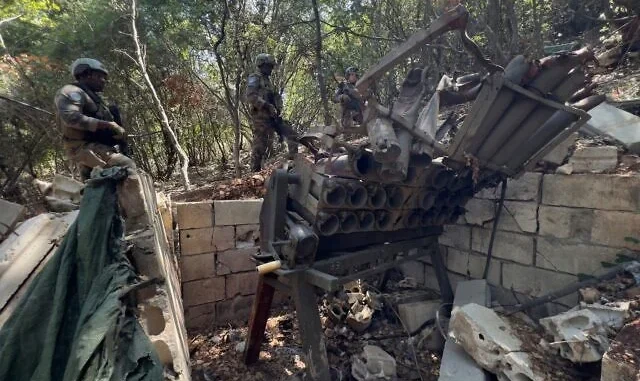
File: French UN peacekeepers inspect a destroyed Hezbollah position in the Saluki Valley, southern Lebanon, Aug. 20, 2025. (AP Photo/Hussein Malla, File)
Reported by:

Cherry Meigh Timbol
News Content Editor
Published October 27, 2026
BEIRUT — Hezbollah has spent the past three months rebuilding its military capabilities in preparation for a possible renewed conflict with Israel, following an influx of funding from Iran, according to Lebanese security sources cited by Reuters.
The Iran-backed armed group has reportedly focused on acquiring explosives, producing attack drones, replenishing weapons stockpiles and rebuilding command-and-control systems damaged during previous battles with Israeli forces.
The reported preparations come amid continued tensions along the Israel-Lebanon border, despite a reduction in large-scale fighting since June. Israeli forces continue to operate in parts of southern Lebanon and conduct strikes against Hezbollah targets, while political pressure in Beirut for the group to disarm has increased.
Iran Reportedly Provides Additional Funding
Two Lebanese security sources told Reuters that Hezbollah had received tens of millions of dollars from Iran to strengthen its military capabilities. A source close to the group also confirmed the reported funding.
The money is separate from approximately $200 million that Iran reportedly provided to help displaced families in Hezbollah’s predominantly Shiite support areas, according to earlier Reuters reporting.
Iran has long been a major financial and military supporter of Hezbollah, which was established in 1982 with backing from Iran’s Islamic Revolutionary Guard Corps.
The reported funding is intended to help the organization rebuild after two major rounds of conflict with Israel since 2024, during which thousands of Hezbollah fighters and numerous senior leaders were killed and much of its weapons arsenal was destroyed.
Drones and Explosives Among Key Priorities
According to the Lebanese security sources, Hezbollah has been concentrating on acquiring explosives and producing drones capable of striking Israeli military positions.
The report also links the group’s rebuilding efforts to explosives seized by Lebanese authorities earlier this month. Hezbollah acknowledged that the seized materials belonged to the organization and were intended for use against Israel. A Hezbollah official and a Lebanese security source told Reuters that the explosives were specifically intended for explosive drones.
Hezbollah is also working to restore command-and-control structures that were disrupted during major battles, including fighting around Bint Jbeil and the strategically important Ali al-Taher ridge in southern Lebanon.
Security officials cited by Reuters said the group’s use of small fighting units and limited supplies of anti-tank rockets left some units isolated during engagements with Israeli forces. Israel has increasingly relied on remotely operated surveillance systems, armed drones and other technologies to monitor and target activity in southern Lebanon.
However, the sources said Hezbollah has not yet fully replenished its weapons stockpiles or restored its fighting force to its previous capacity.
Israel Maintains Positions in Southern Lebanon
Israeli forces continue to control positions in parts of southern Lebanon, including areas near Hezbollah’s traditional strongholds. Israel says its military presence is intended to prevent the group from rebuilding infrastructure near the border and threatening communities in northern Israel.
The continued Israeli presence has become a central point of disagreement between Israel and Hezbollah. The group maintains that resistance against Israeli forces on Lebanese territory is legitimate, while Israel insists that Hezbollah must be prevented from reestablishing its military capabilities near the border.
The Lebanese government faces pressure to implement arrangements aimed at restricting Hezbollah’s armed activities. However, efforts to disarm the organization remain politically sensitive, given its military strength, domestic political influence and backing from Iran.
Hezbollah has rejected claims that its command-and-control systems have collapsed, while continuing to describe Israel’s presence on Lebanese territory as justification for resistance.
Regional Tensions Raise Fears of Renewed Fighting
Hezbollah’s reported preparations come amid broader tensions involving Israel, the United States and Iran. According to the Reuters report, the group is monitoring the possibility of renewed US-Iran hostilities that could reopen the Lebanese front.
Hezbollah entered the latest phase of fighting on March 2, 2026, by opening fire in support of Iran, triggering an Israeli offensive in Lebanon. The subsequent fighting killed more than 4,000 people and displaced approximately one-quarter of Lebanon’s population, according to the report. Hostilities later declined following a ceasefire arrangement linked to diplomatic efforts involving Washington, Beirut and Israel.
Although the ceasefire reduced large-scale fighting, Israeli strikes in southern Lebanon have continued. Hezbollah’s reported preparations indicate that the group is attempting to rebuild its capabilities while remaining alert to a possible escalation.
Hezbollah has not publicly confirmed that it will initiate another round of fighting. Its media office told Reuters that the organization was wary of giving Israeli leaders a justification to expand military operations, particularly given concerns that another conflict could force more residents to flee their homes.
US Signals Continued Pressure on Hezbollah’s Finances
The United States has said it will continue targeting Hezbollah’s financial networks through sanctions and other measures intended to restrict the group’s access to funds.
A US Treasury spokesperson said Iran was facing increasing difficulties in obtaining money and transferring it abroad. These restrictions could complicate Hezbollah’s efforts to rebuild its military capabilities, although the reported Iranian funding suggests that financial support continues to reach the organization.
The extent to which Hezbollah can restore its weapons supplies, operational coordination and combat readiness remains uncertain. Lebanese security sources told Reuters that the rebuilding process was still incomplete.
For now, the group appears to be preparing for the possibility of renewed hostilities without publicly committing to a new offensive. Continued Israeli military activity in Lebanon and the risk of a wider confrontation involving Iran remain major factors shaping the security situation along the border.