
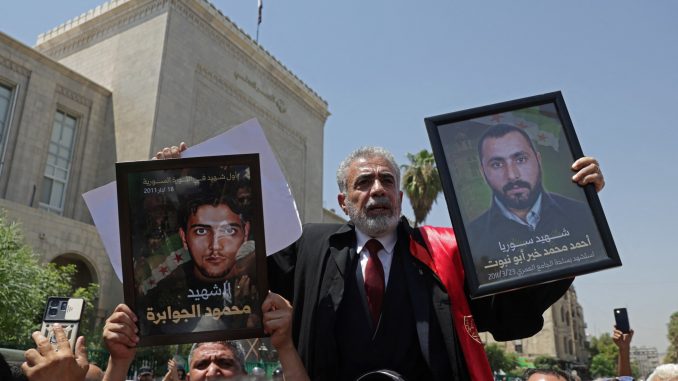
Syrians carry pictures of those killed during the war outside the court where former ruler Bashar al-Assad was sentenced in absentia. Bakr Alkasem/
Reported by:

Cherry Meigh Timbol
News Content Editor
Published August 12, 2026
DAMASCUS, Syria — A Syrian court has sentenced ousted President Bashar al-Assad to death in absentia, convicting the former ruler of killings, torture, arbitrary arrests and crimes against humanity committed during Syria’s nearly 14-year civil war. The ruling marks the first Syrian conviction against Assad since his regime collapsed in December 2024.
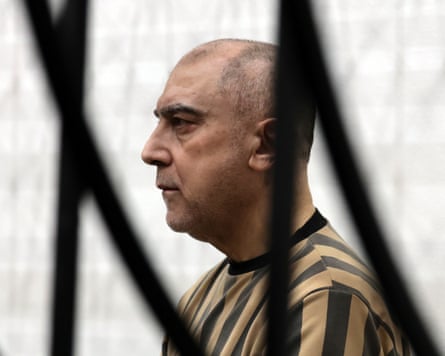
Assad, who fled Syria as rebel forces closed in on Damascus and was granted asylum in Russia, was not present for Tuesday’s proceedings. His younger brother, Maher al-Assad, was also sentenced to death in absentia, while former security official Atef Najib — Assad’s cousin and the only one of the three in custody — received the same punishment.
⚖️ Assad convicted over killings, torture and crimes against humanity
The court found Assad responsible for offenses including premeditated and intentional murder, including killings of children, torture, arbitrary detention and crimes against humanity.
The verdict represents a major symbolic break with the Assad era, which began when Bashar al-Assad succeeded his father, Hafez al-Assad, as president in 2000.
His government faced accusations of widespread abuses throughout the civil war that erupted after anti-government protests in 2011. The conflict eventually killed hundreds of thousands of people and displaced millions.
POSITION: The ruling is being presented by Syria’s new authorities as a major step toward holding senior figures from the former regime accountable.
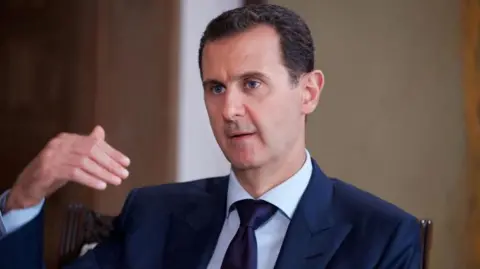
A Syrian court has sentenced ousted dictator Bashar al-Assad to death in absentia, after convicting him of committing war crimes and crimes against humanity during the country’s civil war.
🇷🇺 Death sentence unlikely to be immediately enforced
The biggest obstacle to enforcing the sentence is Assad’s location.
The former president remains in Russia, where he and his family received asylum after his government collapsed in December 2024. Because Assad was tried in absentia, the sentence currently has little practical effect unless Syrian authorities can somehow secure his return.
Syrian legal expert Anwar al-Bunni argued that imposing the death penalty could actually make extradition more difficult, because countries that oppose capital punishment are unlikely to surrender a defendant to a state where he could be executed.
POSITION: Assad’s death sentence is therefore likely to remain largely symbolic unless Syria can overcome the diplomatic and legal barriers surrounding his presence in Russia.
👤 Maher al-Assad and former security officials also sentenced
Assad’s brother Maher, who commanded Syria’s powerful Fourth Armoured Division, received a death sentence in absentia.
The unit played a major role in suppressing opposition during the civil war and was accused by opponents of serious abuses.
Atef Najib, meanwhile, was sentenced to death after being tried in person. Najib served as a senior security official in Deraa, where the first major protests against Assad erupted in 2011. The crackdown there became one of the catalysts for the uprising that eventually developed into a nationwide civil war.
POSITION: The inclusion of senior security figures indicates that the new Syrian authorities are attempting to extend accountability beyond Assad himself.
🇸🇾 Families of victims celebrate the verdict
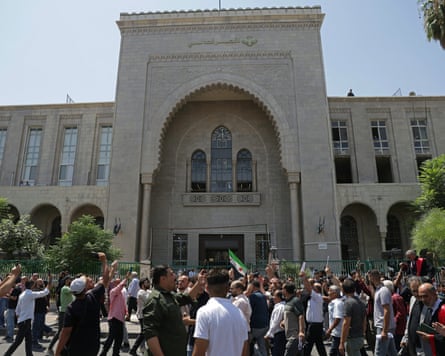
The ruling triggered celebrations outside the courthouse in Damascus and in Deraa, the birthplace of the 2011 uprising.
Families of people killed or detained during the Assad era gathered carrying photographs of victims. Some Syrians described the verdict as long-awaited justice after years of violence and repression.
The reaction was particularly emotional in Deraa, where memories of the regime’s early crackdown remain deeply tied to the origins of the uprising.
POSITION: For many victims’ families, the verdict represents recognition of abuses that had gone largely unpunished while Assad remained in power.
⚠️ Human rights groups raise concerns over fairness
Despite celebrations, human rights organizations have raised concerns about the judicial process.
Rights groups have questioned whether the trials were conducted quickly enough and whether defendants received adequate legal protections. Human Rights Watch also opposes the death penalty in all cases and has called for fair-trial standards, particularly in Najib’s case.
The Syria Justice and Accountability Center described the proceedings as historically significant but documented concerns involving rushed procedures, witness testimony and the quality of legal representation.
POSITION: The challenge for Syria will be balancing demands for accountability with the need to establish a credible judicial system that meets international standards.
🏛️ A major test for Syria’s transitional justice
The verdict comes as Syria attempts to rebuild its political and legal institutions following the dramatic collapse of Assad’s government.
The new authorities have promoted the trials as evidence that Syria is moving toward transitional justice and away from decades of authoritarian rule. But critics argue that genuine accountability will require transparent proceedings, reliable evidence, meaningful defense rights and consistent treatment of suspects.
The death sentences could also complicate efforts to bring Assad-era suspects back from foreign countries.
🌍 Regional and international implications
Assad’s conviction carries significance beyond Syria. His government was a key regional ally of Russia and Iran, and his fall in 2024 dramatically changed the balance of power in the Middle East.
The verdict also places Russia in a potentially sensitive position because Moscow continues to provide refuge to the former Syrian president.
POSITION: The case could become a test of whether Syria’s new government can pursue accountability for the former regime while navigating relations with countries that sheltered or supported Assad.
👥 Public / Political Reactions:
🇸🇾 Syrian Transitional Government
Syrian authorities have presented the death sentence against former President Bashar al-Assad as a major step toward accountability for crimes committed during his rule.
- Assad was sentenced to death in absentia over killings, torture, arbitrary detention and crimes against humanity.
- His younger brother, Maher al-Assad, was also sentenced to death in absentia.
- Former security official Atef Najib, who was tried while in custody, received a death sentence.
- The proceedings represent a major legal action against senior figures of the former Assad regime.
Position: Syria’s new authorities are presenting the verdict as an important step toward transitional justice and accountability for the former regime.
🇸🇾 Victims and Families of Assad-Era Victims
Families of people killed, detained or tortured during Assad’s rule have welcomed the verdict as a long-awaited acknowledgment of their suffering.
- Families gathered around the court carrying photographs of victims.
- Celebrations were reported in Damascus and Deraa, where the 2011 uprising began.
- Victims’ families have spent years seeking accountability for alleged abuses committed by Assad’s security forces.
- The verdict provides formal recognition of crimes attributed to the former regime.
Position: Many victims’ families view the ruling as an important step toward justice and recognition of the suffering experienced during the Assad era.
🇷🇺 Russian Authorities
Russia’s continued protection of Assad creates a major obstacle to enforcing the sentence.
- Assad fled Syria following the collapse of his government and was granted asylum in Russia.
- Because the sentence was issued in absentia, Syrian authorities do not currently have custody of the former president.
- Any attempt to bring Assad back to Syria would require cooperation from Moscow.
- The death penalty could make extradition more difficult because of international opposition to capital punishment.
Position: Russia’s continued sheltering of Assad means the death sentence is likely to remain difficult to enforce unless Moscow changes its position.
⚖️ Human Rights Organizations
Human rights organizations have emphasized the importance of accountability while raising concerns about capital punishment and due-process standards.
- Rights groups generally oppose the death penalty.
- Questions have been raised about whether defendants received adequate legal protections.
- International observers are likely to scrutinize the transparency of the proceedings.
- Future trials will face pressure to meet international fair-trial standards.
Position: Accountability for Assad-era crimes is important, but the credibility of Syria’s justice system will depend on fair and transparent proceedings.
🌍 International Community
The verdict has broader international significance because of the scale of alleged abuses committed during Syria’s civil war.
- Assad-era forces faced accusations of killings, torture, mass detention and other serious abuses.
- The ruling could encourage additional investigations into former regime officials.
- Countries holding Assad-era suspects could face pressure to cooperate with Syrian authorities.
- Syria’s transitional justice process will likely receive increased international scrutiny.
Position: The international community is likely to support accountability while closely monitoring whether Syria’s judicial process respects international legal standards.
⚖️ Legal and Transitional-Justice Experts
Legal experts are focused on the implications of sentencing a former head of state who remains outside the country.
- Assad’s absence makes immediate enforcement of the sentence impossible.
- Russia’s refusal to extradite him would leave the conviction largely symbolic.
- The death sentence could create additional complications in international cooperation.
- Future trials could establish precedents for how Syria handles former regime officials.
Position: The case represents a major test of Syria’s ability to establish a credible transitional-justice system following the collapse of the Assad government.
🇮🇷 Former Assad Allies
The verdict also highlights the dramatic geopolitical consequences of Assad’s removal from power.
- Iran was a major supporter of Assad during the Syrian civil war.
- Tehran provided military and financial support to help sustain the former government.
- Assad’s fall significantly weakened Iran’s position in Syria.
- Russia also faces a changed strategic relationship with Syria following the collapse of Assad’s government.
Position: The verdict reinforces the broader geopolitical transformation created by Assad’s removal and the emergence of Syria’s new political order.
⚠️ Resulting Effects:
The death sentence against Bashar al-Assad could have significant legal, political and geopolitical consequences. While the verdict represents a historic attempt to hold Syria’s former ruler accountable, Assad’s presence in Russia means that the sentence is unlikely to be immediately enforced.
1. Historic Accountability for Assad
The verdict establishes a formal Syrian judicial judgment against the former president.
⚖️ Assad has been convicted of serious crimes connected to his rule.
🩸 The charges include killings, torture and crimes against humanity.
🏛️ The case represents a major break from the former Syrian political system.
➡️ Result: Assad’s conviction creates a historic legal record of accountability against the former ruler.
2. Limited Immediate Enforcement
The biggest obstacle remains Assad’s location in Russia.
🇷🇺 Assad remains outside Syrian custody.
⚖️ The sentence was issued in absentia.
🚫 Syria currently lacks the ability to physically enforce the death sentence against him.
➡️ Result: Death sentence in absentia → major symbolic impact but limited immediate practical effect.
3. Increased Pressure on Russia
The verdict could place additional diplomatic pressure on Moscow.
🇷🇺 Russia continues to provide refuge to Assad.
🤝 Syria could seek cooperation regarding his potential return.
⚠️ Extradition could become politically and legally complicated because the sentence involves capital punishment.
➡️ Result: Assad verdict → increased diplomatic tension over Russia’s continued protection of the former president.
4. Broader Prosecutions of Former Regime Officials
The case could open the door to further prosecutions.
👥 Other senior Assad officials could face investigation.
⚖️ Security and military commanders could become targets of future proceedings.
📂 Evidence from detention centers, prisons and military operations could become important in additional cases.
➡️ Result: Assad conviction → potentially broader transitional-justice proceedings against former regime figures.
5. Justice for Victims and Families
The ruling could provide psychological and symbolic recognition to victims.
🕯️ Families could receive formal acknowledgment of abuses suffered under the former regime.
📸 Victims’ cases could receive greater public attention.
⚖️ Survivors could seek additional prosecutions and compensation.
➡️ Result: Court verdict → greater recognition of victims and renewed demands for justice.
6. Questions Over Fair-Trial Standards
The death sentence could also generate criticism.
⚠️ Human rights organizations oppose capital punishment.
⚖️ Questions surrounding due process could affect the credibility of future trials.
🌍 International observers may demand transparent proceedings and adequate legal representation.
➡️ Result: Accountability efforts → increased scrutiny of Syria’s judicial standards.
7. Major Test for Syria’s Transitional Government
The proceedings could shape the credibility of Syria’s post-Assad political system.
🏛️ The government must demonstrate that justice is applied consistently.
⚖️ Courts will face pressure to remain independent and transparent.
🤝 International recognition of Syria’s justice process could depend partly on adherence to legal standards.
➡️ Result: Assad trial → major test of Syria’s transition from authoritarian rule to institutional governance.
8. Wider Middle East Implications
The verdict reinforces the dramatic political transformation that has taken place in Syria.
🇮🇷 Iran has lost a major regional ally.
🇷🇺 Russia’s position in Syria has been fundamentally altered.
🌍 Regional powers are watching how the new Syrian authorities handle former regime figures.
➡️ Result: Assad’s death sentence → another major marker of the Middle East’s changing political balance.
🔮 Future Outlook:
The sentencing of Bashar al-Assad to death marks a significant moment for Syria’s post-Assad transition, but the practical consequences remain uncertain because the former president is living in Russia. The case could become a starting point for broader prosecutions and transitional-justice efforts while creating diplomatic tensions over Assad’s possible return.
1. Assad’s Sentence Could Remain Difficult to Enforce
Assad is unlikely to face immediate execution while he remains outside Syrian custody.
🇷🇺 Assad remains in Russia.
⚖️ The sentence was issued in absentia.
🚫 Syria currently lacks the ability to physically enforce the punishment.
➡️ Outlook: Assad remaining in Russia → death sentence could remain largely symbolic for the foreseeable future.
2. Pressure Could Increase on Russia
Syria could seek greater international and diplomatic pressure for Assad’s return.
🇷🇺 Moscow could face demands to cooperate with Syrian authorities.
🤝 Damascus could pursue legal or diplomatic channels to seek his extradition.
⚠️ The death penalty could make any extradition process more complicated.
➡️ Outlook: Assad’s continued presence in Russia → increased diplomatic pressure on Moscow.
3. More Former Regime Officials Could Face Prosecution
The Assad case could be followed by additional trials involving senior figures from the former government.
👥 Former military and security officials could face investigations.
⚖️ Evidence from prisons and detention centers could become important in future cases.
📂 Prosecutors could expand investigations into alleged abuses committed during the civil war.
➡️ Outlook: Assad conviction → potentially broader prosecution of former regime officials.
4. Syria Could Expand Transitional-Justice Efforts
The new Syrian authorities may attempt to establish a wider system for addressing crimes committed during Assad’s rule.
🏛️ Courts could handle additional cases involving former regime officials.
🕯️ Victims and families could seek recognition and justice.
⚖️ Authorities could face pressure to establish transparent and credible judicial procedures.
➡️ Outlook: Assad-era prosecutions → development of a broader transitional-justice process.
5. International Scrutiny of Syria’s Courts Could Increase
Future proceedings are likely to face close attention from international human rights organizations and governments.
⚖️ Fair-trial standards could become a major issue.
⚠️ The use of capital punishment could generate international criticism.
🌍 Foreign governments could assess whether Syria’s new judicial institutions operate independently and transparently.
➡️ Outlook: More trials → increased international scrutiny of Syria’s justice system.
6. Victims Could Demand Broader Accountability
The verdict could encourage victims and families to pursue additional cases against former regime officials.
🕯️ Families could continue seeking information about missing relatives.
📸 Survivors could provide evidence about alleged abuses.
⚖️ Additional prosecutions could become an important demand during Syria’s political transition.
➡️ Outlook: Assad verdict → greater pressure for accountability beyond the former president.
7. Russia’s Role in Syria Could Remain Important
Assad’s presence in Russia means Moscow will remain an important factor in the case.
🇷🇺 Russia could continue protecting the former Syrian president.
🤝 Damascus may need to manage its relationship with Moscow while seeking accountability.
🌍 The issue could become part of broader negotiations over Syria’s international relationships.
➡️ Outlook: Assad’s Russian refuge → continued importance of Moscow in Syria’s post-Assad politics.
8. Syria’s Political Transition Faces a Major Test
The handling of Assad’s case could influence perceptions of Syria’s new government.
🏛️ Authorities will need to demonstrate that justice is applied consistently.
⚖️ Courts will face pressure to balance accountability with due process.
🌍 International confidence in Syria could depend partly on the credibility of its transitional institutions.
➡️ Outlook: Assad trial → major test of whether Syria can establish a credible and sustainable post-Assad political and legal order.
🧩 Bottom Line:
The death sentence against former Syrian President Bashar al-Assad represents a major symbolic moment for Syria’s post-Assad transition and could shape the country’s approach to transitional justice. However, Assad’s continued presence in Russia means the sentence is unlikely to be immediately enforced.
🇸🇾 For Syria, the verdict could establish a foundation for broader efforts to hold former regime officials accountable for killings, torture and other alleged abuses.
🇷🇺 For Russia, Assad’s death sentence could create diplomatic pressure over its decision to provide refuge to the former Syrian president and could complicate Moscow’s relationship with Syria’s new authorities.
🕯️ For victims and their families, the ruling could provide an important form of recognition after years of seeking accountability for alleged crimes committed during Assad’s rule.
⚖️ For Syria’s justice system, the case will be an important test of whether the new authorities can conduct credible, transparent and fair proceedings against former regime officials.
🌍 For the international community, the verdict could increase attention on Syria’s transitional-justice process while raising questions about capital punishment and fair-trial standards.
⚠️ Bottom Line: Assad’s death sentence is historically significant but its practical enforcement remains uncertain because he is living in Russia. The case could become the first major step toward broader accountability for the former regime, while also testing Syria’s ability to build a credible judicial system during its post-Assad transition.
SOURCES: BREITBART NEWS – Syria Sentences Exiled Dictator Bashar Assad to Death for War Crimes
REUTERS – Syria sentences absent Bashar al-Assad to death over killings and torture
THE WALL STREET JOURNAL – Syria Sentences Former Dictator Bashar al-Assad to Death




