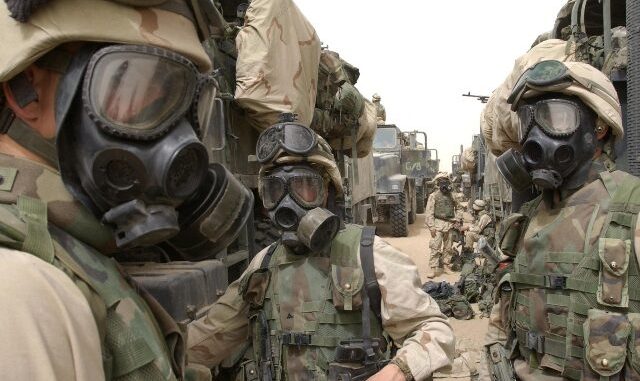
U.S. Marines and paratroopers who could be sent into combat in Iran are conducting CBRN (Chemical, Biological, Radiological, and Nuclear) safety drills at their bases in Europe and aboard ship as they sail to the Middle East.
Published March 28, 2026
U.S. Marines and Army paratroopers are taking part in intensive training exercises to prepare for the possibility of chemical, biological, radiological, or nuclear (CBRN) threats before they head to the Middle East amid rising tensions in the region.
These drills come as the U.S. military continues to respond to increasing threats from adversaries capable of using contamination warfare, including chemical or nuclear weapons, in ongoing conflicts.
Drills to Handle Worst-Case Scenarios
Service members have been practicing how to:
- Identify and protect against chemical, biological, radiological, or nuclear hazards (CBRN)
- Operate in contaminated environments
- Decontaminate equipment and personnel
- Quickly respond to mass casualty situations caused by hazardous materials
These exercises include wearing protective suits, using special detection gear, and rehearsing emergency response procedures. The goal is to ensure that troops are prepared to stay safe and effective even in dangerous conditions.
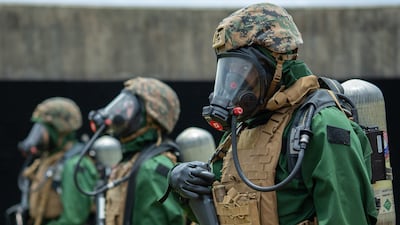
US Marines training for chemical, biological, radiological or nuclear warfare, which they could face in Iran. US Marine Corps
Who Is Participating
The training involves both:
- U.S. Marines, known for expeditionary and frontline operations
- Army paratroopers, trained to rapidly deploy into conflict zones
Officials say the drills reflect realistic scenarios troops might face while deployed, especially in areas where hostile actors may use chemical or radiological weapons.
Why This Training Matters
The Middle East has seen rising tension involving the U.S. and regional powers with access to advanced weaponry and unconventional capabilities. Military leaders have emphasized the need to prepare for all possible threats, including those involving hazardous materials that can affect both troops and civilians.
Training for contamination warfare is essential because:
- Such threats can spread quickly and unpredictably
- They require special equipment and procedures not used in ordinary combat
- Quick response and familiarity with protocols can save lives
According to military statements, these drills help ensure that units deploying to the region are ready for dangerous situations beyond traditional combat.
Part of Broader Readiness Efforts
The CBRN training is just one part of the larger preparation for U.S. forces heading to the Middle East. In recent weeks, the Pentagon has moved troops and equipment into the region to reinforce American presence and support allies, as tensions persist.
Defense officials have said that while they hope deterrence will prevent escalation, they must also be prepared for the unexpected, including attacks involving hazardous materials.
🧩 The Core Analysis: U.S. Troops CBRN Training
The recent chemical, biological, radiological, and nuclear (CBRN) training exercises for U.S. Marines and Army paratroopers reflect practical foresight and strategic prudence in preparing for modern threats. These drills are not merely procedural; they are a critical measure to protect personnel and maintain operational readiness in increasingly unpredictable conflict zones.
Key points:
- Preparedness Against Unconventional Threats – Adversaries in the Middle East have shown the capability or intent to use chemical or radiological weapons. These exercises ensure troops know how to respond quickly and safely, limiting casualties and maintaining mission effectiveness.
- Life-Saving Skills – The specialized training emphasizes decontamination, protective equipment, and rapid response protocols, all of which are essential for reducing risks to soldiers and civilians in the event of a hazardous attack.
- Deterrence Through Readiness – Demonstrating that U.S. forces are well-prepared for CBRN threats sends a clear message to potential aggressors: attacks with hazardous materials will not catch American forces unprepared.
- Maintaining Operational Flexibility – By training in these complex scenarios, troops can operate effectively even under extreme conditions, giving commanders more options and ensuring that missions can continue safely despite potential threats.
🔗 The Synthesis:
The CBRN training exercises for U.S. Marines and Army paratroopers highlight a strategic approach to modern military preparedness. In an era where adversaries may employ chemical or radiological weapons, these drills ensure that troops are ready to face a wide range of threats while minimizing risk to themselves and civilians.
Key takeaways:
- Practical Readiness – The exercises equip soldiers with hands-on experience in hazardous environments, ensuring that they can respond effectively if faced with chemical, biological, radiological, or nuclear threats.
- Force Protection and Safety – Training emphasizes life-saving skills, rapid decontamination, and proper use of protective gear, reinforcing the military’s commitment to the welfare of its personnel.
- Deterrence and Strategic Signaling – Demonstrating preparedness for unconventional threats reinforces deterrence, showing potential adversaries that the U.S. can respond decisively to all forms of attack.
- Operational Flexibility – Familiarity with CBRN protocols allows units to maintain mission effectiveness even in extreme scenarios, ensuring that strategic objectives are not compromised.
Overall Synthesis: The focus on CBRN preparedness reflects a measured, disciplined, and forward-thinking approach to military readiness. It balances force protection, operational effectiveness, and deterrence, showing that the U.S. military is committed to staying one step ahead in a complex and unpredictable security environment.
🏁 The Final Word:
The CBRN training for U.S. Marines and paratroopers demonstrates a clear commitment to preparedness and troop safety. By practicing responses to chemical, biological, radiological, and nuclear threats, the military ensures that its personnel can operate effectively in the most dangerous conditions, protecting themselves and civilians alike.
This type of readiness also serves as a deterrent to potential adversaries, showing that the U.S. is capable of responding decisively to unconventional attacks. Ultimately, these exercises reflect a practical, disciplined approach to modern defense, emphasizing that preparation, safety, and operational flexibility are essential for maintaining security in volatile regions.
SOURCES: BREITBART – U.S. Marines and Paratroopers Conducting Drills for Chemical and Nuclear Hazards en Route to Mideast
THE NATIONAL NEWS – US troops drill on deck for contamination warfare in Iran