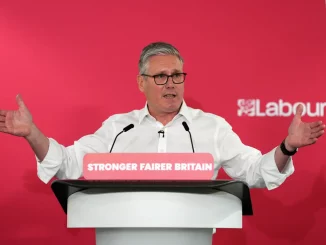
The Prime Minister confirmed he has instructed Labour’s National Executive Committee to draw up a swift succession timetable. Leadership nominations will officially open on July 9, with the entire process scheduled to wrap up before the summer recess.
Published June 22, 2026
LONDON — Britain’s political system has been thrown back into turmoil after Prime Minister Keir Starmer announced his resignation, triggering yet another leadership shake-up and deepening concerns that the UK has become trapped in a cycle of instability unmatched in modern European history.
Starmer’s departure marks the collapse of a premiership that began with historic promise but quickly unraveled under political pressure, economic strain, and growing unrest inside his own Labour Party.
If a successor is confirmed as expected, Britain will soon install its seventh prime minister in just ten years, underscoring what analysts describe as a “permanent crisis of leadership” in Westminster.
⚠️ STARMER’S FALL: From Landslide Win To Political Exit
Keir Starmer entered Downing Street in 2024 after delivering Labour’s first general election victory in nearly two decades, promising stability after years of Conservative turbulence.
But that stability never fully arrived.
By 2025 and early 2026, Starmer faced mounting criticism over:
- Sluggish economic growth
- Internal Labour divisions
- Controversial political appointments
- Rising dissatisfaction from voters
- Electoral setbacks in local contests
Pressure intensified after Labour suffered heavy losses in local elections and faced a surge from populist challengers, including Reform UK led by Nigel Farage.
Insiders say the final blow came when senior Labour figures and MPs began openly questioning whether Starmer could lead the party into the next general election.
Inside the Labour Revolt
Reports from Westminster indicate a widening internal split inside Labour, with senior figures pushing for leadership change ahead of a likely national vote.
A key figure emerging from the crisis is Andy Burnham, widely seen as the frontrunner to replace Starmer and unite a fractured party.
Some ministers reportedly warned that continued leadership uncertainty risked electoral collapse, forcing Starmer to step aside in what allies describe as an “orderly transition.”
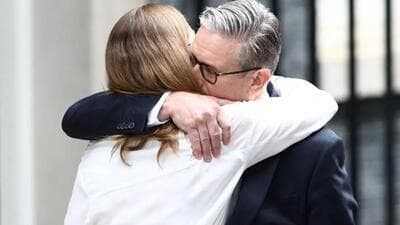
 Keir Starmer and his wife, Victoria, voting in England’s local elections last month.
A Decade of Political Chaos
Starmer’s resignation adds another chapter to what critics now call Britain’s “revolving door” of leadership.
The instability began after the 2016 Brexit referendum and has since included the rapid succession of multiple prime ministers from both major parties.
Analysts note that Britain has struggled with:
- Deep Brexit-era political divisions
- Fragmented party loyalty
- Rising populist movements
- Repeated leadership resignations
The result: a political system unable to maintain long-term governance stability.
Economy, Immigration, And Public Discontent
During Starmer’s time in office, Britain continued to grapple with major domestic pressures:
- Cost-of-living concerns
- Immigration debates
- Strained public services
- Ongoing industrial and political unrest
Opposition critics argue the government failed to present a clear economic direction, while supporters claim Starmer inherited structural problems that predated his premiership.
Foreign Policy: Mixed Results
While domestically embattled, Starmer maintained an active foreign policy role, including continued support for Ukraine and efforts to stabilize relations with key allies.
However, foreign affairs were not enough to offset growing domestic political instability.
🧩 Reading Between the Lines:
On the surface, Keir Starmer’s resignation is being presented as a routine political transition — the kind of leadership change that happens in any parliamentary system. But looking past the official statements, the picture that emerges is far less orderly. This is not just about one leader stepping down; it reflects deeper frustration among voters, growing instability inside the governing party, and a political class struggling to keep control of events rather than shaping them.
In simple terms: this looks less like a planned handover and more like a system reacting under pressure.
1. Leadership Changes Are Becoming Normalized
Britain has now seen multiple prime ministers come and go in a relatively short span of time. What used to be rare has become routine.
The underlying message is clear:
- Party unity is weakening
- Leadership is increasingly fragile
- Elections no longer guarantee long-term stability
When governments cannot hold leadership together, voters often start questioning whether the system itself is working as intended.
2. Public Confidence Is Slipping
Behind the political language of “transition” and “renewal” is a more uncomfortable reality: public trust has been eroding.
Every new leadership change tends to be framed as a “fresh start,” but repeated resets can signal something else:
- Promises not fully delivered
- Economic pressures not easing fast enough
- Growing frustration over daily living costs and services
When voters stop believing things will improve under any one leader, the problem becomes bigger than personalities.
3. Party Control VS. Party Fractures
Officially, leadership resignations are often described as “orderly” or “strategic.” But internally, they usually reflect pressure building inside the party itself.
What this suggests:
- Internal disagreements are harder to contain
- Senior figures may be acting early to avoid worse political damage later
- Competing factions are shaping decisions behind the scenes
In plain terms: the leadership may not have fallen because of one event — but because support was steadily slipping away.
4. Governing has become Reactive, Not Proactive
Another key takeaway is how often governments now appear to respond to crises rather than prevent them.
Whether it is the economy, immigration, or public services, the pattern looks familiar:
- Problems build over time
- Political pressure rises
- Leadership change follows
Instead of long-term planning, the focus becomes short-term damage control.
5. The Bigger Question: Stability Itself
Perhaps the most important signal from this moment is not who replaces Starmer, but why replacements keep happening so frequently.
That raises a broader concern:
- Is the system producing too much political turnover?
- Are leaders being given enough time to implement policy?
- Or has governance become too pressured to sustain continuity?
From this angle, Starmer’s resignation is less a conclusion and more another chapter in an ongoing cycle of instability.
🔗 The Stakes:
Starmer’s resignation is not just another political headline. For many people watching from the outside, it may look like normal government turnover. But underneath that surface, there are real-world consequences. Leadership changes at the top don’t happen in isolation — they ripple down into the economy, public services, international standing, and everyday life.
In plain terms: when a country keeps changing leaders, the impact eventually reaches ordinary people.
1. Cost of Living Pressure
One of the biggest concerns tied to political instability is the economy.
Frequent leadership changes often mean:
- Delayed or shifting economic plans
- Uncertainty for businesses and investors
- No long-term strategy that survives beyond one administration
For households, this translates into:
- Persistent high prices
- Slow wage improvement
- Ongoing financial pressure on basic goods and services
When governments keep resetting, economic relief tends to move further into the future.
2. Public Services under Strain
Health care, transportation, and local services depend heavily on stable long-term planning.
But political instability can lead to:
- Repeated policy changes
- Confusion in implementation
- Slow reform of struggling systems
In everyday terms, this can feel like longer waiting times, stretched services, and reforms that never fully take hold.
3. Trust In Government Weakens
When leadership keeps changing, people begin to tune out politics altogether.
This leads to:
- Lower confidence in government promises
- Voter frustration at repeated “new beginnings”
- A feeling that elections don’t lead to lasting change
Over time, this disconnect becomes as important as any single policy decision.
4. Global Image and Influence
International partners and investors prefer predictable leadership. When a country appears unstable at the top, it can affect how it is viewed abroad.
Possible effects include:
- Reduced confidence from investors
- Weaker negotiating position in global talks
- Perception of political uncertainty among allies
In short: constant leadership changes can make a country look less steady on the world stage.
5. What comes next matters more than two leads
While attention often focuses on who will replace the outgoing leader, the deeper issue is whether anything actually changes.
Key questions remain:
- Will the next leader last long enough to implement reforms?
- Will policies remain consistent, or shift again with the next crisis?
- Can stability be restored, or is this becoming the new normal?
At this point, the concern is not just about personalities — it’s about whether the system can settle long enough to deliver results.
🏁 The Final Word:
Starmer’s resignation is being framed as a normal transfer of power, but it adds to a clear pattern of political instability that has become hard to ignore. In simple terms, the country is moving from one leadership crisis to another, with very little time in between for any government to fully deliver on its promises. Each new leader arrives with a message of change, yet the same underlying problems remain — rising costs, pressure on public services, and a public that feels like things are not improving fast enough.
The bigger concern is not just who takes over next, but whether anyone can realistically bring long-term stability back into the system. When leadership keeps changing, policies keep shifting, and priorities keep resetting, it becomes difficult for any real progress to take hold. For many observers, this moment is less about one resignation and more about a growing question: how long can a country function effectively when its leadership keeps turning over at this pace?
SOURCES: AL JAZEERA – Why has Keir Starmer resigned as UK prime minister, and who will take over?
ZEROHEDGE – Prime Minister Keir Starmer Resigns As UK Faces 7th Leader In A Decade
REUTERS – A decade of chaos: Britain prepares for seventh prime minister
THE NEW YORK POST – Emotional UK Prime Minister Keir Starmer resigns — less than 2 years after landslide election win