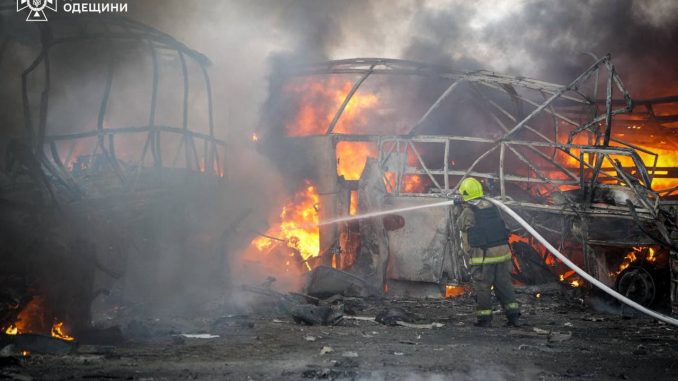
The aftermath of a Russian drone strike on a bus depot in Odesa Oblast on July 12, 2026. (Ukraine’s State Emergency Service/Telegram)
Published July 13, 2026
KYIV, Ukraine — A new wave of Russian aerial attacks struck multiple areas across Ukraine, injuring at least 57 people and sending a Russian drone crashing into neighboring Moldova during an overnight assault, Ukrainian officials reported. The attacks highlight the continued expansion of the Russia-Ukraine war beyond the front lines as both sides intensify long-range strikes using drones and missiles.
Ukraine’s Air Force said Russia launched a large-scale overnight barrage involving three guided missiles and 134 attack and decoy drones, targeting Ukrainian cities and infrastructure. Officials said the assault caused damage in several regions and raised concerns after one Russian drone crossed into Moldovan territory and exploded near the village of Copanca.
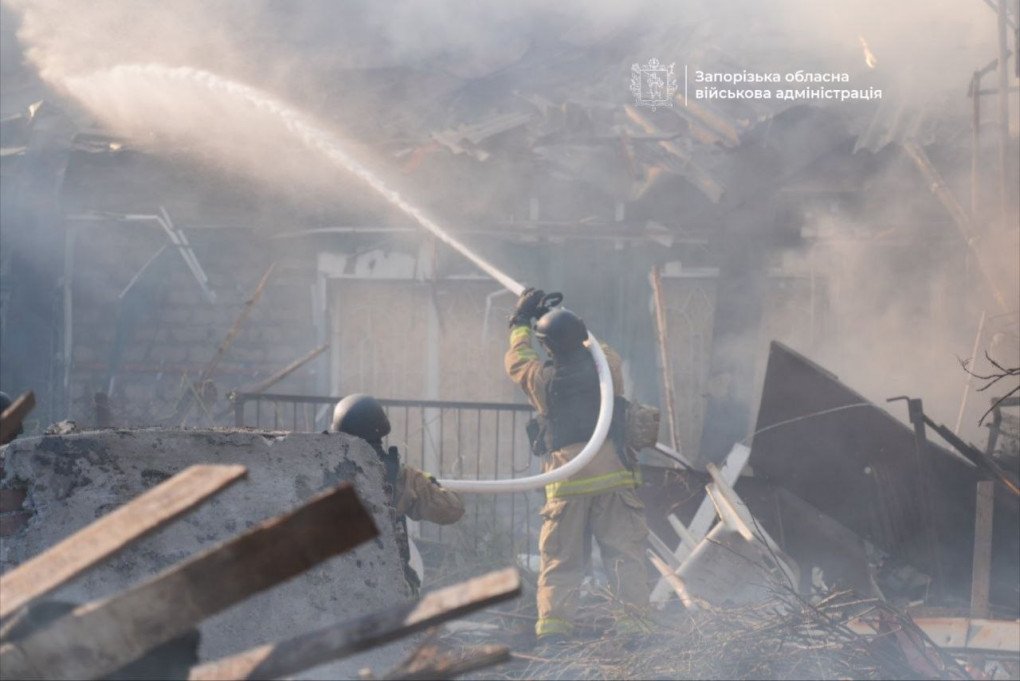 Firefighters extinguish a blaze after a Russian guided aerial bomb strike destroyed homes in Zaporizhzhia on July 13, 2026. Seven people, including a four-year-old girl, were injured in the attack. (Source: Zaporizhzhia Regional Military Administration)
Civilian Areas Hit in Zaporizhzhia Attack
One of the most serious incidents occurred in Zaporizhzhia, where Russian forces reportedly used guided aerial bombs against the city and surrounding areas.
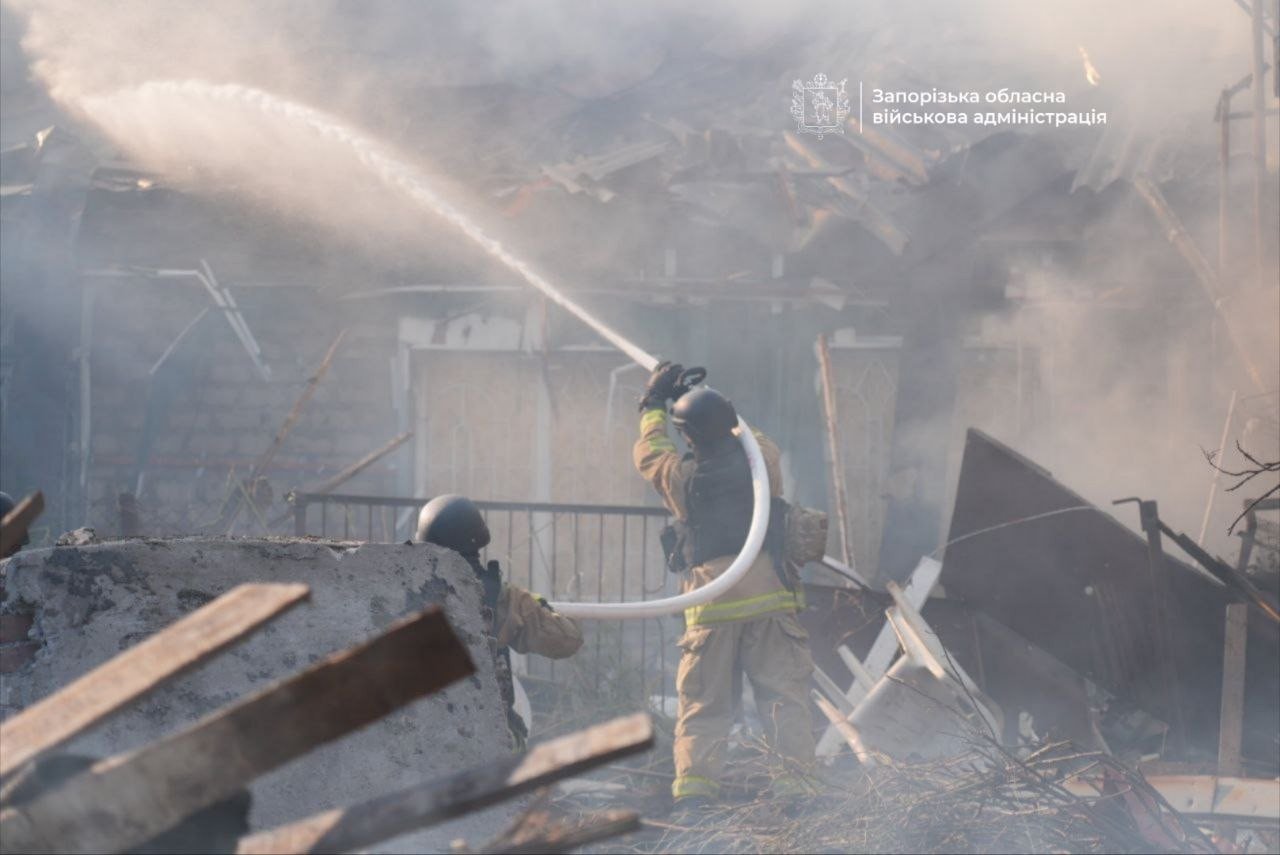
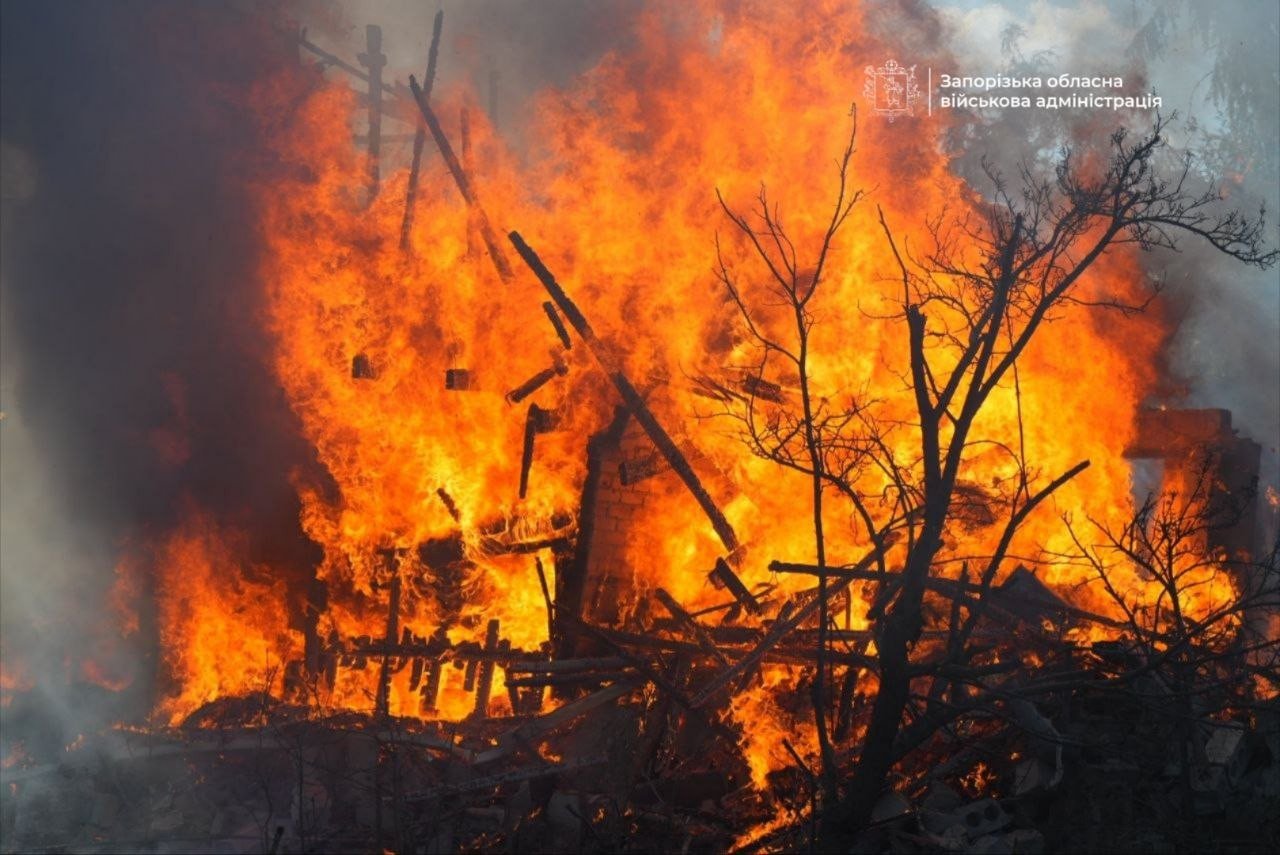
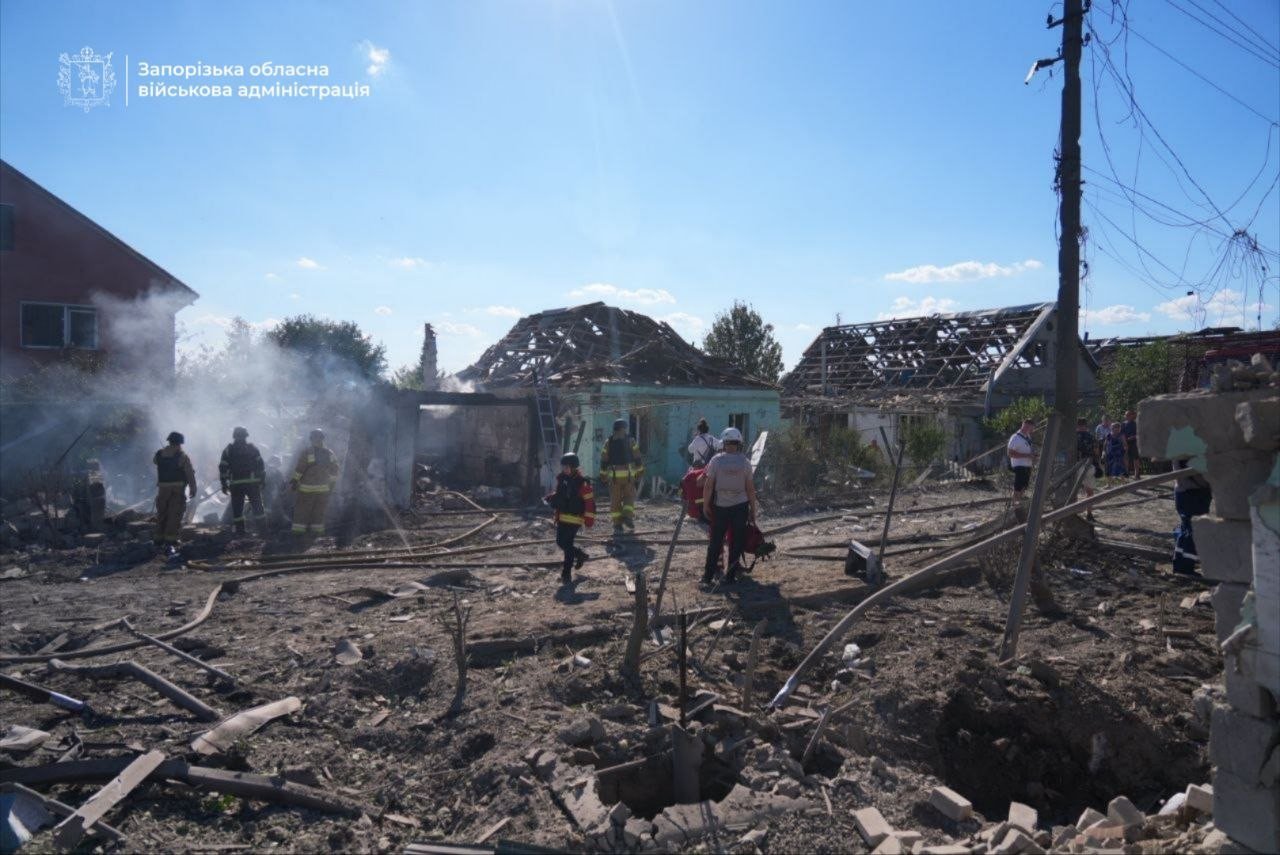
Local officials said the strikes injured seven civilians, including a four-year-old girl. Residential buildings were damaged, including a private home that was destroyed, while emergency crews responded to fires and rescue operations.
The attack adds to a series of recent Russian strikes targeting Zaporizhzhia, a strategically important city located near the front line and home to one of Europe’s largest nuclear power facilities.
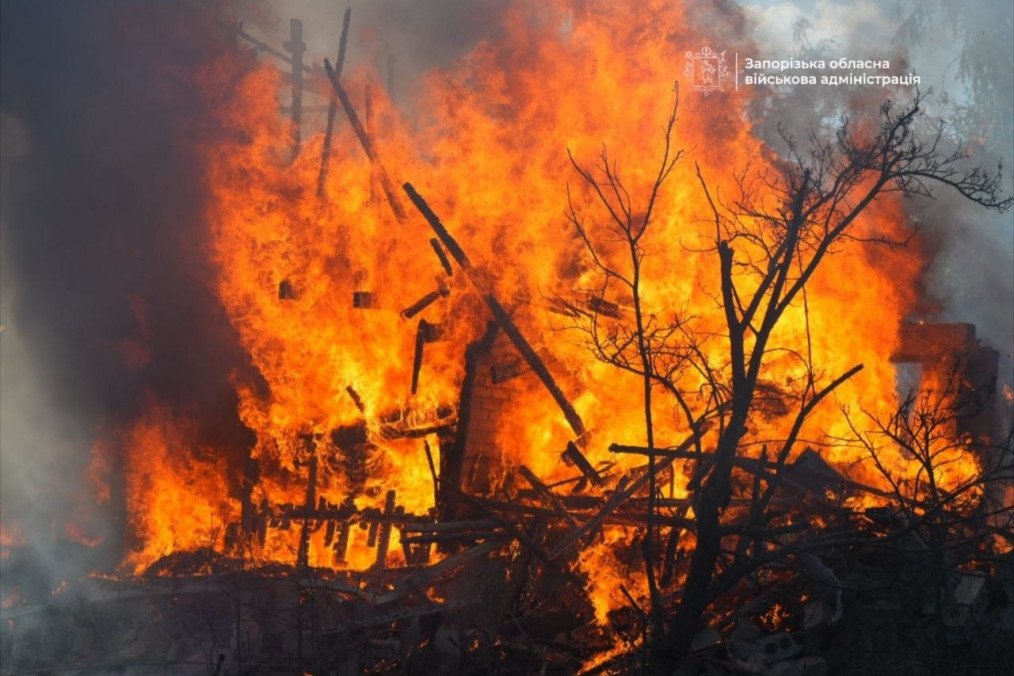 A house burns after a Russian guided aerial bomb strike on Zaporizhzhia on July 13, 2026. The attack injured seven people, including a four-year-old girl. (Source: Zaporizhzhia Regional Military Administration
Drone Incident Raises Moldova Security Concerns
The crash of a Russian Shahed-type drone in Moldova has increased concerns that the war is creating risks beyond Ukraine’s borders.
Authorities reported that the drone crossed into Moldovan airspace during Russia’s overnight operation before exploding near a village. No casualties were immediately reported.
The incident comes as Moldova has faced growing security concerns linked to the war next door. The European Union announced additional support for Moldova’s air defense capabilities amid increasing regional tensions.
Russia Continues Large-Scale Aerial Campaign
Russian forces have increasingly relied on drones and guided bombs to strike Ukrainian cities, infrastructure, and military positions.
Ukrainian officials say Moscow’s strategy is aimed at damaging critical infrastructure and weakening Ukraine’s ability to sustain the war effort. Russia has argued that its strikes are directed at military targets, while Ukrainian authorities frequently report civilian casualties and damage to residential areas.
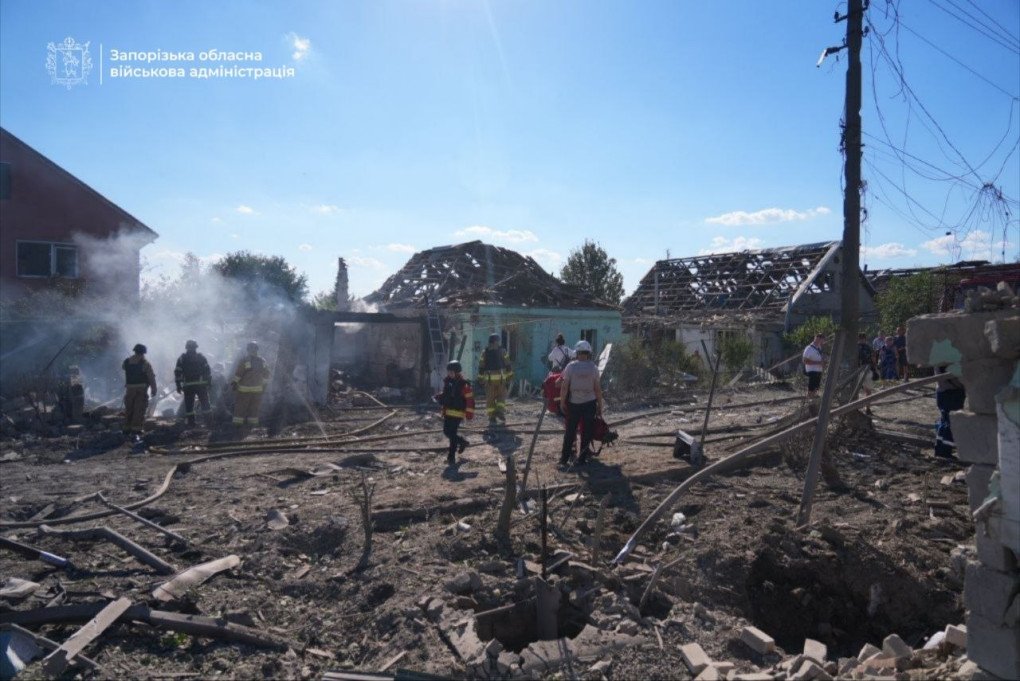 Emergency responders work at the site of a Russian guided aerial bomb strike in Zaporizhzhia on July 13, 2026. Four bombs hit the city, damaging residential properties and injuring seven people. (Source: Zaporizhzhia Regional Military Administration)
War Expands Into a Growing Drone Battlefield
The latest attacks demonstrate how drones have become one of the defining weapons of the conflict.
Both Russia and Ukraine have expanded their drone operations, using unmanned systems to strike targets far behind enemy lines. Ukraine has increasingly targeted Russian logistics, energy facilities, and military infrastructure, while Russia continues launching large drone and missile waves against Ukrainian cities.
The escalation has pushed neighboring countries to strengthen their defenses as the conflict continues to produce security risks across Eastern Europe.
⚠️ Implications:
The latest Russian drone and missile attacks across Ukraine, including strikes that injured civilians and a drone incident in neighboring Moldova, highlight the widening security risks created by the ongoing war. The attacks demonstrate that the conflict is no longer limited to front-line battles, with long-range weapons increasingly affecting civilian areas and raising concerns among countries bordering Ukraine.
🚨 1. Civilian Protection Remains a Major Challenge
- The reported injuries, including a child wounded in the Zaporizhzhia strikes, highlight the continued danger faced by civilians living near conflict zones.
- Russian use of drones, missiles, and guided bombs has increased pressure on Ukrainian emergency services and local authorities.
- Repeated attacks on urban areas continue to create humanitarian concerns.
🔍 Implication: Civilian casualties and infrastructure damage are likely to remain a central issue as both sides continue using long-range weapons.
🛡️ 2. Ukraine’s Air Defense Systems Face Growing Pressure
- Large drone and missile waves force Ukraine to constantly defend multiple cities and critical facilities.
- Russia’s use of cheaper drones in large numbers creates challenges for Ukraine’s air defense resources.
- Kyiv continues requesting additional air defense systems and ammunition from Western allies.
⚠️ Implication: Maintaining sufficient air defense capability will remain one of Ukraine’s most important military priorities.
🌍 3. Moldova and Neighboring Countries Face Increased Security Concerns
- The reported drone crash in Moldova raises concerns about the war’s ability to affect countries outside Ukraine.
- Even accidental incursions or debris from intercepted weapons can create diplomatic and security challenges.
- NATO and European partners are likely to continue monitoring airspace risks in Eastern Europe.
🌐 Implication: The conflict could increase pressure on neighboring countries to strengthen border security and air defense measures.
⚔️ 4. Drone Warfare Is Becoming a Defining Feature of the Conflict
- Russia and Ukraine are increasingly using drones for attacks on military, infrastructure, and logistical targets.
- Mass drone attacks allow both sides to strike deeper behind enemy lines.
- The technology has changed how modern warfare is conducted, reducing reliance on traditional battlefield engagements alone.
📢 Implication: Future conflicts are likely to place greater emphasis on drone production, electronic warfare, and counter-drone systems.
🇺🇦 5. Western Support for Ukraine Could Face Renewed Pressure
- Continued Russian strikes may strengthen calls among Ukraine’s allies to provide additional weapons and air defense systems.
- European governments may face pressure to increase military assistance as attacks continue.
- The humanitarian impact of strikes could influence diplomatic discussions.
🧭 Implication: The latest attacks may reinforce arguments for continued Western involvement in Ukraine’s defense.
🇷🇺 6. Russia Signals Continued Commitment to Aerial Campaign
- The scale of the attacks suggests Moscow continues to prioritize long-range strikes as part of its military strategy.
- Russia appears focused on maintaining pressure against Ukrainian cities and infrastructure.
- Continued attacks indicate that Moscow is not reducing military operations despite diplomatic efforts.
📈 Implication: The war is likely to remain highly active, with further missile and drone exchanges expected in the coming weeks.
🌐 7. Risk of Regional Escalation Remains
- A Russian drone entering Moldovan territory increases concerns about accidental escalation.
- Any incident involving NATO territory or neighboring states could create a larger diplomatic crisis.
- European governments are closely monitoring developments to prevent the conflict from expanding.
🚨 Implication: While direct wider conflict remains unlikely, repeated cross-border incidents increase the risk of miscalculations and regional instability.
💬 Overall Takeaway:
The latest Russian missile and drone attacks across Ukraine demonstrate that the war remains highly active, with aerial warfare continuing to play a central role in the conflict. The reported injuries to civilians, damage in Zaporizhzhia, and the drone incident in Moldova highlight how the consequences of the war extend beyond the battlefield and increasingly affect the broader Eastern European security environment.
For Ukraine, the attacks reinforce the urgent need for stronger air defense systems and continued support from international partners. For Russia, the sustained use of drones, missiles, and guided bombs shows that Moscow continues to rely on long-range strikes as a key part of its military strategy.
The incident involving Moldovan airspace also serves as a warning that the risks of the conflict are not limited to Ukraine alone. As both sides expand their drone capabilities and continue targeting strategic locations, the war is expected to remain a major security challenge for Europe, with the possibility of further escalation remaining a serious concern.