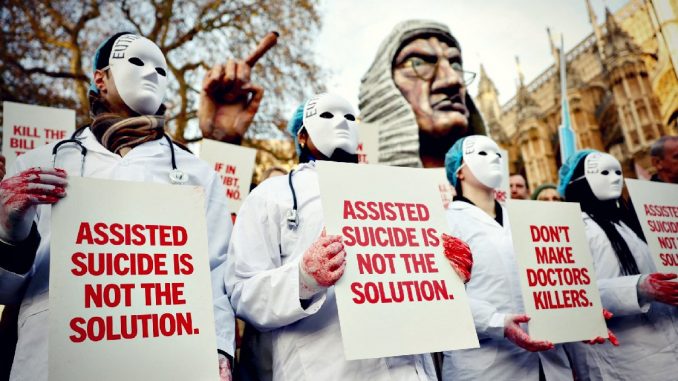
Assisted suicide is never the solution.
Published March 28, 2026
A controversial bill that would have allowed assisted dying for terminally ill adults in the United Kingdom has stalled in Parliament, after months of debate and intense political division. The legislation, known as the Terminally Ill Adults (End of Life) Bill, was seen as one of the most serious attempts in years to change UK law on assisted suicide — but it now looks unlikely to become law in this session.
What the Bill Proposed
The bill aimed to give adults in England and Wales who are:
- **mentally competent, and
- expected to die within six months**
the legal right to seek medical help to end their lives under strict conditions. These requirements included approval from two independent doctors and safeguards intended to prevent abuse or coercion.
At present, assisting another person to end their life remains illegal across the UK, with penalties under laws dating back decades.
Parliamentary Fight and Delay
The bill successfully passed the House of Commons (the elected chamber of Parliament), but it has faced strong opposition in the House of Lords (the unelected upper chamber). Members of the Lords have raised hundreds of amendments and concerns, especially about too few protections for vulnerable people and risks of misuse.
Because this bill was introduced as a private member’s bill — a law proposed by a backbench MP rather than the government — it was on a timetable with limited debate time. With so many amendments and slow progress, the current parliamentary session is ending, meaning the bill will likely fall off the legislative schedule and won’t become law now.
Why It Has Been Hard to Pass
There are several reasons the bill has struggled:
- Deep ethical concerns: Some lawmakers argue that legalizing assisted suicide could put pressure on elderly, disabled, or vulnerable people. Others worry it could weaken trust in medical care.
- Public support vs political caution: Opinion polls show many Britons back the idea under strict conditions, but MPs and Lords remain divided on whether safeguards are strong enough.
- Parliamentary timing: Private members’ bills often fail simply because there is not enough time for debate before a session ends. That has happened here despite the issue’s political weight.
Connected Developments in Scotland
Meanwhile in Scotland, lawmakers also recently rejected a separate assisted dying measure in the Scottish Parliament, where members voted against a bill that would have allowed terminally ill adults to choose medically assisted death.
These parallel debates reflect how the question of end-of-life rights is dividing politicians and communities across the UK.
🧩 The Core Analysis: UK Assisted Suicide Bill
The stalling of the Terminally Ill Adults (End of Life) Bill highlights the deep ethical, social, and legal tensions surrounding assisted dying. At its core, this issue is not just about personal choice—it is about protecting vulnerable populations and ensuring that the state does not normalize ending life as a solution to suffering.
Key points:
- Ethical Safeguards Are Crucial – Allowing medical assistance in dying, even with strict conditions, carries a risk of coercion or subtle pressure on the elderly, disabled, or seriously ill. The hesitation in Parliament reflects concern that current safeguards may not be strong enough.
- Slippery Slope Concerns – Legalizing assisted suicide for terminal illness could, over time, expand expectations to include non-terminal cases or mental health conditions. Lawmakers are cautious about precedent-setting legislation.
- Value of Life vs Individual Autonomy – While public opinion may support choice at the end of life, the debate also emphasizes the principle that human life has intrinsic value, and society has a responsibility to protect it through law.
- Focus on Palliative Care – Opponents argue that improving hospice and palliative care is a safer and more compassionate way to address suffering than creating a legal pathway to death.
- Political Timing and Practicality – The failure of this private member’s bill also demonstrates the difficulty of passing ethically sensitive legislation without broad political consensus, reinforcing that policy decisions with life-and-death implications require careful deliberation.
🔗 The Synthesis: UK Assisted Suicide Bill
The stalling of the Terminally Ill Adults (End of Life) Bill illustrates a careful balancing act between individual autonomy and societal responsibility. While the bill aimed to provide choice for those facing terminal illness, the debate highlights the broader ethical and social implications of legally assisting someone to end their life.
Key takeaways:
- Life Protection as Priority – Lawmakers are signaling that protecting vulnerable citizens must take precedence over expedient legislation. The risks of misuse or unintended consequences are central to the cautious approach.
- Ethical and Legal Boundaries Matter – Even with safeguards, the concern remains that legalizing assisted suicide could gradually expand beyond its initial limits, challenging long-standing ethical norms.
- Focus on Compassionate Alternatives – The debate underscores that palliative care and support for the terminally ill are considered safer and more humane avenues to address suffering, rather than legalizing death.
- Societal Responsibility Over Individual Expedience – The legislative pause shows a recognition that decisions affecting life and death have long-term societal consequences, which require careful reflection rather than rushed approval.
🏁 The Final Word: UK Assisted Suicide Bill
The stalling of the Terminally Ill Adults (End of Life) Bill underscores the delicate balance between compassion, law, and ethics. While the bill aimed to give terminally ill adults more control over their final days, Parliament’s pause reflects the importance of protecting vulnerable citizens and maintaining strong safeguards.
This legislative delay also highlights that society has a responsibility to uphold the value of human life, even when faced with difficult personal choices. Improving palliative care and support for the terminally ill remains a safer, more compassionate path than legalizing assisted death.
Ultimately, the debate demonstrates that life-and-death policy decisions require careful deliberation, ethical clarity, and long-term consideration, rather than rushed legislation.