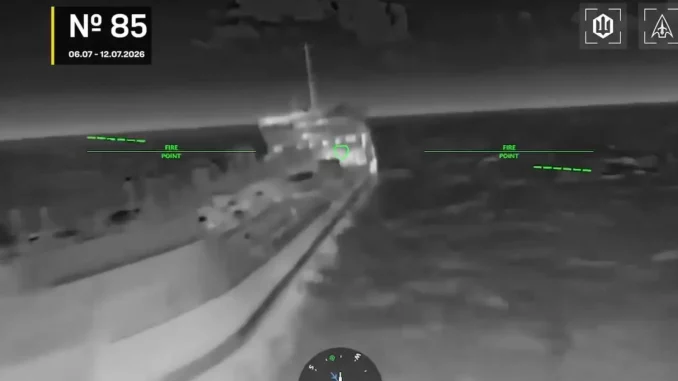
A Ukrainian drone targeting a Russian vessel in the Azov Sea on July 12, 2026 (Robert “Madyar” Brovdi / Telegram)
Published July 12, 2026
KYIV, Ukraine — Ukraine announced Sunday that it had eliminated 14 additional vessels belonging to Russia’s so-called “shadow fleet” in a large-scale overnight operation, marking one of Kyiv’s most ambitious efforts yet to disrupt Moscow’s wartime logistics and sanctions-evasion network.
According to Ukrainian military officials, the latest operation targeted 10 oil tankers and four ferries operating in the Sea of Azov and surrounding waters, bringing the total number of shadow fleet vessels reportedly destroyed this week to approximately 90. The claims have not been independently verified, and Russia has not publicly confirmed the reported losses.
The operation is part of Ukraine’s expanding campaign to strike Russian military infrastructure beyond the battlefield, increasingly focusing on maritime assets that Kyiv says play a critical role in sustaining Russia’s war effort.
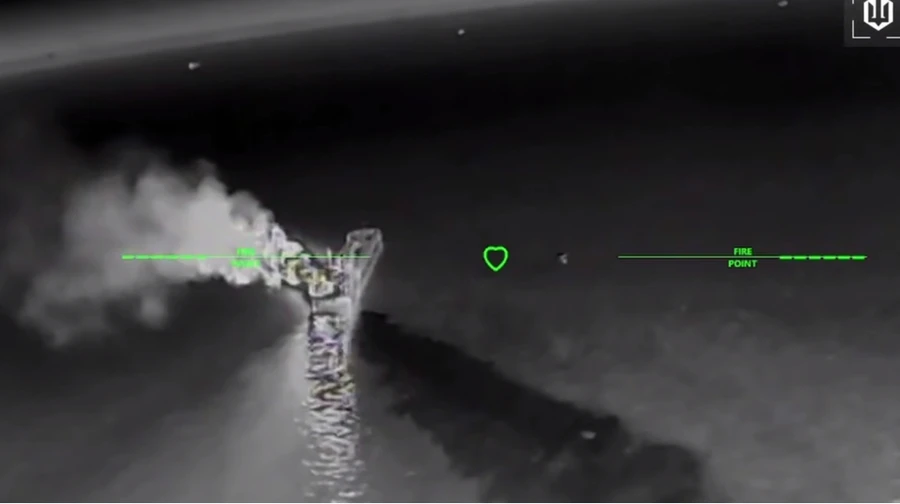 Ukraine’s Unmanned Systems Forces struck another nine tankers from Russia’s so-called shadow fleet in the Sea of Azov on the night of 7-8 July.
What Is Russia’s “Shadow Fleet”?
The “shadow fleet” refers to a network of aging oil tankers, cargo vessels, and support ships that Western governments say Russia has used to transport crude oil and petroleum products while circumventing international sanctions imposed after the invasion of Ukraine.
Ukraine argues that many of these vessels also support Russian military logistics by transporting fuel, equipment, and supplies to occupied territories and strategic ports.
By targeting these ships, Kyiv hopes to reduce Russia’s ability to finance military operations while disrupting supply lines supporting its armed forces.
Ukraine Expands the Battlefield
The latest maritime strikes reflect a broader shift in Ukraine’s military strategy.
Unable to match Russia’s numerical advantage on the front lines, Ukraine has increasingly relied on long-range drones, precision strikes, and special operations to target critical infrastructure deep behind enemy lines.
Recent operations have focused on oil depots, refineries, rail hubs, bridges, naval facilities, and shipping routes that are considered essential to Russia’s military and economic capabilities.
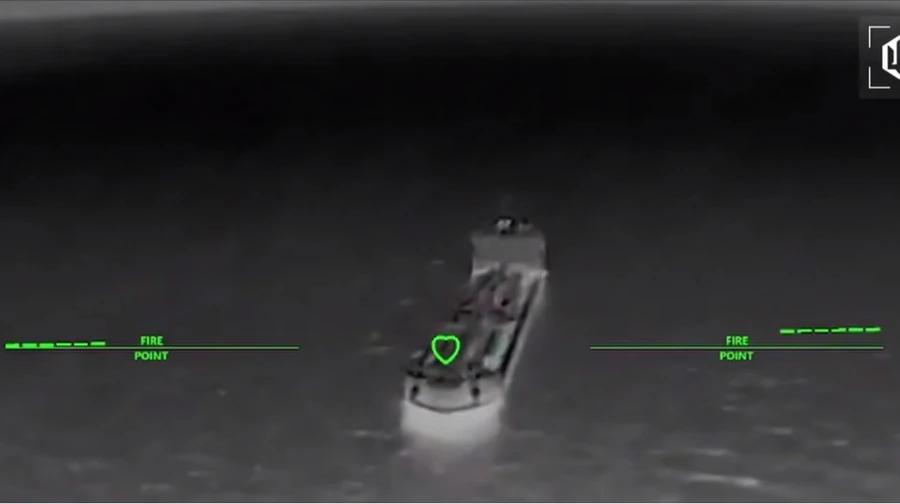 Operators from Ukraine’s Unmanned Systems Forces struck eight tankers belonging to Russia’s so-called shadow fleet in the Sea of Azov on the night of 6-7 July.
Russia Yet to Confirm the Claims
While Ukrainian officials hailed the operation as a significant success, Russian authorities have not confirmed Ukraine’s reported destruction of the vessels.
Independent verification remains difficult because many of the reported targets are located in contested or restricted maritime areas.
Military analysts caution that battlefield claims from both sides should be treated carefully until corroborated by independent evidence or satellite imagery.
Economic Pressure Meets Military Strategy
Beyond the battlefield, Ukraine’s campaign against the shadow fleet is aimed at increasing economic pressure on Moscow.
Western sanctions have sought to reduce Russia’s oil revenues, but officials say the shadow fleet has enabled the country to continue exporting crude through complex shipping arrangements involving older vessels, flag changes, and intermediary companies.
By targeting these ships, Ukraine is attempting to weaken one of Russia’s key financial lifelines while simultaneously disrupting military logistics.
War Expands Beyond the Front Lines
The reported operation highlights how the conflict has evolved far beyond trench warfare.
Naval operations, cyberattacks, drone warfare, energy infrastructure, and economic pressure have become increasingly important components of the war, with both Moscow and Kyiv seeking to degrade each other’s long-term ability to sustain military operations.
As Ukraine intensifies its campaign against Russia’s maritime network and Russia continues its missile and drone strikes on Ukrainian cities, there is little indication that either side is preparing to reduce the intensity of the conflict.
Instead, both nations appear committed to expanding operations across land, sea, and strategic infrastructure, signaling that the war remains far from reaching a negotiated conclusion.
⚠️ Implications:
Ukraine’s reported destruction of 14 additional Russian “shadow fleet” vessels represents more than a tactical battlefield success—it reflects Kyiv’s broader strategy of attacking the economic and logistical foundations that sustain Russia’s war effort. If the reported strikes are confirmed, they could have significant military, economic, and geopolitical consequences.
🚢 1. Russia’s Wartime Logistics Face Growing Pressure
- Ukraine’s campaign is increasingly focused on disrupting the transport of fuel, equipment, and supplies supporting Russian military operations, particularly in occupied Crimea and southern Ukraine.
- Continued strikes on tankers and ferries could complicate Russia’s ability to sustain forces along key fronts.
🔍 Implication: Ukraine is attempting to weaken Russia’s military capabilities by targeting supply chains rather than relying solely on front-line combat.
⛽ 2. Economic Pressure on Russia Could Intensify
- The so-called “shadow fleet” plays an important role in transporting Russian oil exports and helping Moscow mitigate the effects of Western sanctions.
- Repeated attacks on these vessels could increase transportation costs, disrupt exports, and reduce revenues that help finance Russia’s military operations.
🌍 Implication: The campaign is designed to complement international sanctions by making Russia’s energy trade more costly and difficult.
⚔️ 3. The War Is Expanding Beyond Traditional Battlefields
- Ukraine has increasingly relied on long-range drones and maritime strikes to reach targets deep behind Russian lines.
- The latest operation demonstrates that naval logistics, ports, and commercial shipping have become central elements of the conflict.
🛡️ Implication: The war is evolving into a multidomain conflict involving land, air, sea, cyber, and economic warfare rather than conventional front-line engagements alone.
🌊 4. Maritime Security Risks Are Increasing
- Continued attacks on vessels operating in the Sea of Azov and surrounding waters could affect commercial shipping and maritime traffic.
- Increased military activity may also raise insurance costs and operational risks for civilian shipping companies in the region.
🚨 Implication: The conflict is placing additional strain on regional maritime security, with potential effects extending beyond military operations.
📈 5. Russia May Intensify Retaliation
- Moscow has not confirmed Ukraine’s reported destruction of the vessels, but previous Ukrainian deep-strike operations have often been followed by large-scale Russian missile and drone attacks.
- Analysts warn that Russia may respond by increasing strikes against Ukrainian ports, energy infrastructure, or other strategic targets.
⚠️ Implication: The latest operation could contribute to another cycle of military escalation, increasing risks for both military personnel and civilians.
🌐 6. Strategic Messaging to Allies
- The operation also serves as a demonstration of Ukraine’s expanding long-range strike capabilities.
- By showing it can threaten critical Russian logistics and energy infrastructure, Kyiv may strengthen its case for continued military assistance from Western partners.
🤝 Implication: If independently confirmed, the strikes could reinforce arguments that continued military support enables Ukraine to impose meaningful costs on Russia beyond the front lines, while also highlighting the growing strategic importance of maritime operations in the war.
💬 Overall Takeaway:
Ukraine’s reported overnight destruction of 14 additional Russian “shadow fleet” vessels marks another step in its strategy of shifting the battlefield beyond the front lines and into the economic and logistical networks that help sustain Russia’s war effort. While the claims have not been independently verified, the operation underscores Kyiv’s increasing reliance on long-range drones and precision strikes to target critical infrastructure rather than engaging solely in conventional ground combat.
If the reported strikes are confirmed, they could further complicate Russia’s ability to move fuel, military supplies, and sanctioned oil exports, placing additional pressure on both its armed forces and wartime economy. The campaign also demonstrates that maritime operations are becoming an increasingly important dimension of the conflict, with ports, shipping lanes, and commercial vessels playing a larger strategic role.
At the same time, the latest developments reinforce the likelihood that both sides will continue expanding the scope of the war through long-range attacks on strategic assets. As Ukraine seeks to weaken Russia’s logistical capabilities and Moscow continues its missile and drone strikes across Ukrainian territory, the conflict remains characterized by escalation, innovation, and an increasing focus on disrupting each other’s ability to sustain prolonged military operations.