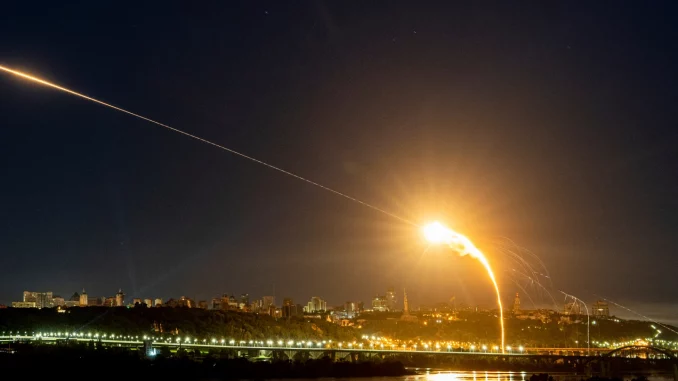
Ukranian air defense intercepts a Shahed drone mid-air in the third Russia aerial attack on the capital in the last 24 hours in Kyiv, on Tuesday, May 30, 2023 (AP Photo/Evgeniy Maloletka)
Published March 28, 2026
Reports that Russia is sending advanced drones to Iran are raising global concern, but the Kremlin has strongly denied the claims, calling them false and misleading as tensions continue to rise in the Middle East.
Reports of Drone Transfers
According to U.S. and European intelligence officials, Russia may be supplying upgraded attack drones to Iran—based on the same Shahed drone designs used in the Ukraine war.
These drones are believed to include:
- Improved navigation and targeting systems
- Better resistance to electronic jamming
- Enhanced ability to evade air defenses
Officials warn that if confirmed, these upgrades could make Iranian drone attacks more effective and harder to stop, especially in strikes targeting U.S. forces and Israel.
Some intelligence sources also say shipments could be disguised as humanitarian aid, making them harder to track.
Kremlin Denies Allegations
Russia has pushed back against these claims. Kremlin officials have rejected reports of military drone transfers, describing them as inaccurate or unverified.
Officials in Moscow have also avoided confirming specific military cooperation, even as they acknowledge ongoing dialogue and partnership with Iran.
This creates a situation where intelligence reports and official statements are directly at odds, leaving many details unclear.
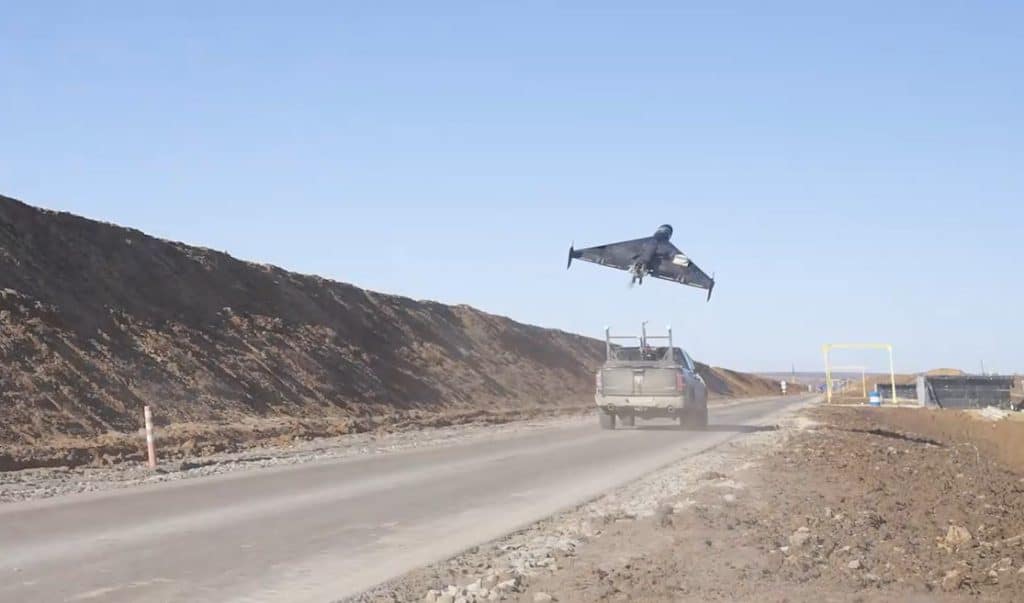 A Russian Geran-2 drone, such as those being provided to Iran by Russia, launches from a pickup truck in Ukraine. (Source: “Military Informant” on Telegram)
Growing Russia–Iran Cooperation
Despite the denial, analysts point to increasing cooperation between Russia and Iran, especially in military and technology areas.
- Iran previously supplied drones to Russia during the Ukraine war
- Russia later expanded production using those designs
- Both countries are now believed to be sharing knowledge and tactics
Officials say talks between the two countries have been “very active” in recent weeks, suggesting a deeper partnership may be forming.
Why This Matters
The situation is significant because Iran has already used drones in attacks across the Middle East, including against:
- Israel
- U.S. military positions
If more advanced drones are introduced, it could:
- Increase the scale and precision of attacks
- Put additional pressure on air defense systems
- Raise risks for both troops and civilians
Uncertainty Remains
At this stage, key questions remain unanswered:
- How many drones, if any, have been delivered
- Whether this is a one-time transfer or ongoing cooperation
- How directly Russia is involved in Iran’s military operations
With conflicting claims from intelligence sources and official denials, the full picture is still developing.
🔍 Analyst Insight:
Conflicting Narratives Signal Information Warfare
The sharp contrast between intelligence reports and Russia’s denial highlights how modern conflicts are shaped not only on the battlefield, but also through competing narratives. Governments may deny involvement to maintain strategic flexibility, avoid escalation, or limit international backlash, making it harder to determine the full truth in real time.
Strategic Cooperation Still a Concern
Even with official denials, the broader pattern of cooperation between Russia and Iran cannot be ignored. Past exchanges of drone technology and military knowledge suggest that both countries are willing to strengthen each other’s capabilities, especially in areas that can challenge U.S. and allied forces.
Preparedness Over Certainty
In situations like this, security planners often act based on potential threats, not just confirmed actions. Whether or not the transfer has already taken place, the possibility alone is enough to justify increased readiness and stronger defense measures.
Evolving Threat Landscape
Drone warfare is becoming a central feature of modern conflict. As these systems grow more advanced and widely shared, they create new risks that are harder to predict and counter, especially when used in coordinated or large-scale attacks.
Implications for Stability
The uncertainty surrounding these reports adds to already rising tensions in the Middle East. When major powers are suspected of supporting opposing sides, even indirectly, it increases the risk of miscalculation and wider escalation.
👥 Human Element:
Troops Facing Uncertain Threats
For U.S. service members and allied forces in the Middle East, conflicting reports about advanced drones create real uncertainty on the ground. Even the possibility of more capable weapons means troops must stay constantly alert, knowing that threats can come quickly and with little warning.
Families Watching From Afar
Back home, families of deployed personnel are left to follow the news and try to understand what is true. Conflicting reports and denials add to the anxiety, as loved ones wait for clear information while hoping for the safety of those serving overseas.
Civilians Living with Risk
In areas affected by conflict, civilians continue to face the danger of drone strikes and military escalation. Whether or not new systems are confirmed, the fear of more advanced weapons adds to daily uncertainty, affecting how people live, work, and move about their communities.
The Weight of Uncertainty
When facts are unclear and narratives conflict, ordinary people often carry the burden. Uncertainty can lead to fear, misinformation, and stress, making it harder for communities to feel secure or prepared.
🎯 Conclusion:
SOURCES: AP NEWS – Russia is sending upgraded drones used in the Ukraine war to Iran, officials say
LONG WAR JOURNAL – Russia reportedly sending Iran drones for use against the US and Israel