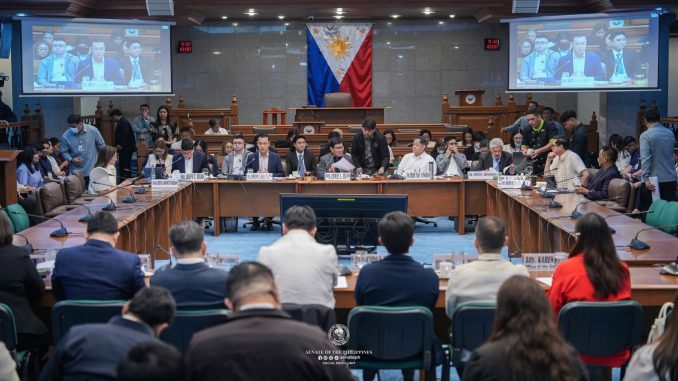
The Philippine Senate’s Blue Ribbon Committee, which is looking into anomalous government flood control spending, convenes a meeting in the Senate chamber, Jun. 8, 2026.Credit: Facebook/Senate of the Philippines
Published June 14, 2026
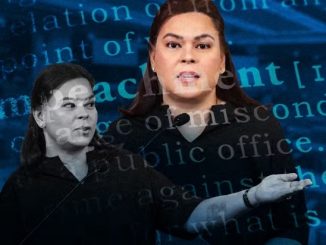
MANILA, Philippines — The impeachment proceedings against Vice President Sara Duterte have become the defining political issue in the Philippines, drawing national attention and deepening divisions among political leaders as the country looks toward the 2028 elections. Recent developments in the Senate, House of Representatives, and legal community have placed the impeachment trial at the center of the country’s political landscape.
The Senate is currently preparing for the impeachment trial, with discussions ongoing regarding who will serve as the presiding officer. Among the names being considered is Senator Francis Pangilinan. The trial is expected to begin in early July following pre-trial proceedings scheduled for June.
House prosecutors have indicated they may focus on selected impeachment articles rather than pursuing every allegation. According to members of the prosecution panel, a conviction would require proving only one impeachable offense if senators find the evidence sufficient.
The impeachment case has also become intertwined with broader political rivalries. The once-powerful alliance between President Ferdinand Marcos Jr. and Vice President Duterte has fractured, creating divisions within the Senate and contributing to leadership disputes in the chamber. Political analysts say the outcome of the impeachment trial could significantly influence the balance of power ahead of the 2028 presidential election.
Questions regarding Senate procedure continue to emerge. Senator Panfilo Lacson recently suggested seeking court permission to allow detained senators to participate in the trial to ensure that the constitutionally required number of votes can be reached. Under current Senate rules, a two-thirds vote is required for conviction.
Volunteer lawyers and legal experts have also joined the effort to support the House prosecution panel, reflecting the national importance of the case. Meanwhile, Duterte’s legal team is preparing its defense as both sides head toward the formal trial phase.

New Evidence Emerges on Alleged Undeclared Assets
House prosecutors say they have uncovered additional evidence that may be presented during the Senate impeachment trial involving properties allegedly linked to Vice President Sara Duterte and her husband, lawyer Mans Carpio. According to former lawmaker and House prosecution spokesperson Terry Ridon, the evidence includes records of properties that allegedly do not appear in Duterte’s publicly available Statements of Assets, Liabilities, and Net Worth (SALNs). Prosecutors contend that these documents could support allegations related to unexplained wealth and failure to fully disclose assets as required by law. Duterte’s camp has not admitted wrongdoing and is expected to challenge the allegations during the trial.
Ridon said the records reportedly cover multiple years and were obtained from government sources. House prosecutors believe the information could strengthen their case before the Senate impeachment court, while legal experts note that the authenticity, ownership, and materiality of the properties would still need to be established during the proceedings.
The allegations concerning undeclared assets add another layer to the impeachment case, which already includes accusations involving misuse of confidential funds, unexplained wealth, and alleged threats against government officials. The Senate impeachment court will ultimately determine whether the evidence presented by prosecutors is sufficient to support conviction.
Main Topics in the Impeachment Trial
1. Alleged Misuse of Confidential Funds
One of the central allegations involves the alleged misuse of confidential and intelligence funds during Duterte’s tenure in government. House investigators have cited concerns over expenditures and documentation related to these funds.
2. Accountability and Public Trust
Supporters of the impeachment argue that public officials must be held accountable for alleged misconduct. They contend that the impeachment process is necessary to maintain public confidence in government institutions.
3. Constitutional and Legal Questions
The proceedings have revived debates about impeachment rules, due process, and constitutional requirements. Legal experts continue to discuss how previous Supreme Court rulings affect the current case and the standards required for conviction.
4. Political Impact on the 2028 Election
The trial is widely viewed as having major implications for the 2028 presidential race. Duterte has been regarded as a potential presidential contender, and a conviction could affect her future eligibility for public office.
5. Senate Leadership and Political Alignments
The impeachment proceedings have exposed divisions within the Senate, with lawmakers taking different positions regarding procedure, leadership, and the handling of the trial. These disagreements have contributed to broader political tensions in Manila.
6. Alleged Undeclared Properties and Unexplained Wealth
A newly reported area of focus involves properties allegedly connected to Vice President Duterte and her husband that prosecutors claim were not fully disclosed in official asset declarations. House prosecutors argue that the records may provide additional evidence regarding allegations of unexplained wealth and transparency in financial disclosures. The Duterte camp is expected to dispute these claims during the trial.
The main message of the video is:
The House prosecutors want the public and the Senate to know that they believe they have enough evidence—not only from the original impeachment articles but also from newly obtained records—to justify proceeding with a full Senate trial. Whether that evidence is convincing enough for conviction will ultimately be decided by the Senate impeachment court.
 Public / Political Reactions:
The impeachment trial of Vice President Sara Duterte has generated strong reactions from both the public and political leaders, reflecting the deep divisions within Philippine politics.
Public Opinion
Recent surveys show that a substantial majority of Filipinos support allowing the Senate impeachment trial to proceed. An OCTA Research survey conducted in April 2026 found that 74% of adult Filipinos believe Duterte should face a Senate trial to address the allegations against her, up from 69% in a previous survey. Support was particularly strong in the National Capital Region and the Visayas.
Supporters of the trial argue that public officials should be held accountable through constitutional processes and that a full hearing of the evidence is necessary to determine the truth of the allegations. Critics of the impeachment, meanwhile, contend that the proceedings are politically motivated and intended to weaken a potential contender for the 2028 presidential election.
Reactions from the Duterte Camp
Vice President Duterte and her allies have consistently denied wrongdoing and described the impeachment effort as a political attack. Duterte has maintained that the allegations are unfounded and has vowed to defend herself through legal channels. Her supporters argue that she is being targeted because of her political influence and popularity ahead of the next presidential election.
Several pro-Duterte political groups and supporters have organized public demonstrations and campaigns expressing solidarity with the Vice President. The impeachment case has also energized opposition movements aligned with the Duterte family.
Reactions from the Marcos Camp and Other Politicians
President Ferdinand Marcos Jr. has publicly maintained that the impeachment process is a matter for Congress and the Senate impeachment court, distancing himself from direct involvement. Nevertheless, the proceedings are widely viewed as taking place against the backdrop of the political split between the Marcos and Duterte camps.
Some lawmakers have emphasized that the trial should focus strictly on evidence and constitutional accountability rather than political loyalties. Others have expressed concern that the proceedings could further polarize the country and distract from governance priorities.
Senate and Legal Community Response
Legal experts, constitutional scholars, and members of the legal community have largely stressed the importance of allowing the impeachment process to proceed according to constitutional rules. Many have argued that the Senate has a duty to hear the case and evaluate the evidence presented by both the prosecution and the defense before reaching a verdict.
Political Significance
Analysts view the impeachment trial as one of the most consequential political events in the Philippines since the 2022 elections. The outcome could influence political alliances, reshape the balance of power between major political families, and affect the landscape of the 2028 presidential race. A conviction could result in Duterte’s removal from office and possible disqualification from future public office, while an acquittal could strengthen her political standing.
 Resulting Effects
The impeachment trial of Vice President Sara Duterte is already having significant political, institutional, and social effects even before a final verdict is reached.
1. Increased Political Polarization
The impeachment proceedings have deepened divisions between supporters of the Duterte and Marcos camps. Political leaders, local officials, and voters have increasingly aligned themselves with one side or the other, creating a more polarized political environment.
Effect:
- Stronger political factionalism.
- Increased political campaigning ahead of the 2028 elections.
- Growing tensions among political allies who were once part of the Marcos-Duterte coalition.
2. Impact on the 2028 Presidential Race
Sara Duterte has long been viewed as a leading potential candidate for the presidency in 2028. The impeachment trial places her political future under intense scrutiny.
Effect:
- A conviction could remove her from office and potentially disqualify her from holding future public office.
- An acquittal could strengthen her position by allowing her to claim political vindication.
- Other potential presidential contenders may gain or lose influence depending on the trial’s outcome.
3. Greater Public Focus on Government Accountability
The case has renewed national discussions about transparency, public accountability, and the proper use of government funds.
Effect:
- Increased public interest in Statements of Assets, Liabilities, and Net Worth (SALNs).
- More scrutiny of confidential and intelligence fund expenditures.
- Greater attention to ethical standards for public officials.
4. Senate Institutional Pressure
The Senate’s role as an impeachment court places senators under public and political pressure to demonstrate impartiality and adherence to constitutional procedures.
Effect:
- Increased scrutiny of senator-judges.
- Debate over Senate rules, voting procedures, and trial fairness.
- Potential long-term impact on public trust in legislative institutions.
5. Legislative Delays and Political Distractions
As political leaders focus on the impeachment proceedings, legislative priorities may receive less attention.
Effect:
- Possible delays in the passage of major legislation.
- Reduced focus on economic, infrastructure, and social policy initiatives.
- Continued political uncertainty within Congress.
6. Impact on Investor and Business Confidence
Political instability can influence economic sentiment, especially when major constitutional disputes dominate national headlines.
Effect:
- Investors may adopt a cautious approach while monitoring political developments.
- Businesses may delay expansion or investment decisions until political uncertainty decreases.
- Financial markets could react to significant developments in the trial.
7. International Attention
The impeachment of a sitting vice president is attracting attention from foreign governments, investors, and international media organizations.
Effect:
- Increased global scrutiny of Philippine democratic institutions.
- Observation of how constitutional processes are handled.
- Potential influence on international perceptions of political stability in the Philippines.
8. Emergence of New Evidence and Public Debate
Recent reports regarding alleged undeclared assets and other evidence have intensified public discussion about transparency and ethics in government.
Effect:
- Expanded media coverage and public debate.
- Increased pressure on both prosecutors and the defense to present credible evidence.
- Greater demand for transparency from public officials across government.
Long-Term Implications
Regardless of the final verdict, the impeachment trial is likely to become a defining political event of the decade. It may reshape political alliances, influence future elections, affect public trust in government institutions, and set precedents for how future impeachment cases are handled in the Philippines.
 Future Outlook
As the Senate prepares to formally hear the impeachment case against Vice President Sara Duterte, political observers expect the proceedings to remain one of the most important issues in Philippine politics throughout 2026 and possibly beyond.
1. Senate Trial Will Be the Immediate Focus
The next major development is the formal Senate impeachment trial, where House prosecutors and Duterte’s defense team will present evidence, witnesses, and legal arguments.
Expected Developments:
- Presentation of documentary evidence and witness testimony.
- Legal challenges regarding admissibility of evidence.
- Debates over constitutional and procedural issues.
- Close public and media scrutiny of senator-judges.
2. New Evidence Could Shape the Outcome
House prosecutors have indicated that additional evidence may be introduced, including allegations involving undeclared assets, confidential fund expenditures, and financial disclosures.
Possible Impact:
- Could strengthen the prosecution’s case if supported by verifiable documents and testimony.
- Could face legal and factual challenges from the defense.
- May become a central issue during public hearings and media coverage.
4. Implications for the 2028 Presidential Election
Many analysts view the impeachment trial as an early battleground for the next presidential race.
Possible Outcomes:
- If convicted: Duterte could face removal from office and possible disqualification from future public office, depending on the Senate’s judgment.
- If acquitted: She could emerge politically stronger and potentially use the verdict to reinforce her support base.
- Regardless of outcome: The trial will likely shape campaign narratives and political strategies for years to come.
5. Public Opinion Will Remain Important
As evidence is presented, public sentiment may shift depending on how convincing the prosecution and defense arguments appear.
Factors Influencing Opinion:
- Credibility of witnesses.
- Strength of documentary evidence.
- Media coverage and public debates.
- Statements from key political and civic leaders.
6. Institutional and Constitutional Legacy
The trial could set important precedents for future impeachment proceedings in the Philippines.
Long-Term Significance:
- Clarification of impeachment procedures.
- Increased focus on accountability mechanisms.
- Potential reforms regarding confidential funds, asset disclosures, and government transparency.
Best-Case Scenario
A transparent, orderly, and evidence-based trial that is accepted by the public regardless of the outcome could strengthen confidence in democratic institutions and constitutional processes.
Worst-Case Scenario
If the proceedings become heavily politicized or if either side rejects the legitimacy of the outcome, political divisions could deepen, leading to prolonged instability and reduced public trust in government institutions.
 Bottom Line
The impeachment trial of Vice President Sara Duterte has become the most consequential political story in the Philippines, with implications that extend far beyond the courtroom. What began as a constitutional accountability process has evolved into a major political showdown involving questions of public trust, government transparency, and the future direction of the country’s leadership.
As prosecutors prepare to present evidence—including allegations involving confidential funds and newly reported undeclared assets—the Senate impeachment court will ultimately determine whether the accusations are supported by sufficient evidence. Meanwhile, Duterte and her supporters continue to reject the allegations and characterize the proceedings as politically motivated.
The outcome of the trial could reshape political alliances, influence public confidence in government institutions, and significantly affect the landscape of the 2028 presidential election. Whether it results in conviction, acquittal, or a prolonged legal and political battle, the case is already leaving a lasting mark on Philippine politics.
In short: The Sara Duterte impeachment trial is not only a test of the Vice President’s political future but also a test of the Philippines’ democratic institutions, constitutional processes, and commitment to accountability under the rule of law.
SOURCES: CDN – VP Sara’s unlisted assets new impeachment trial evidence —Ridon
THE DIPLOMAT – What’s the Philippine Senate Drama All About?
PHILIPPINE NEWS AGENCY – Pangilinan eyed to preside over VP Sara impeachment trial
CEBU DAILY NEWS – Sara Duterte impeachment trial: One article enough to convict VP, says Chua
GMA NEWS – Lacson backs seeking court nod for detained senators in Sara Duterte impeachment trial
INQUIRER.NET – Volunteer lawyers backing up House impeach team