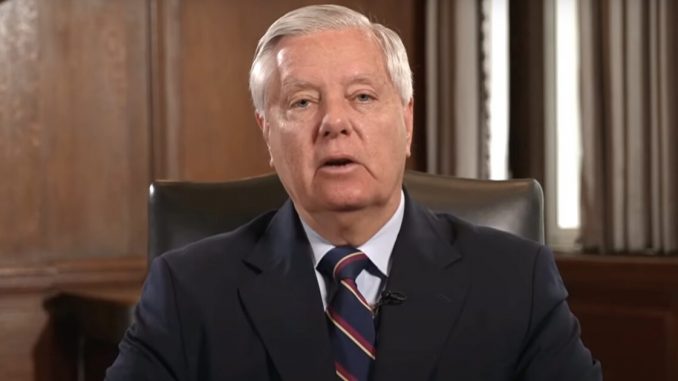
On the evening of Saturday, July 11, U.S. Senator Lindsey Graham passed away from a brief and sudden illness,” his office said.
Published July 12, 2026
WASHINGTON, D.C. — Senator Lindsey Graham (R-S.C.), one of the most recognizable figures in American politics and a close ally of President Donald Trump, has died at the age of 71 following what his office described as a “brief and sudden illness.” Graham’s family requested privacy as tributes poured in from across the United States and around the world.
The passing of the longtime South Carolina senator marks the end of more than three decades of public service, during which Graham became one of the Republican Party’s most influential voices on national security, foreign policy, judicial appointments, and military affairs.
A Lifetime of Service
Born in Central, South Carolina, Graham overcame personal tragedy early in life. After losing both parents while still in his early twenties, he helped raise his younger sister while completing his education and beginning a career in public service. Those who knew him often cited those experiences as shaping his sense of duty and resilience.
Before entering Congress, Graham served as an officer and military lawyer (Judge Advocate General’s Corps) in the U.S. Air Force, eventually retiring from the Air Force Reserve with the rank of colonel. His military service remained central to his identity and heavily influenced his views on national defense throughout his political career.
From the House to the Senate
Graham was first elected to the U.S. House of Representatives in 1994 before winning election to the U.S. Senate in 2002. Over the years, he became one of Washington’s most experienced lawmakers, serving on and later chairing several influential committees, including the Senate Judiciary Committee and the Senate Budget Committee.
He played a significant role in confirming federal judges and Supreme Court justices, helping shape the federal judiciary for generations to come.
A Champion of ‘Peace Through Strength’
Throughout his Senate career, Graham consistently argued that American strength was the best deterrent to war.
He believed robust military capabilities, strong alliances, and firm responses to hostile governments helped prevent larger conflicts from erupting. That philosophy made him one of Congress’s most outspoken advocates for maintaining a strong U.S. military, expanding sanctions against adversarial regimes, and supporting America’s allies abroad.
His unwavering support for Israel, NATO, and Ukraine, along with his calls to confront terrorism and deter authoritarian aggression, earned him respect among many defense and foreign policy leaders.
Working Across Party Lines
Although widely recognized as a conservative Republican, Graham also demonstrated a willingness to work with Democrats on issues where he believed bipartisan cooperation was possible.
He participated in major immigration negotiations, collaborated on criminal justice issues, and maintained personal friendships with lawmakers from both parties—even during periods of intense political polarization.
Political allies and opponents alike often acknowledged his accessibility, humor, and ability to build relationships across ideological divides.
A Trusted Adviser to President Trump
Graham’s relationship with Donald Trump evolved dramatically over the past decade.
After initially criticizing Trump during the 2016 Republican primary campaign, Graham became one of the president’s closest allies and most trusted advisers on national security and international affairs. He frequently traveled overseas, consulted with foreign leaders, and publicly defended Trump’s foreign policy initiatives.
In recent years, Graham remained deeply involved in discussions surrounding Iran, Russia, Ukraine, and the Middle East, continuing to advocate for a firm American posture toward adversarial regimes.
Tributes from Around the World
President Donald Trump led the tributes, calling Graham “a true American patriot” and praising his decades of dedicated service to the nation. Flags were ordered flown at half-staff in his honor. Leaders from allied nations and members of Congress from both parties also recognized his long career and influence on American foreign policy.
A Lasting Legacy
Whether admired or criticized, Lindsey Graham was undeniably one of the defining figures of American politics during the first quarter of the 21st century.
His career was marked by military service, decades in Congress, an unwavering commitment to national security, and a belief that strong alliances and American leadership were essential to maintaining global stability.
His voice shaped debates on war, peace, judicial appointments, immigration, and foreign policy for more than thirty years.
With his passing, the United States loses not only a veteran legislator but also one of the Senate’s most enduring and consequential voices on national security.
As tributes continue to arrive from across the political spectrum, Lindsey Graham leaves behind a legacy that will remain part of America’s political and diplomatic history for years to come.
⚠️ Implications:
The death of Senator Lindsey Graham marks more than the passing of a longtime U.S. lawmaker. It leaves a significant void in American politics, particularly in the areas of national security, foreign policy, and U.S. engagement abroad. His influence extended beyond Capitol Hill, shaping debates on military strategy, alliances, judicial appointments, and America’s role on the world stage.
🇺🇸 1. A Major Void in U.S. National Security Leadership
- Senator Graham was one of the Senate’s most influential voices on defense, military readiness, and foreign affairs.
- His decades of experience made him a trusted adviser to presidents, military leaders, and fellow lawmakers on issues ranging from counterterrorism to great-power competition.
- His absence removes one of Congress’s strongest advocates for maintaining a robust U.S. military presence around the world.
🛡️ Implication: Future debates on defense spending, military intervention, and national security strategy may unfold without one of their most experienced and recognizable champions.
🌍 2. Impact on U.S. Foreign Policy
- Graham consistently supported close partnerships with Israel, NATO allies, and democratic nations confronting authoritarian regimes.
- He was a leading advocate for sanctions against adversarial governments, including Iran and Russia, while supporting military assistance to allies such as Ukraine.
- His positions often helped shape congressional support for American engagement overseas.
🌐 Implication: His passing could influence the direction of future foreign policy debates, particularly as Congress considers America’s role in ongoing international conflicts and security partnerships.
⚖️ 3. Loss of an Influential Senate Voice
- Throughout his career, Graham served in key leadership positions, including as Chairman of the Senate Judiciary Committee.
- He played a central role in confirming federal judges and Supreme Court justices, leaving a lasting imprint on the American judicial system.
- His institutional knowledge and legislative experience were widely recognized by colleagues from both political parties.
📜 Implication: The Senate loses one of its most seasoned lawmakers, creating a leadership gap that may take years to fill.
🤝 4. The End of a Bridge Between Political Factions
- Although known for his firm conservative principles, Graham frequently worked across party lines on issues such as immigration reform, criminal justice, and national security.
- His willingness to negotiate made him an influential figure during bipartisan legislative efforts.
- He maintained relationships with lawmakers across the political spectrum despite an increasingly polarized political environment.
🧩 Implication: Congress may lose one of the lawmakers capable of facilitating dialogue between opposing political camps during critical national debates.
🕊️ 5. The Legacy of “Peace Through Strength”
- Graham consistently argued that maintaining a strong military, supporting allies, and deterring aggression were the most effective ways to preserve peace.
- Supporters credit his approach with reinforcing U.S. alliances and strengthening deterrence against hostile actors.
- Critics often debated his support for military intervention, but few questioned the consistency of his commitment to American national security.
⚠️ Implication: His passing is likely to renew discussion over the future direction of U.S. foreign policy—whether America should continue emphasizing military deterrence or adopt a different strategic approach.
🇺🇸 6. A Lasting Political Legacy
- Over more than three decades in Congress, Lindsey Graham became one of the most recognizable figures in American politics.
- His influence extended across judicial appointments, defense policy, veterans’ issues, and international affairs.
- Even political opponents acknowledged his work ethic, institutional knowledge, and willingness to engage in difficult policy debates.
🏛️ Implication: Regardless of political affiliation, Graham’s career will remain an important part of the modern history of the U.S. Senate and will continue to shape discussions about leadership, national security, and America’s role in the world.
💬 Overall Takeaway:
The passing of Senator Lindsey Graham marks the end of a distinguished career that spanned more than three decades of military service and public office. Throughout his tenure in Congress, Graham established himself as one of America’s most influential voices on national security, judicial affairs, and foreign policy. Whether advocating for a strong national defense, supporting key U.S. allies, or shaping the federal judiciary, he remained a consequential figure in Washington whose influence extended well beyond the Senate chamber.
Graham’s legacy is likely to be remembered through his enduring belief in “peace through strength”—the conviction that a capable military, strong alliances, and firm deterrence are essential to preserving stability and preventing conflict. While his policies often generated spirited debate, his commitment to public service, support for the armed forces, and willingness to engage on some of the nation’s most complex challenges earned him respect from allies and political opponents alike.
His death leaves a significant void in American politics at a time of heightened global uncertainty. As the United States continues to confront challenges ranging from great-power competition to instability in the Middle East and Europe, Graham’s decades of experience and leadership will be difficult to replace. His contributions to national security, foreign policy, and the U.S. Senate ensure that his legacy will remain an enduring part of modern American political history.