Published July 12, 2026
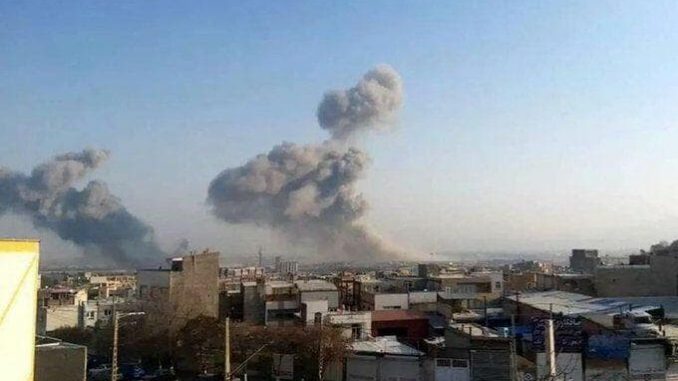
WASHINGTON, D.C. / TEHRAN — The conflict between the United States and Iran escalated dramatically as U.S. forces launched a third round of coordinated air and missile strikes targeting approximately 140 Iranian military and strategic sites, following what American officials described as an Iranian-backed attack on commercial shipping transiting the Strait of Hormuz.
The latest operation marks one of the largest U.S. military actions against Iran in recent history and signals Washington’s determination to keep one of the world’s most vital maritime trade routes open after repeated threats from Tehran.
Within hours of the strikes, Iran retaliated by launching missiles and drones toward military installations hosting U.S. and coalition forces in Kuwait and Jordan, raising fears that the conflict could spread across the Middle East.
Why the U.S. Launched Another Round of Strikes
According to U.S. officials, the latest military action was ordered after an attack on a commercial vessel in the Strait of Hormuz, a critical shipping lane through which roughly one-fifth of the world’s seaborne oil supply passes.
Washington accused Iran and its proxy forces of attempting to disrupt international shipping and threaten global energy security.
The third wave of strikes reportedly targeted:
- Islamic Revolutionary Guard Corps (IRGC) facilities
- Missile launch sites
- Air defense systems
- Drone infrastructure
- Weapons depots
- Military command-and-control centers
- Logistics hubs supporting regional proxy forces
American officials said the objective was to degrade Iran’s military capabilities while protecting freedom of navigation in international waters.
Hormuz Remains the World’s Most Dangerous Chokepoint
The Strait of Hormuz has long been viewed as one of the most strategically important waterways on Earth.
Nearly 20 percent of global oil exports move through the narrow passage linking the Persian Gulf with the Gulf of Oman and the Arabian Sea.
Any disruption to shipping through Hormuz has immediate consequences for global energy markets, international trade, and regional security.
The latest attack on commercial shipping has renewed concerns that the conflict could evolve beyond military targets and begin affecting civilian maritime traffic.
International Concern Grows
Governments across Europe, the Gulf, and Asia are closely monitoring developments.
Regional allies have placed their armed forces on heightened alert while diplomatic channels remain active in an effort to prevent a broader regional war.
Energy markets are also watching closely, as any prolonged disruption in the Strait of Hormuz could affect global oil supplies and increase fuel prices worldwide.
Conflict Continues to Escalate
The latest exchange represents a significant escalation in a conflict that has already seen multiple rounds of missile strikes, drone attacks, cyber operations, and retaliatory military actions.
With both Washington and Tehran signaling they are prepared to respond forcefully to future attacks, analysts warn that the risk of a wider regional conflict is increasing.
Despite continued diplomatic efforts by regional mediators, neither side has indicated a willingness to de-escalate in the immediate future, leaving the Middle East facing one of its most volatile security crises in years.
⚠️ Implications:
The third round of U.S. strikes against Iranian targets—and Iran’s subsequent retaliation against bases in Kuwait and Jordan—marks a significant escalation in the conflict, raising concerns that the confrontation is evolving beyond limited exchanges into a broader regional war. The latest developments carry major implications for military strategy, global energy markets, regional stability, and international diplomacy.
⚔️ 1. Risk of a Wider Regional Conflict
- The exchange demonstrates that both Washington and Tehran remain willing to respond militarily rather than de-escalate.
- Iran’s decision to strike U.S.-linked military facilities outside its own territory signals that neighboring countries could increasingly become part of the conflict.
- The involvement of multiple countries raises the possibility of a broader regional war if hostilities continue.
🔍 Implication: The Middle East faces an increased risk of prolonged military escalation involving additional state and non-state actors.
🚢 2. Global Energy Security Under Pressure
- The reported attack near the Strait of Hormuz highlights the vulnerability of one of the world’s most important maritime trade routes.
- Nearly one-fifth of global seaborne oil shipments pass through the waterway.
- Continued attacks on commercial shipping could disrupt energy supplies, increase insurance costs for vessels, and contribute to higher global oil prices.
🌍 Implication: Prolonged instability in the Strait of Hormuz could have economic consequences far beyond the Middle East, affecting global markets and consumers.
🛡️ 3. U.S. Military Presence Faces Greater Threats
- Iran’s retaliation against bases in Kuwait and Jordan demonstrates its willingness to target locations hosting U.S. and coalition forces.
- American military installations throughout the region may face heightened security risks as tensions continue.
⚠️ Implication: The United States and its regional partners may be compelled to reinforce force protection measures and expand air and missile defense capabilities.
🤝 4. Diplomatic Efforts Become More Challenging
- Each new exchange of military action makes it more difficult for mediators to encourage meaningful negotiations.
- Regional governments seeking to prevent further escalation now face a narrower window for diplomacy.
📢 Implication: Without sustained diplomatic engagement, the likelihood of additional military retaliation may continue to grow.
🌐 5. Growing International Concern
- Allies and major powers are closely monitoring the conflict due to its potential impact on international security and global commerce.
- The latest developments may prompt renewed discussions at international forums regarding maritime security, regional stability, and crisis management.
🏛️ Implication: The conflict is increasingly becoming an international concern, with implications extending beyond the immediate parties involved.
📈 6. Strategic Calculations on Both Sides
- The United States has signaled its willingness to respond decisively to attacks on international shipping and its forces.
- Iran continues to demonstrate that it retains the capability to retaliate through missiles, drones, and regional military assets despite sustained military pressure.
🧭 Implication: As both sides seek to deter one another without triggering a full-scale war, the risk of miscalculation remains high, making future incidents potentially more dangerous than those that preceded them.
💬 Overall Takeaway:
The third round of U.S. strikes against Iranian military targets, followed by Iran’s retaliation against bases in Kuwait and Jordan, marks a significant turning point in the ongoing confrontation between Washington and Tehran. What began as a series of limited military exchanges is increasingly taking on the characteristics of a broader regional conflict, with both sides demonstrating a willingness to respond forcefully to perceived acts of aggression.
Beyond the immediate military implications, the latest escalation highlights the strategic importance of the Strait of Hormuz and the vulnerability of global energy supply chains. Continued attacks on commercial shipping or military installations could have consequences that extend well beyond the Middle East, affecting international trade, energy markets, and the security calculations of governments around the world.
At the same time, the exchange underscores the shrinking space for diplomacy. As military operations intensify and rhetoric hardens, the risk of miscalculation grows, increasing the possibility that future incidents could draw additional regional actors into the conflict. Whether this latest escalation remains contained or develops into a wider regional war will depend largely on the decisions made by both Washington and Tehran in the days and weeks ahead.