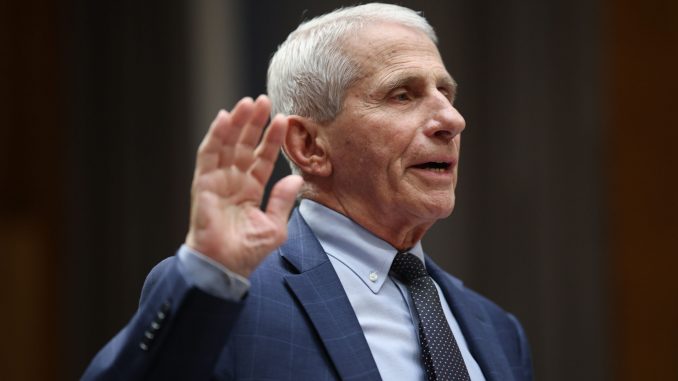
Former NIAID Director Anthony Fauci is sworn in prior to testimony before the Senate Homeland Security and Governmental Affairs Committee hearing on July 29, 2026 in Washington, DC. Fauci was expected to be questioned about his diary entries during his handling of the Covid-19 pandemic. (Photo by Kevin Dietsch/Getty Images)
Published July 29 , 2026
WASHINGTON, D.C. — Former White House Chief Medical Adviser Dr. Anthony Fauci invoked his Fifth Amendment right against self-incrimination during a Senate Homeland Security and Governmental Affairs Committee hearing on Wednesday, declining to answer questions related to the federal government’s COVID-19 response, pandemic-era decision-making, and funding for coronavirus research.
The hearing, chaired by Sen. Rand Paul (R-Ky.), examined longstanding Republican concerns regarding federal support for coronavirus research, the origins of COVID-19, and whether government officials were fully transparent with Congress during the pandemic. Before questioning began, Fauci announced that, on the advice of legal counsel, he would invoke the Fifth Amendment in response to questions that could expose him to criminal liability.
Republican lawmakers argued that Fauci’s refusal to testify prevented the committee from obtaining answers on issues they say remain unresolved. Fauci, meanwhile, maintained through his opening statement that he had been the subject of years of political attacks and legal threats, making it appropriate to exercise his constitutional rights.
Republicans Renew Scrutiny Over Pandemic Decisions
Republican senators questioned Fauci on matters including National Institutes of Health (NIH) funding, research conducted through international partners, public health guidance during the COVID-19 pandemic, and communications with federal agencies.
Sen. Rand Paul said the hearing was part of Congress’ responsibility to investigate the government’s handling of the pandemic and determine whether officials provided accurate information to lawmakers and the public. He argued that unanswered questions remain regarding federal oversight of research connected to coronaviruses.
Several Republicans contended that Fauci’s decision to invoke the Fifth Amendment would likely intensify public debate over government transparency and accountability.
Fauci Cites Legal Advice and Constitutional Rights
Fauci stated that his decision was based solely on legal advice and should not be interpreted as an admission of wrongdoing.
In his opening remarks, he said he had faced repeated accusations, threats of prosecution, and years of investigations related to his public service during the pandemic. His attorneys advised that responding to questions under those circumstances could create unnecessary legal risk.
Legal experts note that invoking the Fifth Amendment is a constitutional protection available to any witness and, by itself, does not establish guilt or innocence.
Democrats Criticize Hearing as Politically Motivated
Democratic members of the committee argued that the hearing largely revisited issues that have already been examined through previous congressional investigations and public reviews.
They defended Fauci’s decades of public service and said the hearing risked politicizing public health issues rather than focusing on future pandemic preparedness. Democratic lawmakers also emphasized that constitutional protections apply equally to all witnesses appearing before Congress.
Continuing Debate Over COVID-19 Accountability
The hearing reflects the continuing political divide over the origins of COVID-19, federal research funding, and the government’s response to the pandemic.
Conservative outlets including Breitbart and The Daily Signal framed Fauci’s invocation of the Fifth Amendment as a significant development that raises additional questions about pandemic-era decision-making. Those characterizations reflect the editorial perspectives of those publications and are not, by themselves, established findings of fact.
Supporters of Fauci argue that multiple investigations have not produced evidence establishing criminal wrongdoing by the former health official and caution against interpreting his constitutional decision as proof of misconduct.
Congressional Oversight Expected to Continue
Republican committee leaders have indicated that investigations into the government’s pandemic response and COVID-19 origins will continue, with additional hearings and document requests expected in the coming months.
The hearing marks another chapter in the years-long debate over accountability for one of the most consequential public health crises in modern history. While supporters and critics remain sharply divided, the political and legal scrutiny surrounding pandemic-era decisions appears far from over.
👥 Public / Political Reactions:
🏛️ Sen. Rand Paul and Republican Lawmakers
Sen. Rand Paul (R-Ky.) and Republican members of the Senate Homeland Security and Governmental Affairs Committee said the hearing was part of Congress’ responsibility to investigate the federal government’s handling of the COVID-19 pandemic.
- Republicans argued that Fauci’s decision to invoke the Fifth Amendment left important questions unanswered regarding federal funding for coronavirus research and pandemic-era decision-making.
- Sen. Paul said congressional oversight would continue and indicated the committee intends to pursue additional investigations and document requests.
- Several Republican lawmakers maintained that greater transparency is necessary to restore public trust in federal health agencies.
➡️ Position: Republicans argue the hearing is a necessary oversight effort to determine whether government officials were fully accountable for pandemic-related decisions.
⚖️ Dr. Anthony Fauci and His Legal Team
Dr. Anthony Fauci defended his decision to invoke the Fifth Amendment, stating that it was made solely on the advice of legal counsel.
- Fauci said years of political attacks, investigations, and threats of prosecution created significant legal risks.
- His attorneys emphasized that invoking the Fifth Amendment is a constitutional protection and should not be interpreted as an admission of guilt.
- Fauci maintained that he has consistently denied allegations of misconduct during his government service.
➡️ Position: Fauci and his legal team argue that exercising constitutional rights protects against potential legal exposure and does not imply wrongdoing.
🏛️ Democratic Lawmakers
Democratic members of the committee criticized the hearing as politically motivated and defended Fauci’s decades of public service.
- Democrats argued that previous investigations have not established criminal wrongdoing by Fauci.
- They warned against politicizing scientific research and public health decisions.
- Several lawmakers stressed that constitutional protections apply equally to every witness appearing before Congress.
➡️ Position: Democrats contend the hearing revisited previously examined issues and should not be used to imply guilt without evidence.
📰 Media and Political Commentary
Coverage of the hearing reflected deep political divisions.
- Conservative outlets including Breitbart and The Daily Signal described Fauci’s invocation of the Fifth Amendment as a significant development that raises additional questions about pandemic accountability. These reflect the editorial opinions of those outlets rather than established findings of fact.
- Other national news organizations emphasized that invoking the Fifth Amendment is a constitutional legal right and reported the hearing within the broader context of continuing political disputes over COVID-19.
➡️ Position: Media coverage remains sharply divided, reflecting broader disagreements over pandemic oversight and accountability.
👥 Public Response
Public reaction was highly polarized across social media and political communities.
- Supporters of the Senate investigation argued that Americans deserve additional answers regarding the government’s pandemic response.
- Fauci’s supporters said he was appropriately exercising a constitutional right after years of political scrutiny.
- Public discussion continues to center on government transparency, scientific accountability, and the long-term legacy of the nation’s COVID-19 response.
➡️ Position: Public opinion remains deeply divided between calls for continued investigations and concerns over the politicization of public health.
⚠️ Resulting Effects:
Dr. Anthony Fauci’s decision to invoke the Fifth Amendment before the Senate Homeland Security and Governmental Affairs Committee has intensified political debate over the federal government’s handling of the COVID-19 pandemic. While the hearing did not produce new testimony from Fauci, it has renewed discussions about congressional oversight, public trust, and accountability.
1. Congressional Oversight Intensified
The hearing has renewed efforts by congressional Republicans to examine pandemic-era decisions.
🏛️ Republican lawmakers said Fauci’s refusal to answer questions reinforces the need for continued investigations into COVID-19 origins and federal research funding.
📄 Committee leaders indicated they will pursue additional hearings, witness testimony, and document requests.
🔍 Lawmakers said oversight efforts will continue regardless of Fauci’s decision to invoke the Fifth Amendment.
➡️ Result: Congressional investigations into the government’s pandemic response are expected to continue.
2. Political Divisions Deepened
The hearing further highlighted the sharp political divide over COVID-19 accountability.
🗳️ Republicans argued that Americans deserve greater transparency regarding pandemic-related decisions.
⚖️ Democrats maintained that the hearing was politically motivated and emphasized Fauci’s constitutional right to remain silent.
📢 The proceedings reinforced long-standing disagreements over how the pandemic response should be evaluated.
➡️ Result: The hearing widened existing partisan divisions over pandemic oversight.
3. Public Debate Over Government Transparency Expanded
Fauci’s invocation of the Fifth Amendment generated widespread public discussion.
👥 Supporters of the investigation said government officials should fully answer questions about pandemic policies.
📢 Fauci’s supporters argued that exercising the Fifth Amendment is a constitutional protection and should not be viewed as evidence of wrongdoing.
💬 Public debate has centered on balancing legal rights with demands for government accountability.
➡️ Result: The hearing renewed national discussion about transparency, accountability, and constitutional protections.
4. Media Coverage Became More Polarized
News organizations and political commentators offered sharply different interpretations of the hearing.
📰 Conservative outlets described Fauci’s refusal to testify as raising further questions about pandemic-era decision-making.
📺 Other news organizations emphasized that invoking the Fifth Amendment is a constitutional legal right and reported the event within the broader context of ongoing investigations.
📣 Coverage reflected the continuing political divide surrounding the pandemic.
➡️ Result: Media attention further amplified competing narratives over Fauci’s legacy and the government’s COVID-19 response.
5. Continued Focus on COVID-19 Origins
The hearing renewed attention on unresolved questions surrounding the origins of COVID-19.
🧬 Republican lawmakers reiterated concerns regarding federal funding for coronavirus research.
📑 Committee members indicated they intend to continue reviewing pandemic-related records and government communications.
🔬 Debate over the origins of the virus remains a major focus of congressional oversight.
➡️ Result: Investigations into pandemic-related research and government decision-making are expected to remain active.
6. Constitutional Issues Moved to the Forefront
Fauci’s decision highlighted broader legal questions surrounding congressional testimony.
⚖️ Legal experts noted that invoking the Fifth Amendment is a constitutional right available to any witness facing potential legal exposure.
📚 The hearing prompted renewed discussion about the legal protections afforded to witnesses appearing before Congress.
🏛️ Constitutional rights became a central aspect of the public conversation surrounding the hearing.
➡️ Result: The proceedings underscored the intersection of congressional oversight and constitutional protections.
7. Future Investigations Expected
Republican lawmakers have indicated that the hearing is unlikely to be the final chapter in congressional scrutiny of the pandemic response.
📋 Additional hearings, subpoenas, and document requests may follow as investigations continue.
🏛️ Congressional committees are expected to pursue further testimony from current and former government officials.
📅 The broader debate over COVID-19 accountability is likely to remain a significant issue in Washington.
➡️ Result: The hearing marks another stage in an ongoing investigation that is expected to continue in the months ahead.
🔮 Future Outlook:
The Senate hearing is unlikely to end congressional scrutiny of the federal government’s COVID-19 response. Instead, Dr. Anthony Fauci’s invocation of the Fifth Amendment is expected to fuel continued political, legal, and public debate over pandemic-era decisions and government accountability.
1. Congressional Investigations Are Expected to Continue
Republican lawmakers have indicated that the hearing marks another step in their broader oversight efforts.
🏛️ Committee leaders are expected to pursue additional hearings, witness testimony, and document requests.
📄 Investigators will likely continue examining federal research funding, pandemic policies, and government communications.
➡️ Outlook: Congressional oversight of the COVID-19 response is expected to remain active.
2. Legal Issues May Remain Under Review
Fauci’s decision to invoke the Fifth Amendment may not end legal scrutiny surrounding pandemic-related investigations.
⚖️ Lawmakers have suggested they will continue reviewing evidence and consulting legal experts as investigations progress.
📜 Any future legal developments will depend on evidence gathered through ongoing congressional and other official inquiries.
➡️ Outlook: Legal questions surrounding pandemic-era decision-making may continue to receive attention.
3. Political Divisions Are Likely to Persist
The hearing has reinforced long-standing disagreements over the government’s handling of COVID-19.
🗳️ Republicans are expected to continue calling for greater accountability and transparency.
📢 Democrats are likely to maintain that previous investigations have not established criminal wrongdoing and caution against politicizing public health.
➡️ Outlook: The pandemic response is expected to remain a politically divisive issue in Washington.
4. Public Trust in Government Health Agencies Will Continue to Be Debated
The hearing has renewed discussion about confidence in federal public health institutions.
👥 Supporters of continued investigations argue that greater transparency is necessary to rebuild public trust.
🏥 Others contend that prolonged political conflict surrounding health officials could further undermine confidence in scientific institutions.
➡️ Outlook: Public trust in government health agencies will likely remain an important topic of national debate.
5. COVID-19 Origins Will Remain a Focus
Questions surrounding the origins of COVID-19 and federal research funding are expected to remain under congressional review.
🧬 Lawmakers have indicated they will continue examining records related to coronavirus research and international collaborations.
📑 Additional reports or testimony could shape future discussions regarding pandemic preparedness and oversight.
➡️ Outlook: Debate over COVID-19 origins and related research is unlikely to end soon.
6. Constitutional Issues Could Influence Future Hearings
Fauci’s invocation of the Fifth Amendment has highlighted constitutional protections available to witnesses appearing before Congress.
⚖️ Future witnesses may also rely on legal protections if they believe testimony could expose them to legal liability.
📚 Lawmakers and legal experts may continue debating the balance between congressional oversight and constitutional rights.
➡️ Outlook: Constitutional questions are likely to remain part of future congressional investigations.
7. The Broader Pandemic Legacy Will Continue to Shape Public Policy
The hearing underscores that the political and policy consequences of the COVID-19 pandemic remain unresolved.
📋 Policymakers are expected to continue evaluating lessons learned from the pandemic to improve preparedness for future public health emergencies.
🤝 Future reforms involving public health agencies, research oversight, and emergency response policies may be influenced by the findings of ongoing investigations.
➡️ Outlook: The long-term legacy of the pandemic will continue to shape public policy, congressional oversight, and public debate for years to come.
🧩 Bottom Line:
Dr. Anthony Fauci’s decision to invoke the Fifth Amendment before the Senate Homeland Security and Governmental Affairs Committee has become one of the most closely watched developments in the continuing debate over the federal government’s response to the COVID-19 pandemic. Supporters of the Senate investigation argue that additional oversight is necessary to address unanswered questions surrounding pandemic-era decisions, while Fauci’s defenders maintain that invoking the Fifth Amendment is a constitutional legal right and should not be interpreted as evidence of wrongdoing.
🏛️ Supporters of the investigation view the hearing as an important step toward increasing government transparency and accountability, arguing that Congress should continue examining federal research funding, COVID-19 policies, and decision-making during the pandemic.
⚖️ Fauci’s supporters, including many Democratic lawmakers and public health advocates, argue that his decision reflects sound legal advice amid years of political scrutiny. They emphasize that exercising the Fifth Amendment is a constitutional protection afforded to every American.
📄 Congressional oversight is expected to continue. Republican lawmakers have indicated that additional hearings, witness testimony, and document reviews are likely as investigations into the government’s pandemic response move forward.
🌎 The hearing could have broader implications. Its outcome may influence future congressional oversight of federal agencies, public health policy, scientific research, and the balance between government accountability and constitutional protections.
➡️ Bottom Line: The hearing has intensified the national debate over transparency, accountability, and the legacy of the COVID-19 pandemic. Whether future investigations uncover new evidence or reinforce existing conclusions, the issue is expected to remain a significant political and public policy debate for the foreseeable future.
SOURCES: DAILY SIGNAL – Fauci Invokes 5th Amendment Before Senate Committee
BREITBART NEWS – Watch Live: Anthony Fauci Testifies Before the Senate