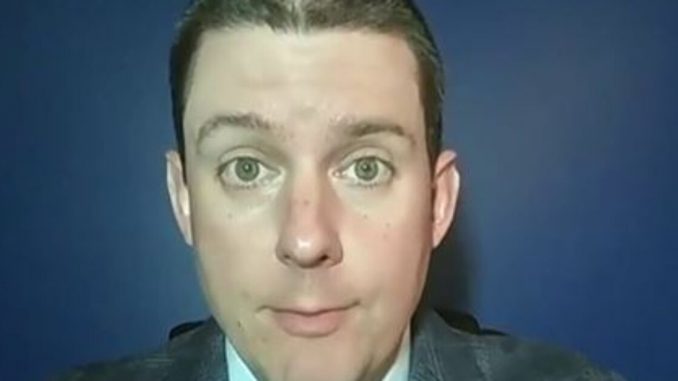
WaPo hack Don LaMothe tips off America’s enemies to President Trump emergency travel arrangements.
Published August 12, 2026
WASHINGTON — Imagine the president of the United States stepping aboard Air Force One in front of cameras, reporters watching from the tarmac and the world assuming they know exactly where he is headed.
But then, behind the scenes, the plan changes.
According to reporting by The Washington Post, President Donald Trump was secretly removed from Air Force One after arriving in Ankara, Turkey, and transferred to a smaller military aircraft in an elaborate security operation prompted by what officials described as a credible Iranian assassination threat.
The extraordinary maneuver reportedly involved Trump and several aides being moved from the presidential aircraft inside an airport catering truck before he boarded a U.S. Air Force C-32A. The larger Air Force One aircraft then continued toward Britain with journalists and other personnel aboard, effectively serving as a decoy. Reuters independently reported the details of the Post’s account. 0
The Associated Press also reported on the operation, while noting that it had not independently confirmed the Washington Post’s original account at the time of its initial report. AP said the White House did not directly confirm the details, although officials did not deny that extraordinary security measures had been taken. 1
The reported threat came during a period of heightened tensions involving Iran.
Trump had attended the NATO summit in Ankara before preparing to leave Turkey. He had arrived aboard a newly renovated aircraft provided by Qatar, but announced that he would instead travel part of the way home aboard an older Air Force One aircraft.
Publicly, the explanation was that the older aircraft would be used “for old time’s sake” and that the newer plane would stop at RAF Mildenhall so U.S. troops could inspect it.
Behind the scenes, however, the security plan was reportedly very different.
According to Reuters, Trump boarded the older Air Force One in front of cameras and was then secretly transported to the smaller C-32A using an airport catering truck. Reporters who believed they were traveling with Trump were instructed to keep their window shades closed during the flight. 2
The operation was designed to conceal Trump’s actual location.
The C-32A carrying Trump flew to Britain, while the larger presidential aircraft followed the expected route. After reaching Britain, Trump was photographed switching aircraft at RAF Mildenhall.
The unusual operation has raised questions about just how seriously U.S. security officials regarded the reported threat.
The White House has said that Trump faces threats from numerous enemies and that officials use every available tool to protect him. The Secret Service has declined to provide details about the reported operation. 3
The episode also highlights the complicated security environment surrounding presidential travel.
A president’s location is normally protected for security reasons, particularly when traveling through areas affected by military conflict or heightened tensions. But the Turkey operation went considerably further by apparently allowing a decoy aircraft to depart with members of the presidential traveling operation while Trump traveled separately.
The Associated Press described the arrangement as unusual compared with previous secret presidential journeys. Historical examples include President Bill Clinton using a decoy aircraft during a 2000 trip to Pakistan and President George W. Bush making an undisclosed trip to Iraq in 2003.
The difference, according to AP’s reporting, is that Trump’s whereabouts remained concealed even after the immediate danger had passed.
That has prompted a separate debate over presidential security and transparency.
Supporters of the operation argue that protecting the president must take priority when intelligence indicates a credible threat. If security officials believe an adversary could track the president’s aircraft, deliberately creating uncertainty about his location could provide an important layer of protection.
Critics, meanwhile, have questioned the implications of separating the president from the traveling press pool and keeping his whereabouts concealed for an extended period. AP reported that some lawmakers have called for more information about the circumstances surrounding the operation. 5
For Trump, however, the episode underscores the reality of traveling while facing serious threats.
The reported operation was not simply a change of aircraft. It was a carefully coordinated deception involving multiple aircraft, airport personnel, security officials and members of the presidential entourage.
The most striking detail may be the simplest: while the world believed the president was aboard Air Force One, he was already somewhere else.
And while the full details of the intelligence that triggered the operation remain classified, the fact that U.S. officials were willing to undertake such an elaborate maneuver illustrates how seriously the security apparatus was treating the potential threat.
The episode also serves as a reminder that presidential travel is rarely as straightforward as it appears on television.
What looked like a routine departure from Turkey reportedly became a covert evacuation designed to keep the president’s actual location hidden from a potential adversary.
For a president facing threats from Iran and other hostile actors, the extraordinary deception may have been the price of keeping the commander in chief alive and out of an adversary’s sights.
WATCH: Trump’s Secret Flight From Turkey
The video can be used as accompanying material for the report, but the reported details of the flight should be attributed to the Washington Post and corroborating coverage from Reuters and AP rather than presented as independently established by the Rumble clip.
The bottom line is clear: Trump’s departure from Turkey was reportedly far more complicated than the public was initially led to believe. An aircraft presented as the president’s flight served as a decoy while Trump was secretly transferred to another military jet amid a reported Iranian threat.
The operation has now become public, raising a difficult question for Washington: how much secrecy is justified when protecting the president, and where should the line be drawn between presidential security and public transparency?
⚠️ Implications:
- Trump’s security protocols could become even more restrictive. The reported use of a decoy aircraft and a concealed transfer shows how far U.S. security officials may go to prevent hostile actors from tracking the president.
- Iran-related threats could have consequences beyond the battlefield. If the reported assassination threat is confirmed, it demonstrates that tensions with Tehran could directly affect presidential movements, diplomatic travel and international security arrangements.
- Presidential travel may become harder to predict. Future overseas trips could involve last-minute aircraft changes, undisclosed routes and additional deception intended to prevent adversaries from identifying Trump’s exact location.
- The episode could intensify scrutiny of Iran. A reported threat against a sitting U.S. president would likely increase pressure on American intelligence and national-security agencies to monitor Iranian networks and potential retaliation plans.
- The press-security relationship could face new tensions. Keeping journalists aboard a different aircraft while concealing the president’s actual location raises questions about how much information the White House should provide during a legitimate security operation.
- Allies may reassess presidential security arrangements. Countries hosting Trump or other senior U.S. officials could face greater security requirements, particularly when intelligence indicates a potential threat.
- The psychological impact could be significant. The revelation that a president’s movements reportedly required an elaborate deception could reinforce public perceptions that the threat environment surrounding U.S. leadership has become increasingly serious.
- The biggest unanswered question is the intelligence itself. The precise nature, credibility and source of the reported Iranian threat remain unclear publicly. Until those details are disclosed, the security operation can be assessed, but the underlying threat should not be treated as independently proven.
Overall, the episode demonstrates how a reported threat against the president can transform an apparently routine international departure into a highly coordinated security operation — and potentially reshape how future presidential travel is conducted.
💬 Overall Takeaway:
The reported operation surrounding President Donald Trump’s departure from Turkey raises serious questions that go beyond presidential security. If the details are accurate, the fact that information about a covert security measure was publicly reported is deeply troubling. When a president is reportedly facing a credible threat, revealing details about how his movements were concealed can potentially provide useful information to anyone seeking to harm him.
What is particularly alarming is the judgment involved in publishing sensitive operational details. Who, in their right mind, would knowingly disclose information that could potentially endanger a person’s life — especially the life of a sitting U.S. president? Responsible journalism has an obligation to inform the public, but that responsibility should also be weighed against the potential consequences of revealing information that could compromise someone’s security.
This raises an uncomfortable question about the limits of press freedom. Freedom of speech and freedom of the press are fundamental protections, but they do not automatically make every disclosure responsible or immune from scrutiny. There is a significant difference between reporting that a president faced a security threat and publishing operational details that could help an adversary understand how presidential protection was carried out.
That does not mean journalists should automatically be imprisoned for publishing controversial or sensitive information. Criminal punishment requires an actual legal basis, and legitimate journalism is protected under the First Amendment. But the public is fully justified in asking whether the publication of highly sensitive security information crossed an ethical line, particularly if the information could reasonably put someone’s life at risk.
The greater concern is the precedent. If security officials must constantly assume that sensitive protective measures could become public, presidential movements may become more predictable, security plans may become more complicated, and the people responsible for protecting the president may have fewer options during a genuine emergency.
In my view, the most important issue is not whether the public has a right to know that Trump faced a reported threat. The public should know. The more serious question is whether the public needed to know the specific mechanics of how his protection was carried out.
There is a difference between transparency and unnecessary exposure.
If reporting on a security operation provides information that could help protect the public, that is one thing. If it reveals information that could potentially help someone locate, target or harm the president, the consequences deserve much more serious consideration.
The reported story should therefore prompt a broader debate about where responsible journalism ends and reckless disclosure begins. Freedom of the press is essential to a free society, but with that freedom comes responsibility — especially when the information being published concerns the physical safety of the president of the United States.
SOURCES: THE GATEWAY PUNDIT – WaPo Hacks Put Trump’s Life in Danger – Tip Off Iran to His Secret Travel Changes for the Next Time They Want to Kill Him
THE GATEWAY PUNDIT – LEAK: Trump Took Secret Flight from Turkey After He Was Quietly Moved from Air Force One to Another Plane by Jumping into Catering Truck Amid Iranian Threat (VIDEO)
AP NEWS – Trump used elaborate ruse o fly out of Turkey following summit because of Iran threat