Reported by:

Cherry Meigh Timbol
News Content Editor
Published November 22, 2026
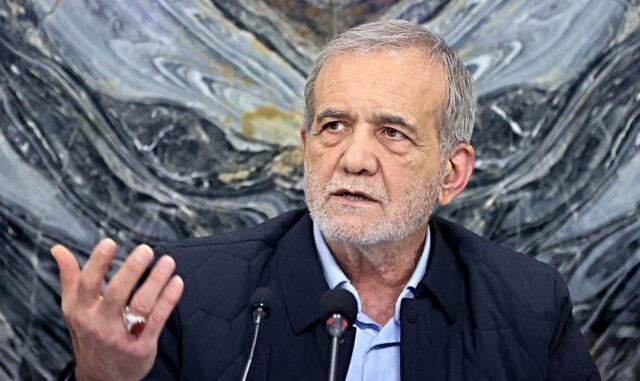
Tehran, Iran — Iranian President Masoud Pezeshkian has acknowledged that the country’s economic confrontation with the United States is proving more difficult than a military conflict involving missile strikes, as President Donald Trump’s administration intensifies sanctions and restrictions targeting Iran’s oil exports and financial networks.
Speaking at a capital markets conference in Tehran on Saturday, November 21, Pezeshkian described the situation as a “silent war” that presents serious challenges for Iran’s economy and business sector.
“We are engaged in a silent war that is far more difficult than one in which missiles are launched and destruction is caused,” Pezeshkian said, according to remarks reported by Iran’s state-run news agency IRNA.
He added that the economic confrontation required sustained efforts from businesses, investors and other economic participants.
US intensifies economic pressure
The Trump administration has expanded its economic pressure campaign against Tehran through additional sanctions, restrictions on Iranian oil shipments and efforts to disrupt financial networks used to facilitate international trade.
Washington says the measures are intended to restrict the Iranian government’s access to revenue and increase pressure on its leadership to make concessions.
On November 20, the US Treasury Department announced sanctions against four Iranian individuals accused of helping manage proceeds from Iranian oil sales and facilitating efforts to evade existing restrictions.
The measures form part of a broader US strategy to limit Tehran’s ability to generate revenue through international petroleum transactions.
US officials have defended the campaign, arguing that restrictions on oil exports and financial transactions are weakening Iran’s economic position.
Energy shortages and inflation add to pressure
Iran is also confronting domestic economic difficulties, including inflation, energy shortages and concerns about industrial production.
Pezeshkian warned that shortages of natural gas and electricity could affect factories, employment and economic activity as the country approaches winter.
He urged government officials to prioritize electricity supplies for industrial facilities to prevent further disruptions to production.
The president’s remarks highlight the challenges facing an economy already affected by years of international sanctions, declining purchasing power and restrictions on access to foreign markets.
A September Reuters report, citing three senior Iranian sources, described growing difficulties in maintaining oil exports and accessing international financial networks amid Washington’s intensified restrictions.
The report also highlighted the impact of declining trade and increasing costs associated with sanctions evasion.
Washington favors sustained economic pressure
The Trump administration has increasingly emphasized economic measures as an alternative to launching another major military offensive against Iran.
US Secretary of State Marco Rubio has argued that the economic pressure being imposed on Tehran is substantial and continues to accumulate.
Treasury Secretary Scott Bessent has also defended the administration’s campaign, claiming that restrictions on Iranian oil shipments are limiting the government’s ability to generate revenue.
However, the effectiveness of economic pressure in securing political concessions remains uncertain.
Iran has maintained economic relationships with countries willing to continue trading with it, while its government has repeatedly rejected US pressure that it considers an infringement on national sovereignty.
Economic consequences extend beyond the government
The growing confrontation also raises concerns about the consequences for ordinary Iranians.
Restrictions on oil revenue, international financial transactions and imports can affect government finances, business operations, employment and the availability of goods.
Although Washington maintains that its campaign is directed at the Iranian government, broader economic restrictions can have consequences for the civilian population.
Meanwhile, Tehran faces the challenge of maintaining domestic production, addressing energy shortages and preventing further deterioration in living conditions.
Pezeshkian’s latest remarks offer a public acknowledgment of the difficulties confronting Iran’s economy. However, they do not necessarily indicate that Tehran is prepared to accept Washington’s demands.
As the United States continues its economic pressure campaign, the central question remains whether financial restrictions will persuade Iran to negotiate or deepen an already prolonged confrontation between the two countries.