Published March 10, 2025
“The U.S. will take them if you won’t,” Trump said in an earlier plea to the Australian prime minister.
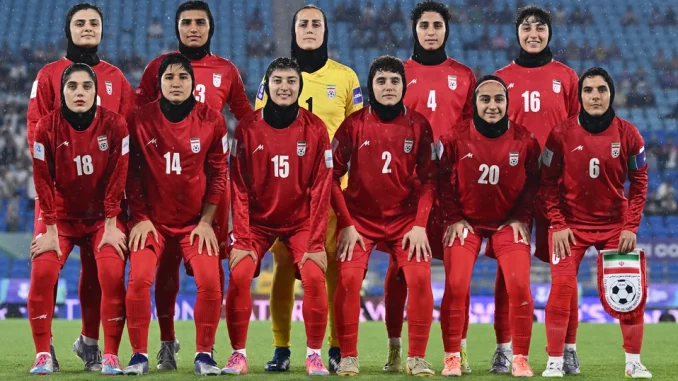
U.S. President Donald Trump issued a high‑profile appeal on Monday urging the Australian government to grant asylum to members of Iran’s national women’s soccer team, who have become the center of an international humanitarian and political controversy. Trump warned that the players could face grave danger — including potential execution — if forced to return to Iran following their participation in the AFC Women’s Asian Cup hosted in Australia.
In a Truth Social post, Trump wrote that Australia would be committing a “terrible humanitarian mistake” if it allowed the Iranian squad to return home, where they “will most likely be killed.” He told Australian Prime Minister Anthony Albanese to “give ASYLUM,” and added that “the U.S. will take them if you won’t.”
What Sparked the Crisis
The asylum appeal comes after several members of the Iranian team remained silent during their national anthem before a group‑stage match against South Korea. That act — interpreted by many observers as a protest or gesture of defiance — led to condemnation by Iranian state media, which branded the players “wartime traitors,” amplifying fears that they could face retaliation upon their return.
The team was eliminated from the tournament after a 2–0 loss to the Philippines on Sunday, and traditionally teams depart soon after group‑stage exits. But rising safety concerns have complicated the situation.
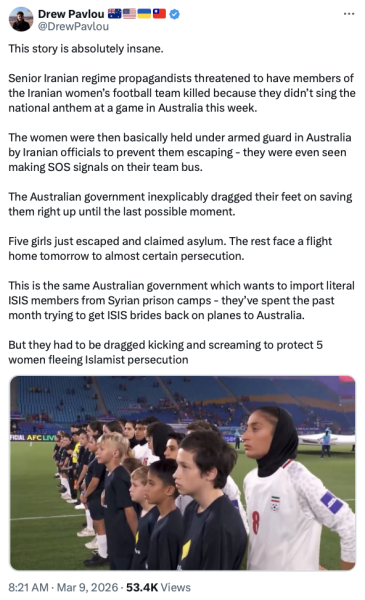
The team recently shared SOS signs as they boarded the team’s bus.
Players Flee and Seek Protection
According to reports, five members of the Iranian squad — Fatemeh Pasandideh, Zahra Ghanbari, Zahra Sarbali, Atefeh Ramazanzadeh, and Mona Hamoudi — fled their training camp and are now in protective custody with Australian authorities, including the Australian Federal Police, amid fears of repercussions from Iranian officials.
Trump later acknowledged on Truth Social that he had spoken with Australia’s Albanese and said those five have been “taken care of.” He also indicated that some players nonetheless feel pressure to return because of threats toward their family members back in Iran.
The Iranian women’s football team were labeled “war-time traitors” by the regime’s state TV after refusing to sing its anthem at the Asian women’s cup in Australia
The Australian government was urged to allow them temporary refuge due to the grave threat of returning to Iran. It… pic.twitter.com/KzpLvHMZuw
— Elica Le Bon الیکا ل بن (@elicalebon) March 8, 2026
International and Political Dimensions
Reza Pahlavi, the exiled son of Iran’s last monarch, also called for Australia to protect the team, saying the players faced intense pressure and threats. Additionally, the global players’ union FIFPRO expressed serious concern for the welfare of the women athletes.
Trump’s offer of asylum — should Australia not follow through — highlights a rare moment of alignment between his camp and other voices in the international community advocating for direct protection of Iranian women under threat. Yet opponents have noted what they see as inconsistency with Trump’s previous immigration policies on Iranian asylum seekers and visa restrictions.
Australia is not helping, so President Trump has offered them asylum.
BREAKING:
President Trump has announced he will take in the entire Iranian women’s football team and grant them refuge.
They are currently in Australia and the regime in Iran wants them dead for standing up to it.
THANK YOU, MR PRESIDENT.
Trump first condemned Australia and said he would take care of it.
Australia is making a terrible humanitarian mistake by allowing the Iran National Woman’s Soccer team to be forced back to Iran, where they will most likely be killed. Don’t do it, Mr. Prime Minister, give ASYLUM. The U.S. will take them if you won’t. Thank you for your attention to this matter. President DONALD J. TRUMP
Here is President Trump’s latest message – Australia is on it:
I just spoke to Prime Minister Anthony Albanese, of Australia, concerning the Iranian National Women’s Soccer Team. He’s on it! Five have already been taken care of, and the rest are on their way. Some, however, feel they must go back because they are worried about the safety of their families, including threats to those family members if they don’t return. In any event, the Prime Minister is doing a very good job having to do with this rather delicate situation. God bless Australia! President DONALD J. TRUMP
 Public / Political Reactions
1. Official Political Responses
U.S. Government & Trump
-
President Donald Trump used social media to publicly pressure Australia, calling its decision “a terrible humanitarian mistake” if the team were sent back to Iran and urging asylum — even offering that “the U.S. will take them if you won’t.” He later softened his message by praising Australian Prime Minister Anthony Albanese for handling the situation and noting that five players were “taken care of.”
Australian Officials
-
Australia’s government took swift action to protect some players, with Home Affairs Minister Tony Burke flying to Queensland amid the crisis. Officials said they cannot comment on individual asylum decisions due to privacy rules, but they acknowledged the asylum claims and the involvement of the Australian Federal Police.
Iranian Leadership & State Media
-
Iranian state media sharply criticized the players for refusing to sing the national anthem, labeling them “wartime traitors,” contributing to fears about their safety if forced to return home.
2. International Human Rights & Advocacy Groups
Global Players’ Union (FIFPRO)
-
The international footballers’ union expressed “serious concern” about the team’s welfare, highlighting the potential danger players could face upon returning to Iran and pushing for protective measures.
Human Rights Campaigners
-
Human rights advocates have warned that some players and their families may have already been threatened and face persecution if sent back. Calls have grown for safe asylum pathways and international legal protection.
3. Public Opinion — Supportive and Critical Voices
Support for the Team (Pro‑Asylum)
-
Grassroots support has risen, with protestors chanting “free our girls” and online campaigns urging Australia to protect the players and offer asylum. Iranian supporters and diaspora communities have backed the asylum calls, seeing the team as symbols of resistance and courage.
Criticism of Trump’s Political Motives
-
Some public commentary criticized Trump’s response as opportunistic or inconsistent with broader immigration policy, suggesting the offer was more political posturing than genuine humanitarian leadership. Others said that if Trump truly cared, the U.S. itself should directly offer asylum rather than publicly pressure Australia.
4. Mixed or Nuanced Reactions
-
Some reactions blended support for the players with skepticism about political leaders’ intentions — agreeing that the women should be protected but questioning the motives or effectiveness of Trump’s or Australia’s approaches. Others debated whether asylum decisions should be made in Australia first, given the team was physically there, rather than involving international relocation.
 Resulting Effects
1. Immediate Safety for Players
-
Five members of Iran’s women’s national soccer team were granted protection in Australia, ensuring they avoid immediate threats of persecution from Iranian authorities.
-
The players now have time and security to seek permanent asylum or relocation options.
2. Diplomatic and Political Impact
-
Trump’s public statements increased international attention and pressure on Australia to act, creating a rare diplomatic moment where U.S. influence was explicitly linked to humanitarian action.
-
The move may affect Australia’s future handling of politically sensitive asylum cases, as global scrutiny is heightened.
3. Human Rights and Advocacy Momentum
-
International human rights organizations, players’ unions, and activists have used the event to highlight ongoing repression of women in Iran and the risks faced by athletes.
-
The case may set a precedent for protective interventions for athletes who face political or social reprisals at home.
4. Global Awareness and Media Attention
-
The story went viral across social media, news outlets, and sports platforms, amplifying the players’ situation as a symbol of resistance and courage for Iranian women.
-
The international focus puts additional pressure on Iran regarding human rights practices, potentially influencing internal and diplomatic narratives.
5. Sports and Organizational Implications
-
FIFA and other football governing bodies are now under scrutiny to ensure athlete protection during international tournaments, prompting potential policy reviews.
-
The incident may influence how future international sporting events manage political risks and safeguard participants.
6. Broader Sociopolitical Effects
-
The case spotlights the struggle for women’s rights in authoritarian contexts, inspiring activism both within and outside Iran.
-
Trump’s involvement and public messaging may polarize opinions internationally, with supporters praising humanitarian leadership and critics questioning political motivations.
 Future Outlook
1. Ongoing Protection and Asylum Decisions
-
The immediate future for the Iranian players will involve securing long-term asylum or relocation options, whether in Australia, the U.S., or another safe country.
-
Authorities will likely balance legal immigration processes with humanitarian considerations, especially given the international spotlight on the case.
2. Diplomatic Repercussions
-
Trump’s public pressure may influence how Australia and other nations respond to similar crises in the future, potentially encouraging quicker humanitarian intervention in politically sensitive cases.
-
The situation may also strain Iran–Australia relations further, with Tehran likely condemning asylum grants and criticizing foreign interference in domestic matters.
3. Implications for Sports Governance
-
FIFA and other international sports organizations may adopt more robust protocols to safeguard athletes who face political risks or persecution at home.
-
Future tournaments could include stronger oversight to ensure players’ safety, especially for women or other vulnerable groups from restrictive countries.
4. Social and Political Impact in Iran
-
The story may inspire other athletes and citizens within Iran to express dissent more cautiously or seek asylum when facing political repression.
-
It could also accelerate conversations around women’s rights, personal freedoms, and government accountability in Iran.
5. Broader Humanitarian Precedent
-
This case sets an international precedent for humanitarian intervention where athletes or other high-profile individuals are at risk due to political or social oppression.
-
Nations may increasingly face public and political pressure to act in similar crises, especially when global media coverage amplifies individual cases.
 Bottom Line:
The situation surrounding Iran’s women’s national soccer team highlights the profound intersection of sports, human rights, and international diplomacy. President Donald Trump’s call for Australia to grant asylum brought global attention to the real dangers faced by athletes under authoritarian regimes and sparked debates on humanitarian responsibility. The immediate protection of the players, coupled with international scrutiny, underscores the importance of proactive measures to safeguard vulnerable individuals. Looking ahead, this episode may influence future asylum practices, sports governance policies, and international advocacy for women’s rights, while serving as a reminder that acts of personal courage can catalyze global awareness and action. Ultimately, the case reinforces the idea that humanitarian considerations must transcend politics, borders, and national allegiances.