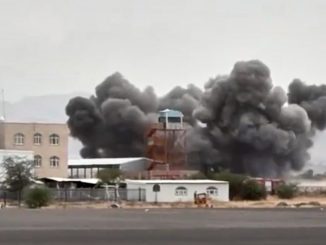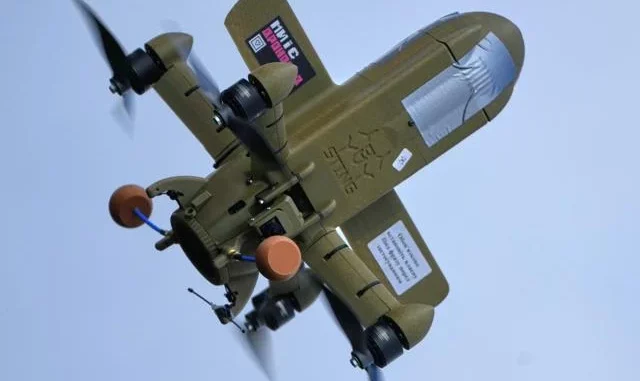
Ukrainian military personnel have shot down Iranian-designed Shahed drones in multiple Middle Eastern countries during the Iran war, according to Ukraine President Volodymyr Zelenskyy. (AP Photo/Efrem Lukatsky, File)
Published April 10, 2026
Ukrainian President Volodymyr Zelenskyy has claimed that Ukrainian military personnel have participated in shooting down Iranian-designed Shahed drones in multiple Middle Eastern countries, marking what would be a significant expansion of Ukraine’s counter-drone operations beyond its own war with Russia.
The statement has drawn attention internationally because it suggests Ukraine’s battlefield experience is increasingly being applied in other conflict environments where Iranian-made drone technology is present.
Experience from the Russia-Ukraine War Becomes a Global Export
Ukraine has spent years defending itself against repeated waves of Shahed drones launched by Russia. These drones—designed in Iran but widely used in the Ukraine war—have been deployed to strike energy infrastructure, military sites, and civilian areas.
Because of this sustained exposure, Ukraine has developed:
- Advanced drone detection techniques
- Electronic warfare systems to jam or disrupt UAVs
- Rapid-response interceptor drone tactics
- Mobile air defense strategies adapted for low-cost drone threats
Zelenskyy’s remarks suggest that this experience is now being shared with partner countries facing similar threats in the Middle East.
Claims of Operations in Multiple Middle Eastern Countries
According to Zelenskyy, Ukrainian personnel have helped shoot down Shahed drones in multiple Middle Eastern countries, although specific locations were not publicly disclosed.
This lack of detail has raised questions about:
- The scope of Ukrainian involvement abroad
- Whether operations were advisory, technical, or active interception support
- The level of coordination with local governments
At this stage, independent verification of exact locations has not been publicly confirmed, and details remain limited.
Shahed Drones at the Center of Regional Security Concerns
The Shahed drone platform, widely associated with Iran, has become one of the most closely watched weapons systems in modern asymmetric warfare.
Key characteristics include:
- Low production cost compared to traditional missiles
- Long-range strike capability
- Ability to overwhelm air defenses in large numbers
- Use in both military and infrastructure targeting
These drones have been used extensively in the Russia-Ukraine war and have also appeared in various Middle Eastern security incidents, raising concerns among regional and Western defense analysts.
Ukraine Positioning Itself as a Counter-Drone Partner
Zelenskyy has increasingly framed Ukraine not only as a country defending itself in war, but also as a source of modern battlefield expertise.
Reports and statements suggest Ukraine has provided or shared knowledge in:
- Drone interception systems
- Electronic warfare countermeasures
- Air defense coordination strategies
- Training programs for counter-drone specialists
Some reports have even suggested Ukrainian specialists may be working in advisory roles with partner nations in regions facing Iranian-linked drone threats, though full operational details remain undisclosed.
Strategic and Geopolitical Implications
If confirmed in full scope, Ukraine’s involvement in countering Iranian-designed drones in multiple regions would highlight several major geopolitical shifts:
1. Expansion of Ukraine’s military influence
Ukraine would be moving beyond a regional war actor into a broader defense contributor.
2. Increasing global focus on drone warfare
Cheap drones are becoming one of the most important tools in modern conflicts.
3. Deepening indirect tensions involving Iran
Iranian-designed military technology continues to appear in multiple conflict zones.
4. Growing international military cooperation
Countries facing similar threats are increasingly sharing defense strategies and expertise.
Questions That Remain Unanswered
Despite Zelenskyy’s claims, several important questions remain:
- Which countries were involved?
- Were Ukrainian forces directly intercepting drones or assisting local defenses?
- What level of authorization or cooperation was involved?
- How extensive are these operations in scale and duration?
Without official operational details, the full scope of Ukraine’s involvement remains unclear.
🔍 Critical View: Ukraine’s Reported Role in Countering Iranian-Designed Drones Abroad
Recent claims by Ukrainian President Volodymyr Zelenskyy suggest that Ukrainian military personnel may have helped shoot down Iranian-designed Shahed drones in multiple Middle Eastern countries. While this development is being presented as a sign of Ukraine’s growing defense expertise, it also raises important questions about transparency, foreign military involvement, and how far a country at war should extend its operations beyond its own borders.
From a simple, practical point of view, the situation is not just about drones—it is about how global conflicts are becoming more interconnected and harder to clearly define.
1. Lack of Clear Details and Transparency
One of the main concerns is that there are very few confirmed details about these operations.
We still do not clearly know:
- Which countries were involved
- What Ukrainian forces actually did on the ground
- Whether they directly shot down drones or only assisted others
- How large or official these operations really are
When military actions happen outside a country’s own war zone, people naturally expect clear explanations. Without that, it becomes difficult to fully understand what is happening.
2. Expanding Military Role Beyond the Main War
Ukraine is primarily engaged in a major war with Russia. Because of that, some observers question whether it is wise or realistic for Ukraine to also be involved—directly or indirectly—in other regional security situations.
The concern here is simple:
- A country under heavy wartime pressure may struggle to stretch its military capacity
- Expanding operations into other regions could create new risks or distractions
- It may blur the line between defense and broader international involvement
In plain terms, critics ask whether Ukraine is focusing on its main battlefield or spreading itself too thin.
3. Risk of Becoming Part of Wider Regional Conflicts
The Middle East already has multiple ongoing tensions and conflicts. Any foreign military involvement—direct or indirect—can easily become politically sensitive.
Even if the role is limited to training or technical support, it can still:
- Increase diplomatic tensions
- Create misunderstandings between countries
- Pull Ukraine into disputes that are not directly related to its own defense
The concern is not about cooperation itself, but about unintended consequences.
4. Dependence on Unverified or Partial Information
Because the details are not fully public, much of the discussion relies on statements rather than independently verified operational reports.
This raises a basic issue:
- Are we seeing the full picture?
- Or only selected parts of it?
In situations involving military activity, incomplete information can easily lead to confusion or different interpretations of the same events.
5. Growing Global Spread of Drone Warfare
One clear reality is that drone warfare is now global. The same Iranian-designed Shahed drones used in Ukraine are also appearing in other regions.
This raises a broader concern:
- Cheap drones are making modern conflict easier to spread
- More countries are becoming involved in counter-drone operations
- Military technology is moving faster than international rules and agreements
In simple terms, the battlefield is no longer limited to one region—it is becoming interconnected.
👥 On the Ground: Ukraine’s Reported Counter-Drone Role Abroad Raises Questions on Scope, Focus, and Transparency
Recent claims from Ukrainian President Volodymyr Zelenskyy that Ukrainian personnel have helped shoot down Iranian-designed Shahed drones in multiple Middle Eastern countries are drawing attention not just for what they suggest militarily, but for what they may mean on the ground. While the story is being framed as Ukraine sharing hard-earned battlefield experience, it also raises practical questions about how much involvement is happening outside its own war zone, and what the real impact could be.
From an everyday perspective, people are asking simple questions: Who is involved, where is this happening, and why is it happening beyond Ukraine’s own battlefield?
1. Unclear Operations and Limited Public Details
One of the biggest concerns is the lack of clear, confirmed information.
At this point, many basic questions remain unanswered:
- Which Middle Eastern countries were involved
- What Ukrainian personnel actually did
- Whether they directly engaged drones or provided support from afar
- How large or formal these operations are
On the ground, this lack of detail makes it difficult to understand the true scale of the situation.
2. Focus on Ukraine’s Own War Effort
Ukraine is still deeply involved in a major war at home. Because of this, some observers question whether expanding activity abroad could distract from its primary defense needs.
The concern is simple:
- Military resources and expertise are already under pressure
- Attention divided across regions could stretch capacity
- The main war effort may require full focus and concentration
From a practical standpoint, people are asking whether Ukraine can balance both responsibilities effectively.
3. Risk of Being Pulled Into Wider Regional Tensions
The Middle East is already a complex and sensitive region with multiple ongoing conflicts.
Even limited involvement in drone defense efforts could:
- Create diplomatic sensitivities
- Lead to misunderstandings about Ukraine’s role
- Risk entanglement in disputes that are unrelated to its own war
On the ground level, this raises concern about unintended consequences of being present in multiple conflict environments.
4. Lack of Independent Verification
Another major issue is that much of the information so far comes from official statements rather than fully verified operational reports.
This leads to a basic concern:
- Are the claims fully confirmed?
- Or are we seeing only partial information?
Without independent confirmation, it becomes harder for outside observers to understand exactly what is happening.
5. Drone Warfare Becoming a Global Problem
One thing that is clear is that drone warfare is no longer limited to one region.
Iranian-designed Shahed drones have appeared in multiple conflicts, and this has created:
- Increased demand for counter-drone systems
- More international cooperation in defense technology
- Faster spread of battlefield tactics across countries
In simple terms, drone warfare is becoming a global security issue, not just a regional one.