Published May 12, 2026
🧭 Headline Brief
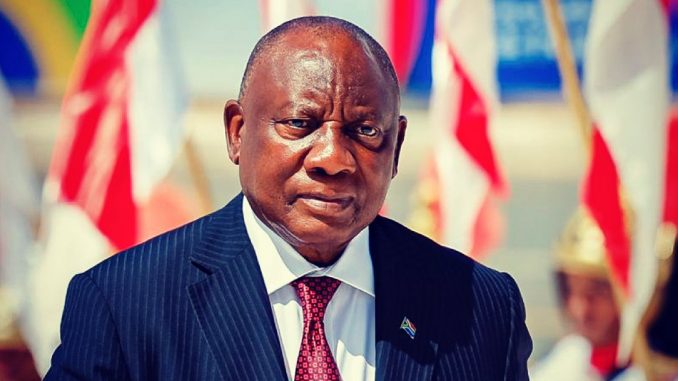
South African President Cyril Ramaphosa is facing renewed impeachment pressure after the country’s Constitutional Court reopened a long-running investigation tied to the “Phala Phala” or “Farmgate” scandal. The case centers on allegations that large sums of foreign currency—reportedly around $580,000—were stolen from a sofa at his private farm and that the incident was not properly disclosed or handled. Opposition parties have intensified calls for impeachment proceedings to move forward, arguing that the matter involves possible misconduct and constitutional violations. Ramaphosa has rejected the accusations, refused to step down, and stated he will challenge the findings in court while remaining in office as the parliamentary process continues.
🧩 Context Signal
The impeachment pressure on President Cyril Ramaphosa stems from the long-running “Phala Phala” scandal, which first surfaced in 2022 and has continued to resurface through legal and political challenges. The core issue involves allegations that large sums of foreign cash were stolen from his private game farm and that the incident may not have been properly reported through official channels, raising questions about transparency, ethics, and compliance with South Africa’s constitutional requirements for public officials.
The matter has moved through several stages of review, including parliamentary inquiries and legal scrutiny, but has remained politically divisive rather than conclusively resolved. Supporters of impeachment argue that the allegations point to a potential breach of public trust that warrants formal accountability proceedings. Critics of the impeachment push, including Ramaphosa’s allies, argue that the case is politically motivated and lacks sufficient grounds for removal, framing it as part of ongoing factional struggles within South Africa’s ruling political landscape.
The renewed attention reflects how unresolved governance controversies can re-emerge during periods of political tension, especially when legal rulings or institutional reviews reopen previously contested findings.
🌍 Field Reality
On the ground in South Africa, the impeachment calls have intensified political activity but have not yet disrupted day-to-day governance. President Cyril Ramaphosa remains in office and continues to carry out executive duties while the legal and parliamentary processes unfold. Parliament is facing increased pressure from opposition parties pushing for formal impeachment proceedings, which has led to heated debates and heightened political division inside the National Assembly.
Public reaction is mixed, with some groups demanding accountability and transparency over the Phala Phala allegations, while others view the impeachment push as politically driven and destabilizing. This divide has contributed to a tense political atmosphere, especially within the ruling party, where internal disagreements over leadership and handling of the scandal have periodically resurfaced.
Despite the controversy, government operations continue, and there is no immediate sign of administrative paralysis. However, the ongoing dispute has created a backdrop of uncertainty that influences investor confidence, political stability perceptions, and public trust in leadership institutions.
🔍 Global Lens
The renewed impeachment pressure on President Cyril Ramaphosa highlights how domestic political scandals can shape perceptions of governance stability in emerging economies. While the process remains internal to South Africa’s parliamentary and judicial systems, it carries broader significance for international confidence in political continuity and institutional resilience.
- Investor confidence sensitivity – Political uncertainty in South Africa can affect foreign investment sentiment, particularly in sectors tied to mining, energy, and infrastructure.
- Governance and institutional credibility – The handling of high-profile corruption allegations is closely watched as a test of judicial independence and parliamentary oversight.
- Regional political stability – As one of Africa’s largest economies, South Africa’s internal political tensions can influence broader regional economic and diplomatic dynamics.
- Party political fragmentation risk – Continued internal divisions within the ruling political structure may affect policy consistency and reform momentum.
- Global perception of accountability systems – The case contributes to wider international assessments of how democracies manage allegations involving sitting heads of state.
- Market and currency sensitivity – Even without immediate policy changes, political uncertainty can contribute to volatility in financial markets and currency performance.
📌 Closing Signal
The impeachment pressure against President Cyril Ramaphosa remains ongoing and politically active, but it has not yet reached a decisive legal or parliamentary outcome. The renewed focus on the Phala Phala allegations has kept the issue in the public and political spotlight, with opposition parties continuing to argue that the matter warrants formal impeachment proceedings, while Ramaphosa and his allies maintain that the accusations are either unproven or politically motivated and should be resolved through existing judicial processes.
At present, the situation is being handled through South Africa’s institutional frameworks—parliamentary debate, committee scrutiny, and potential court review—rather than any immediate executive transition. This means the presidency remains intact, and there is no confirmed movement toward removal from office, but the political pressure surrounding the case continues to build and evolve.
In practical terms, governance continues without interruption, but the controversy adds a layer of instability to the political environment, influencing party dynamics, public trust, and longer-term policy focus. The final outcome now depends on how parliamentary processes and legal interpretations develop in the coming stages, making the situation unresolved, procedurally active, and politically sensitive rather than settled.