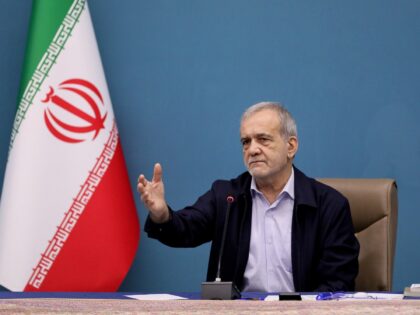
Iranian President Masoud Pezeshkian said that Tehran is “ready” to demonstrate to the world that it is not seeking to acquire nuclear weapons as talks of a potential peace agreement between the Islamist regime and the United States appear to be advancing.
Published May 25, 2026
TEHRAN – Iranian President Masoud Pezeshkian declared Sunday that Tehran is prepared to reassure the international community that it is not pursuing nuclear weapons, a statement that comes amid heightened diplomatic pressure and fragile negotiations with the United States over Iran’s nuclear program.
“We are ready to assure the world that we are not seeking nuclear weapons,” Pezeshkian said, according to Iranian state media, reiterating Tehran’s long-standing position that its nuclear activities are peaceful in nature.
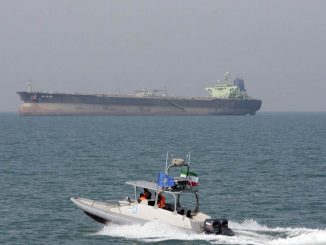
The comments arrive as Washington and Tehran continue indirect discussions aimed at reducing regional tensions and potentially shaping a broader security arrangement that could include sanctions relief and maritime agreements involving the strategic Strait of Hormuz.
Iran Repeats Denial Amid Skepticism
Iranian officials have repeatedly insisted that the country has no intention of developing nuclear weapons, pointing instead to civilian energy needs and scientific development. Pezeshkian emphasized that Iran is open to verification measures but will not compromise what he described as the nation’s sovereignty or dignity.
“We have stated this repeatedly,” he said, reinforcing Tehran’s claim that its nuclear program remains within peaceful limits.
However, Western officials and Israeli leaders have long expressed skepticism, citing Iran’s enrichment levels and restrictions on international inspections as cause for concern. Intelligence assessments over the years have warned that Iran has the technical capacity to move closer to weapons-grade material if it chooses to do so.
Talks With Washington Remain Fragile
The statement comes as the United States and Iran reportedly explore a broader diplomatic framework that could include phased sanctions relief in exchange for nuclear transparency commitments.
Recent reporting indicates that discussions have touched on issues such as uranium stockpiles, maritime security in the Persian Gulf, and regional de-escalation measures.
While some officials have described progress as “significant,” both sides remain divided over key conditions, including verification mechanisms and the handling of Iran’s enriched uranium reserves.
A senior Iranian source told Reuters that no agreement has been reached regarding the removal or transfer of highly enriched uranium from the country, underscoring the fragility of the talks.
Regional Tensions Still Simmer
Despite diplomatic movement, tensions remain high across the Middle East, with concerns that negotiations could collapse if either side hardens its position.
Israel and several Gulf states continue to closely monitor the talks, warning that any agreement that fails to fully block Iran’s path to a nuclear weapon could destabilize the region further.
At the same time, Iranian officials have indicated that broader regional stability is part of their negotiating posture, suggesting that Tehran is seeking a wider security framework rather than a narrow nuclear-only deal.
🧩 Reading Between the Lines:
Official statements in diplomacy often sound straightforward, but the real meaning usually sits underneath the headlines. Leaders speak carefully, especially when negotiations, sanctions, and regional security are all in play. What is said publicly is often meant to calm pressure or shape perception, while the more difficult positions are worked out behind closed doors.
In Iran’s latest comments about its nuclear program, the wording is calm and reassuring—but the context around it tells a more complicated story. Looking closer at the key issues helps explain what may really be going on.
Timing of the Statement
The announcement comes while talks with the United States are still active and unresolved. That timing suggests a strategic purpose: easing international pressure and keeping diplomatic channels open without making major policy shifts yet. In negotiations like this, statements often serve as tools to influence momentum.
Trust vs. Verification
Iran says it is willing to assure the world it is not pursuing nuclear weapons. But in practice, global concerns rarely rest on assurances alone. The real issue has always been verification—how much access inspectors have, what can be monitored, and whether enrichment activity can be independently confirmed. Without that, trust remains limited.
Regional Security Concerns
Neighboring countries, especially Israel and several Gulf states, continue to view Iran’s nuclear capabilities as a serious long-term risk. Even if Iran insists its program is peaceful, the ability to enrich uranium at advanced levels raises concerns about how quickly that capability could shift if political decisions change in the future.
Negotiation Strategy
Public messaging like this often plays a dual role. On one hand, it signals cooperation to reduce pressure. On the other, it preserves leverage in negotiations over sanctions relief, uranium stockpiles, and inspection rules. The gap between public statements and negotiation demands is often where the most important bargaining happens.
🔗 The Stakes:
At first glance, this looks like another round of familiar diplomacy: Iran says it’s not building nuclear weapons, and the world debates whether to believe it. But the stakes behind those words are much bigger than routine politics—they touch on regional stability, global energy routes, and the balance of power in the Middle East.
Nuclear Threshold Risk
The core concern is not just whether Iran has a nuclear weapon today, but how close it could get if it chose to move in that direction. Enrichment technology is already in place, and once a country reaches a certain technical level, the “breakout time” to a weapon can shrink significantly. That uncertainty is what keeps tensions high, even when official statements sound calm.
Middle East Stability
If Iran is seen as getting closer to nuclear capability, it could trigger reactions across the region. Israel views this as an existential threat, while Gulf countries worry about a regional arms race. Even the perception of imbalance can push neighboring states to increase military readiness or seek stronger alliances, raising the risk of miscalculation.
Global Energy and Trade Routes
The Strait of Hormuz, a key passage for global oil shipments, sits at the center of this geopolitical tension. Any escalation involving Iran has the potential to disrupt energy markets and shipping lanes. Even short-term instability in this area can ripple through global fuel prices and supply chains.
Sanctions and Economic Pressure
For Iran, sanctions remain a central pressure point. Any negotiation over nuclear assurances is closely tied to potential sanctions relief. For the United States and its allies, the challenge is balancing economic incentives with security guarantees—ensuring that relief does not outpace verification.
Trust Deficit
Perhaps the biggest issue is not technical capability but trust. Years of disputes, stalled agreements, and conflicting reports have created a deep credibility gap on all sides. That gap means even positive statements are often met with skepticism, because past assurances have not always matched long-term outcomes.
🏁 The Final Word:
Iran’s latest statement is meant to sound reassuring, but it doesn’t really settle the bigger issue. At the end of the day, the concern isn’t just what Tehran says—it’s what can be independently confirmed on the ground. With nuclear capability already advanced, trust alone is not enough to calm long-running doubts from the United States and its allies.
What comes next will likely depend on whether any agreement includes strict, real-time verification and clear limits that can actually be enforced. Without that, talks risk repeating the same cycle: public promises, limited transparency, and renewed tension down the line. For now, diplomacy is still moving, but the core questions about intent and enforcement remain unresolved.
SOURCES: BREITBART – Iranian President Says Tehran ‘Ready to Assure World’ They Are Not Seeking Nuclear Weapons
THE TIMES OF ISRAEL – Iran’s Pezeshkian says Tehran ready to assure world it’s not seeking nuclear weapons