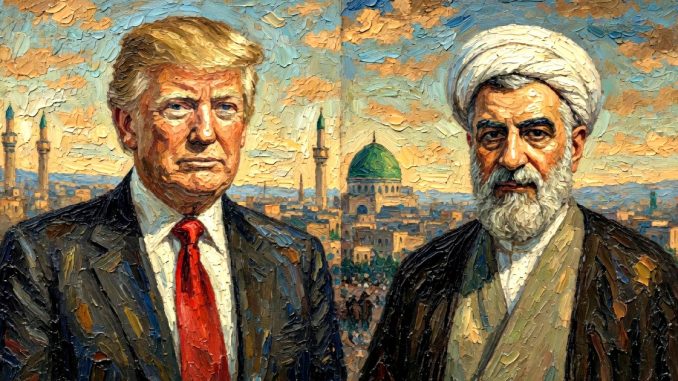
Peace upcoming? AI-Generated Image by Grok shows Donald J. Trump and Ayatollah Mojtaba Khamenei against a Tehran landscape
Published May 29, 2026
Washington / Middle East —
U.S. and Iranian negotiators have reportedly reached a tentative framework for a 60-day ceasefire extension, marking a potential breakthrough in one of the most volatile geopolitical crises in the world — though the deal is still awaiting final approval from President Donald Trump and confirmation from Tehran.
The proposed agreement would extend the current pause in large-scale hostilities and open the door to renewed nuclear negotiations, even as regional tensions continue to flare in multiple theaters across the Middle East.
60-Day Framework Focuses on De-escalation and Nuclear Talks
According to officials familiar with the discussions, the draft memorandum outlines a 60-day extension of the ceasefire, during which both sides would pursue broader negotiations over Iran’s nuclear program and regional security concerns.
The framework reportedly includes provisions aimed at reducing maritime tensions, stabilizing shipping routes, and laying the groundwork for discussions on sanctions relief and Iranian compliance with nuclear limits.
However, the agreement remains conditional, with key details still under negotiation and final approval required from both President Trump and Iranian leadership before it can take effect.
Iran Response Mixed, Key Details Still Disputed
While U.S. officials describe the talks as a step toward de-escalation, Iranian authorities have issued cautious and at times conflicting statements, with some denying that a finalized agreement is in place.
The disagreement highlights ongoing mistrust between the two sides, even as diplomatic channels remain active and both governments face pressure to avoid a broader regional war.
Israel Strikes Lebanon Amid Parallel Escalation
At the same time, Israel has continued military operations in Lebanon targeting Hezbollah positions, underscoring how multiple conflicts are now overlapping across the region.
The renewed Israeli strikes come as Washington pushes for broader regional stabilization efforts, further complicating already fragile ceasefire negotiations involving Iran and its regional partners.
Trump Faces High-Stakes Decision
President Trump now faces a critical decision: whether to endorse the 60-day framework and move forward with expanded negotiations, or reject the deal amid concerns from political allies who warn against concessions to Tehran.
Supporters of the diplomatic push argue the agreement could reduce the risk of a wider regional war and stabilize global energy markets. Critics, however, warn it may give Iran strategic breathing room without resolving long-term nuclear concerns.
Region at a Crossroads
With ceasefire talks progressing but not finalized, and active conflicts continuing in Lebanon and other flashpoints, the Middle East remains on edge.
The next move from Washington and Tehran could determine whether the current pause leads to a lasting diplomatic framework — or collapses into another cycle of escalation.
🧩 Reading Between the Lines:
The reported 60-day U.S.–Iran ceasefire framework looks like a diplomatic breakthrough on the surface, but it also reflects a much more fragile situation underneath. Talks are happening while regional conflicts are still active, which means this is less a stable peace and more a temporary pause that depends heavily on whether both sides follow through under pressure.
A Temporary Pause, Not a Final Peace
One of the main topics here is that the agreement, if confirmed, is only a short-term framework. A 60-day window suggests both sides are trying to buy time rather than settle core disputes, especially over Iran’s nuclear program and regional military activity.
High Dependence on Leadership Approval
Another key issue is that nothing is final yet. The deal reportedly still needs approval from President Trump and confirmation from Iranian leadership. That makes the agreement politically fragile, since either side could walk away if domestic pressure increases.
Ongoing Regional Conflict Complicates Talks
At the same time, Israel’s continued strikes in Lebanon highlight how unstable the broader region remains. Even if U.S. and Iran move toward de-escalation, other active conflicts could still pull the situation back into escalation.
Trust Deficit Between the U.S. and Iran
A major underlying problem is trust. Even when agreements are announced, both sides have a long history of accusing each other of violations or bad faith. That makes any ceasefire inherently unstable and dependent on constant enforcement and monitoring.
Strategic Positioning on Both Sides
There is also a sense that both Washington and Tehran are using the talks strategically. The U.S. is trying to prevent a wider regional war, while Iran is trying to avoid further military pressure and sanctions. That dynamic makes the agreement feel more like a managed pause than a true resolution.
🔗 The Stakes:
The reported 60-day U.S.–Iran ceasefire framework comes at a critical moment where the Middle East is still dealing with active military conflicts, political pressure in Washington, and deep mistrust between all sides. While the agreement is being described as a step toward de-escalation, the real stakes involve whether this pause actually holds or simply delays a larger confrontation.
Risk of a Broader Regional War
One of the biggest concerns is that the ceasefire does not exist in isolation. With Israel continuing strikes in Lebanon and tensions still high across multiple fronts, any breakdown in talks could quickly expand into a wider regional conflict involving several countries at once.
Fragility of the Agreement
Another key issue is how unstable the deal appears. Since the framework still depends on final approval from both U.S. and Iranian leadership, it can be reversed quickly if political pressure shifts or if either side believes the other is not complying.
Nuclear and Security Pressure
The core of the negotiations still revolves around Iran’s nuclear program and regional military activity. The stakes here are high because failure to reach a lasting agreement could restart full-scale escalation, sanctions, or even direct military confrontation.
U.S. Political and Strategic Consequences
There is also a domestic angle in Washington. Any decision by President Trump on whether to approve or reject the framework carries major political consequences, especially with differing opinions on how far the U.S. should go in negotiating with Iran.
Energy and Global Stability Impact
Beyond the region, global oil markets and shipping routes remain sensitive to instability in the Middle East. Even limited fighting can quickly affect energy prices and international trade, turning a regional dispute into a global economic concern.
🏁 The Final Word:
The reported 60-day U.S.–Iran ceasefire framework represents a narrow opportunity to cool tensions in a region that is already under multiple strains, but it remains highly fragile and dependent on political approval from both Washington and Tehran. Supporters see it as a necessary step to prevent a wider Middle East war and create space for more serious negotiations, while critics warn it could simply pause the conflict without resolving the underlying nuclear and security disputes. With active fighting still unfolding in nearby areas like Lebanon and trust between the parties at a low point, the agreement’s success will ultimately come down to whether both sides can avoid new provocations and stick to the terms long enough to turn a temporary pause into something more stable.
SOURCES: THE GATEWAY PUNDIT – US and Iran Reportedly Reach Agreement on 60-Day Ceasefire Extension Pending Trump’s Approval
AXIOS – Scoop: U.S. and Iran reach deal but need Trump’s final approval, officials say
FINANCIAL REVIEW – Iran and US reportedly reach new ceasefire deal
NEWS NATION – US, Iran reach deal to extend ceasefire; Trump’s signoff needed
FORBES – U.S. And Iran Reach Deal—Pending Trump’s Approval