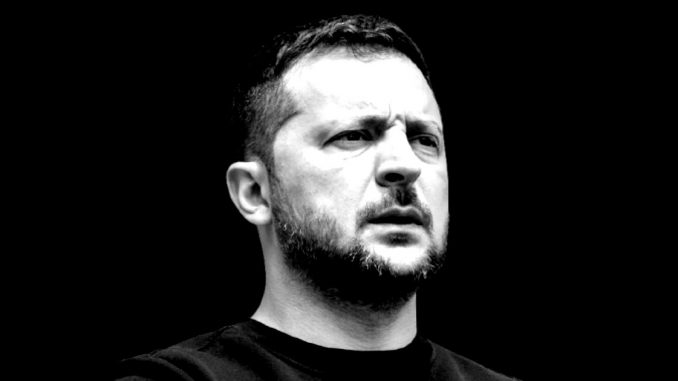
From selling Kiev-built air defenses to asking for US help, again
Published May 29, 2026
‘Vova’ is again asking for help from the US.
Washington / Kyiv —
Ukrainian President Volodymyr Zelensky is stepping up urgent appeals to President Donald Trump and U.S. lawmakers for additional American air defense systems, warning that Russia’s escalating missile and drone campaign is pushing Ukraine’s defenses to the limit.
The renewed request comes as Russian forces continue heavy strikes on Ukrainian infrastructure, military positions, and cities — prompting Kyiv to argue that existing Western air defense supplies are no longer sufficient to keep pace with the intensity of the attacks.

Ukrainian President Volodymyr Zelensky stressed the impressive capabilities of American firepower.AFP via Getty Images
Ukraine Says Air Defenses Are Running Short
Zelensky has repeatedly emphasized that systems like the U.S.-made Patriot missile batteries remain the most effective tool Ukraine has to intercept Russian ballistic missiles.
However, Ukrainian officials say interceptor stockpiles are being depleted faster than they can be replenished, especially as Russia increases the scale and frequency of its strikes.
During recent discussions with U.S. officials, Zelensky also stressed Ukraine’s willingness to purchase additional air defense systems directly, arguing that faster deliveries are critical to preventing further damage to energy infrastructure and civilian areas.

Patriots are among America’s top anti-ballistic missile defense.AFP via Getty Images
Russia’s Intensifying Strike Campaign
At the same time, Russia has continued to escalate its long-range missile and drone operations, targeting key Ukrainian energy facilities and military assets in an effort to strain air defenses and weaken battlefield coordination.
Ukrainian military officials say the pattern of attacks is designed to overwhelm interception systems and exploit gaps in coverage, particularly during mass overnight strikes.
Despite strong Western support, Ukraine has acknowledged that it cannot fully counter the volume of incoming missiles without additional advanced systems and ammunition supplies.

Russia has been leaning on its ballistic missiles to attack Ukraine, which has developed considerable drone defense technology.AP Photo/Efrem Lukatsky
U.S. Aid Pressure and Strategic Debate
The renewed appeal to Trump highlights a broader strategic debate in Washington over long-term military aid to Ukraine, particularly as U.S. stockpiles and global commitments are stretched across multiple theaters.
Supporters of continued aid argue that air defense systems are essential not only for Ukraine’s survival but also for maintaining broader regional stability and deterring further Russian advances.
Critics, however, have raised concerns about the pace of weapons transfers, production capacity, and the long-term sustainability of continued large-scale military assistance.

President Trump has been skeptical about the idea of sending aid to war-torn Ukraine.SAMUEL CORUM/POOL/EPA/Shutterstock
Air Defense Seen as Key Battlefield Advantage
Military analysts widely agree that air defense has become one of the most decisive elements of the war, with Ukraine relying heavily on Western systems to protect cities, infrastructure, and front-line logistics hubs.
Ukrainian officials warn that without a steady flow of interceptors and additional Patriot batteries, Russia could gain greater freedom to strike deeper into the country with fewer constraints.

The Russians have teased brutal attacks against Ukraine that are currently in the works.via REUTERS
Growing Pressure for Faster Decisions
Zelensky’s latest push underscores a familiar challenge in the conflict: Ukraine’s urgent battlefield needs versus the slower pace of international procurement, approval, and delivery processes.
As Russia continues to escalate its air campaign, Kyiv is pressing for faster decisions from Washington, arguing that delays directly translate into greater damage on the ground.
For now, Ukraine remains heavily dependent on U.S. and allied air defense systems — and is making clear that it wants more, and it wants them sooner.
🧩 Reading Between the Lines:
Zelensky’s renewed push for more U.S. air defense systems is about more than just military equipment. It reflects a broader reality in the war: Ukraine is trying to keep its defenses from being overwhelmed, while the U.S. and its allies are trying to manage how much support they can realistically sustain over time.
Air Defense Shortages and Battlefield Pressure
A major topic here is simple capacity. Ukraine says it is burning through missile interceptors faster than they can be replaced, especially as Russia increases drone and missile attacks. The concern is that even strong systems like Patriot batteries can only do so much if they run low on ammunition.
Escalation of Russian Strikes
Another key issue is Russia’s intensified strike strategy. The focus appears to be on overwhelming Ukrainian defenses through volume—launching waves of drones and missiles to stretch interception systems and exploit gaps. This puts constant pressure on Ukraine to request more advanced systems just to maintain basic coverage.
U.S. Military Supply Limits
There is also a quieter but important discussion happening in Washington: how long the U.S. can continue supplying high-end air defense systems without straining its own stockpiles and commitments in other regions. Even strong political support runs into practical limits of production, inventory, and logistics.
Strategic Dependence on Western Systems
Ukraine’s defense strategy is increasingly tied to Western air defense technology. That creates a dependency where battlefield stability is directly linked to continued foreign supply. The concern is what happens if deliveries slow down or gaps appear.
Diplomatic Pressure Through Military Needs
Zelensky’s appeal to President Trump is also a form of strategic pressure. By publicly emphasizing urgent needs, Ukraine is trying to speed up decision-making in Washington and keep air defense at the top of the political agenda.
🔗 The Stakes:
Zelensky’s renewed push for more U.S. air defense systems highlights a broader reality in the Ukraine war: the outcome is increasingly being shaped not just by battlefield fighting, but by how much military support the West is willing and able to keep supplying over time. As Russian strikes intensify, the pressure is building on both Ukraine’s defenses and Washington’s long-term strategy.
Survival of Air Defenses Under Constant Pressure
One of the biggest concerns is whether Ukraine can keep its air defense systems functioning effectively under nonstop attacks. Even advanced systems like Patriot batteries depend on a steady supply of interceptor missiles, and shortages could leave major cities and infrastructure more exposed.
Escalation of Russian Missile and Drone Campaigns
Another key issue is Russia’s continued reliance on large-scale missile and drone strikes. The strategy appears focused on overwhelming defenses through volume, forcing Ukraine to constantly respond and potentially stretch its systems beyond capacity.
U.S. Stockpiles and Military Readiness
There is also growing focus on how much the United States can continue to send without affecting its own military readiness or global commitments. Air defense systems are expensive, limited in number, and in demand across multiple regions, creating pressure on U.S. decision-makers.
Long-Term Dependency on Western Aid
Ukraine’s defense posture is increasingly dependent on Western weapons and ammunition. That raises long-term questions about sustainability, especially if the war continues for years and supply chains struggle to keep up with battlefield demand.
Strategic Balance of the War
The conflict is also being shaped by a broader strategic reality: neither side is close to a decisive breakthrough. Instead, the war is becoming an endurance contest where supply, production capacity, and continued political support may matter as much as military operations on the ground.
Risk of Gradual Fatigue
A final concern is what happens if support begins to slow over time. Even small delays in deliveries or funding gaps could have a direct impact on Ukraine’s ability to defend key infrastructure, potentially shifting momentum on the battlefield and changing the overall balance of the war.
🏁 The Final Word:
Zelensky’s renewed appeal for more U.S. air defense systems underscores how the war in Ukraine is increasingly being decided by sustainment rather than short-term battlefield gains. As Russia continues to escalate missile and drone strikes, Ukraine’s ability to hold the line depends heavily on steady Western supplies of interceptors, systems, and funding. Supporters of continued strong U.S. involvement argue that allowing Ukraine’s defenses to weaken would invite further Russian advances and broader instability in Europe. At the same time, the pressure on U.S. stockpiles and the long-term cost of ongoing military aid are becoming harder to ignore, making future decisions in Washington increasingly consequential. The result is a war where military outcomes are tightly linked to political will and industrial capacity, and where delays or reductions in support could quickly shift the balance on the ground.
SOURCES: THE GATEWAY PUNDIT – Zelensky Asks Trump for More US Air Defense Against Russian Massive Missile Attacks
AP NEWS – Zelenskyy asks Trump for more US air defense help against Russian missile attacks, Kyiv says
REUTERS – Zelenskiy asks Trump for air defence as Russia escalates strike threats
THE NEW YORK POST – Zelensky pleads with Trump for additional Patriot missile systems as fears mount over more Russian strikes