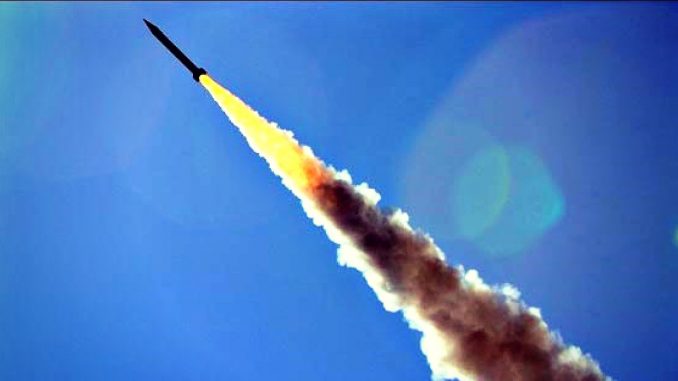
Launch of an Iranian missile – Wiki Commons
Published May 29, 2026
Washington / Kuwait City —
Tensions in the Middle East surged dramatically this week after Iran reportedly launched ballistic missiles toward a U.S. military installation in Kuwait, in what U.S. Central Command is calling a direct violation of an already fragile ceasefire agreement.
The attack comes amid a fast-moving cycle of strikes and counterstrikes between U.S. forces and Iran, raising fears that the region is once again slipping toward broader conflict.

A US Navy guided-missile destroyer has enforced a blockade against Iranian ports after a tanker attempted to sail toward the country.CENTCOM / SWNS
Missile Attack Targets U.S. Presence in Kuwait
According to multiple military and regional reports, Iranian forces fired missiles toward a base in Kuwait that hosts U.S. troops. Kuwaiti air defenses successfully intercepted the incoming projectiles, preventing major damage and casualties.
U.S. officials described the strike as an “egregious ceasefire violation,” pointing to it as part of a pattern of escalating Iranian retaliation following recent U.S. operations targeting Iranian drone infrastructure and missile sites in the region.
While no confirmed deaths have been reported, the attempted strike underscores how quickly the conflict has expanded beyond its original theaters, with Gulf states increasingly caught in the crossfire.

Iranian missiles are displayed at the Islamic Revolutionary Guard Corps Aerospace Force Museum in Tehran.via REUTERS
U.S. and Iran Locked in Rapid Retaliation Cycle
The missile launch followed U.S. military actions against Iranian drone operations near the Strait of Hormuz, where American forces reportedly shot down multiple Iranian drones and struck a ground control site believed to be preparing additional attacks.
Iran, in turn, claimed its actions were defensive and framed the strike on the Kuwaiti base as retaliation for earlier U.S. attacks on its military infrastructure.
The back-and-forth has fueled concerns that both sides are now operating under a “strike-and-response” dynamic that could spiral further if diplomacy breaks down.
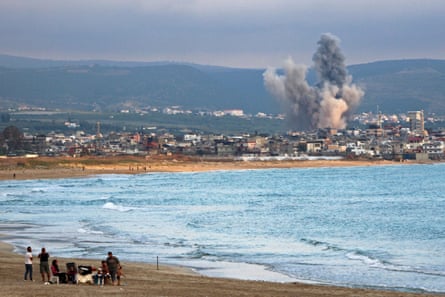
People on a beach watch as smoke rises from an Israeli strike near the southern Lebanese city of Tyre, on 27 May. Photograph: Kawant Haju/AFP/Getty Images
Kuwait Caught in the Middle
Kuwait, which hosts key U.S. military facilities, confirmed its air defenses intercepted incoming missiles and drones. Officials there condemned the attack as a violation of sovereignty and a dangerous escalation of regional instability.
Although the missiles were stopped before impact, the incident highlights the growing risk to Gulf nations that host American forces and infrastructure.
Broader Regional Conflict Expanding
The Kuwait strike is only the latest flashpoint in a wider regional confrontation involving the United States, Iran, and Israel-linked operations across the Middle East.
At the same time, Israeli military activity in neighboring Lebanon has intensified, further stretching regional stability and complicating diplomatic efforts to restore calm.
Military analysts warn that overlapping conflicts — from the Strait of Hormuz to Lebanon — are creating a multi-front crisis with little sign of de-escalation.
Ceasefire Under Strain
Officials had previously suggested a fragile ceasefire framework was holding, but recent exchanges of fire have placed that agreement under severe strain.
While diplomatic channels remain open, both sides continue to accuse the other of violating terms and escalating tensions through military action.
Growing Fear of Wider War
With U.S. bases, Iranian military assets, and Gulf infrastructure all now within range of escalating strikes, security experts warn that miscalculation could quickly trigger a wider regional war.
For now, intercepted missiles have prevented mass casualties — but the political and military trajectory remains volatile, with both Washington and Tehran signaling they are prepared for further action if provoked.
🧩 Reading Between the Lines:
This latest round of missile fire and military responses between Iran and U.S. forces in the Gulf is being viewed as more than just another isolated exchange. It reflects a growing pattern of rapid escalation, where each strike is answered quickly, and the space for diplomacy is getting smaller with every incident.
Escalation and Retaliation Cycle
A major topic being discussed is how quickly this situation has turned into a back-and-forth cycle. U.S. forces strike Iranian-linked assets, Iran responds with missile launches, and then defensive systems intercept incoming attacks. The concern is that this pattern can easily spiral if neither side steps back.
Deterrence and Military Messaging
Another key issue is deterrence. The U.S. is signaling that attacks on its bases or personnel will be met with force, while Iran appears to be testing how far it can go without triggering overwhelming retaliation. Both sides are essentially trying to shape behavior through pressure, but that also raises the risk of misjudging the other side’s limits.
Ceasefire Stability and Trust Breakdown
Even though ceasefire language has been referenced, the situation shows how fragile those understandings can be.
Each side is accusing the other of violations, which makes it difficult for any agreement to hold. Once trust breaks down, even small incidents can be treated as major provocations.
Kuwait and Regional Exposure
Kuwait’s role is also a major talking point. As a host for U.S. forces, it becomes exposed when tensions rise, even if it is not directly part of the conflict. This highlights a broader regional problem: Gulf states can quickly become front-line zones when U.S.-Iran tensions escalate.
Wider Regional Pressure Points
This incident is also being discussed alongside other active hotspots in the Middle East. Conflicts involving Iran, U.S. military positions, and parallel regional fighting are creating multiple pressure points at once. The concern is that these overlapping tensions make containment much harder than in past crises.
🔗 The Stakes:
This latest escalation between the U.S. and Iran is being watched closely because it highlights how quickly a limited exchange can shift into a wider regional crisis. With missiles launched toward U.S. positions in Kuwait and intercepted before impact, the situation is now being shaped by fast retaliation, defensive responses, and fragile diplomatic assumptions that could break down at any moment.
Safety of U.S. Forces and Allied Bases
One of the main concerns is the safety of American troops stationed across the Middle East. The discussion centers on how exposed these bases are becoming as missile and drone activity expands beyond traditional conflict zones. Even when attacks are intercepted, each attempt raises the risk of a future strike getting through.
Escalation and Retaliation Pressure
Another major issue is the growing cycle of action and response. U.S. strikes on Iranian-linked targets are followed by Iranian missile launches, which then trigger defensive interceptions and potential countermeasures. The concern is that this pattern can accelerate faster than diplomacy can keep up.
Deterrence and Military Signaling
Both sides are also sending messages through force. The U.S. is signaling that attacks on its assets will not be tolerated, while Iran is demonstrating it can still reach American-linked positions in the region. The key question being discussed is whether either side fully understands the other’s red lines.
Fragile Ceasefire and Trust Issues
Even where ceasefire language or de-escalation efforts exist, trust is thin. Each side is accusing the other of violations, which makes agreements difficult to enforce. Once credibility breaks down, even small incidents can be treated as major provocations.
Gulf Security and Regional Spillover
Kuwait and other Gulf nations are also part of the conversation because they host U.S. forces but are not direct participants in the conflict. This creates a spillover risk where countries outside the dispute become exposed to retaliation simply because of geography and alliances.
Global Economic and Energy Impact
Another layer of concern is the potential impact on global oil markets and shipping routes. Any sustained instability in the region can quickly affect energy prices and international trade, turning a regional conflict into a global economic issue.
🏁 The Final Word:
The situation between the United States and Iran is entering a dangerous phase where every new strike and response increases the pressure on both sides to escalate further. With missile attacks reaching U.S.-linked bases in places like Kuwait and defenses only narrowly preventing damage, the conflict is no longer theoretical — it is actively unfolding across multiple points in the region. Supporters of a stronger security approach argue that this is exactly why firm deterrence, clear red lines, and rapid responses are necessary to prevent further attacks and protect American forces and allies. At the same time, the fragile nature of ceasefire claims and the constant risk of miscalculation mean the next move from either side could determine whether tensions cool down or expand into a much larger regional conflict involving more countries and broader consequences.
SOURCES: THE GATEWAY PUNDIT – Iran Reportedly Fired Missiles Against US Base in Kuwait, as the Most Serious Clashes Since April Ceasefire Unfold
LOS ANGELES TIMES – U.S. and Iranian negotiators reach tentative deal to extend ceasefire and launch nuclear talks
THE HILL – Central Command: Iran attack on Kuwait an ‘egregious ceasefire violation’
THE TIMES OF ISRAEL – Kuwait appears to come under Iranian attack hours after US targeted Islamic Republic
THE NEW YORK POST – Iran fires ballistic missile at American base in Kuwait in ‘egregious cease-fire violation’ after US takes out Tehran drones in Strait of Hormuz