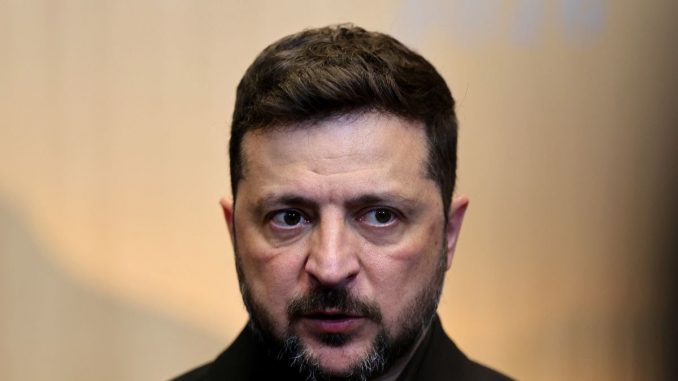
Volodymyr Zelensky said a week should be enough for Alexander Lukashenko to remove the equipment
Published June 26, 2026
Ukrainian President Volodymyr Zelenskyy’s deadline for Belarus to dismantle Russian-linked military infrastructure has now expired, marking a critical turning point in a rapidly escalating standoff between Kyiv and Minsk that has raised fears of a broader regional confrontation.
The ultimatum, issued earlier this month, demanded that Belarus remove what Ukrainian officials described as Russian-operated relay stations and military support infrastructure allegedly being used to guide drone and missile strikes against Ukraine. Kyiv warned that failure to comply could trigger unspecified “consequences.”
As of the deadline’s expiration, neither Ukraine nor Belarus has publicly confirmed any compliance or dismantling of the disputed facilities, setting the stage for heightened uncertainty along Ukraine’s northern frontier.
‘Do this or face Consequences’ WARNING
Zelenskyy’s warning to Belarus marked one of Kyiv’s most direct challenges yet to President Alexander Lukashenko, accusing Minsk of enabling Russia’s war effort by allowing its territory to be used for military coordination and logistics support.
Ukrainian officials have repeatedly argued that Belarus is not a neutral actor, pointing to intelligence assessments suggesting Russian forces continue to benefit from infrastructure inside Belarusian territory.
Belarus, however, has denied playing an active role in the war beyond allowing limited Russian use of its territory, insisting it does not intend to directly enter the conflict.

Russia and Belarus conducted three days of joint nuclear drills at a military base in Belarus’ Asipovichy district in May(Image: BELARUS PRESIDENT PRESS SERVICE HANDOUT/EPA/Shutterstock)
Military And Diplomatic Pressure Mounts
The expiration of the deadline comes amid broader tensions along Ukraine’s northern border, where analysts warn Belarus remains a potential staging ground for future Russian operations.
Recent reports indicate Moscow has been pushing Minsk to deepen its involvement in the war, while Belarusian leadership appears divided between maintaining alignment with Russia and avoiding direct escalation with Ukraine.
At the same time, Ukraine has intensified strikes on Russian military infrastructure, part of a broader strategy to weaken Moscow’s operational capacity and deter further escalation.

Belarusian President Alexander Lukashenko (left) and Russian President Vladimir Putin attend a ceremony in Moscow on May 9(
Regional fears of Escalation
Security experts warn that the standoff could mark a dangerous inflection point.
Belarus has already allowed Russian forces to launch operations from its territory since the early stages of the 2022 invasion, making it a key strategic rear base for Moscow’s war effort.
Any direct confrontation between Ukraine and Belarus, analysts say, risks widening the war’s geographic scope and drawing in additional regional actors.
Minsk remains defiant
Despite mounting pressure, Belarusian President Alexander Lukashenko has maintained that his country does not seek war with Ukraine, while also rejecting accusations that Minsk is directly participating in hostilities.
However, Belarus continues to host Russian military assets, including air defense systems and infrastructure tied to Moscow’s broader war operations.
That dual position — denying involvement while maintaining strategic cooperation — has left Belarus at the center of escalating geopolitical tensions.
Final Outcome Uncertain
With the deadline now expired, it remains unclear whether Ukraine will take further action or continue applying diplomatic and military pressure.
What is clear, however, is that the standoff has pushed Ukraine-Belarus relations to one of their most fragile points since the start of the war — with the potential for consequences extending far beyond the border.
🧩 Reading Between the Lines: A Warning That Extends Beyond Belarus
More Than a Single Deadline
Zelenskyy’s ultimatum to Belarus and the expiration of the stated deadline suggest a broader strategic message aimed not only at Minsk, but also at Russia. The framing indicates an attempt to signal consequences for continued cooperation in military operations, while also testing how far Ukraine is willing to push pressure on northern borders without triggering direct escalation.
Belarus’ Position Under Strain
The situation highlights Belarus’ increasingly difficult balancing act between maintaining alignment with Russia and avoiding direct entry into the war. While Minsk continues to deny active participation, its ongoing hosting of Russian military infrastructure places it in a position that Kyiv views as operationally significant rather than neutral.
Escalation Managed Through Signals
Rather than immediate action, the use of deadlines and public warnings reflects a pattern of controlled escalation. These signals allow Ukraine to apply pressure while preserving flexibility, keeping both military and diplomatic options open depending on how the situation develops.
A Broader Regional Message
The dispute also functions as a message to other regional actors about the risks of enabling or supporting military operations tied to the war. The emphasis on infrastructure and coordination points to a wider strategy of targeting support systems rather than only frontline forces.
Uncertainty After the Deadline
With the deadline now expired and no confirmed changes on the ground, the situation enters a more ambiguous phase. What follows may depend less on formal compliance and more on how both sides interpret and respond to the political weight of the ultimatum.
🔗 The Stakes: Why This Story Matters
The expiration of Ukraine’s ultimatum to Belarus raises the risk of a wider and more complex regional confrontation. While the immediate dispute centers on alleged military infrastructure and support roles, the broader issue is whether neighboring states can remain outside the active fighting while still being accused of enabling one side’s war effort.
Risk of Regional Spillover
Belarus’ geographic and political proximity to Russia makes it a critical factor in the conflict’s northern dimension. Any escalation linked to this standoff could increase the likelihood of cross-border incidents or expanded military activity along Ukraine’s northern frontier, raising concerns about the war widening beyond its current zones of engagement.
Pressure on Neutrality Claims
The situation also tests the credibility of neutrality claims in wartime conditions. If one side believes a territory is being used for operational support, it can become a legitimate target of strategic pressure, even without formal declarations of involvement. This blurs the line between direct participation and indirect support.
Diplomatic Space Under Strain
Deadlines and public ultimatums reduce room for quiet diplomacy. As positions become more public and rigid, the ability for intermediaries to de-escalate tensions becomes more difficult, especially when both sides frame the issue in security terms rather than political compromise.
Escalation Through Interpretation
A key risk is not only what actions are taken, but how those actions are interpreted. Even limited responses or continued inaction after a deadline can be portrayed as escalation, increasing the chance of retaliatory measures or expanded targeting in response.
The Bigger Picture
Ultimately, the standoff reflects how the war continues to expand beyond the main battlefield into surrounding states through infrastructure, logistics, and strategic alignment. The outcome of this dispute will likely influence how far the conflict’s geographic and political boundaries continue to stretch.
🏁 The Final Word:
With Ukraine’s deadline to Belarus now expired, the standoff has entered a more uncertain phase marked by heightened rhetoric and unresolved claims over military support infrastructure. While Kyiv continues to frame Belarus as a critical enabling factor in Russia’s war effort, Minsk maintains it is not a direct participant in the conflict. The absence of a clear resolution keeps tensions elevated along Ukraine’s northern frontier, with the next steps likely to depend on how both sides choose to interpret and respond to the situation in the days ahead.
SOURCES: DAILY EXPRESS.CO.UK – Ukraine issues bombshell threat to go to war with ANOTHER country as soon as next week
MIRROR – Zelensky issues bombshell threat to go to war with another country next week