Published July 12, 2026
Part I: The Father Everyone Admired
There was a time when Lee Young-hak was one of the most admired fathers in South Korea.
Television cameras followed him through hospital corridors. Newspapers chronicled his family’s daily struggles. Complete strangers sent money, gifts, and letters of encouragement after hearing about the devastating genetic disease that had disfigured both him and his young daughter.
To millions of South Koreans, Lee wasn’t just another father.
He was “Molar Dad” (어금니 아빠)—a man who refused to surrender despite unimaginable hardship.
His face became familiar across the country. His story inspired compassion. Charities, corporations, and ordinary citizens rallied behind him, hoping their donations would help save a little girl born with an incredibly rare disorder.
Few people imagined that the same man they praised as a devoted parent would later stand in a courtroom accused of committing one of South Korea’s most horrifying crimes.
The transformation was so shocking that many Koreans would later describe it as if two completely different people had existed inside the same body.
One was the loving father shown on television.
The other was the man prosecutors would accuse of building a web of deception that eventually ended in the rape and murder of a 14-year-old girl.
A Disease That Changed Everything
Lee Young-hak suffered from an extremely rare hereditary condition known as cherubism.
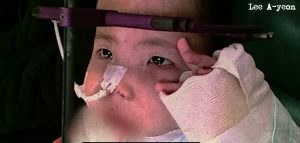
The disease affects the jawbones, causing abnormal growth of the facial bones that gradually alters a person’s appearance.
Although not always life-threatening, severe cases require repeated surgeries and years of medical treatment.
Lee had lived with the condition since childhood.
Doctors later confirmed that his daughter inherited the same disease.
For Lee, the diagnosis became both a heartbreaking reality—and eventually the foundation of a public image that would make him famous across South Korea.

The Birth of “Molar Dad”
During the early 2000s, South Korean television frequently featured inspirational human-interest stories.
Broadcasters discovered Lee’s family while searching for stories about parents overcoming extraordinary hardship.
Viewers watched as Lee cared for his daughter through painful surgeries.
Television crews documented hospital visits, medical appointments, and emotional moments between father and daughter.
The broadcasts struck a chord with the public.
Parents imagined what it would be like to watch their own child endure endless operations.
Grandparents mailed handwritten letters.
Children donated their allowance.
Businesses quietly offered financial assistance.
The nation embraced him.
Soon newspapers began calling him “Molar Dad,” a nickname inspired by the jaw disease that had defined both his life and his daughter’s.
He wasn’t famous because he was wealthy.
He wasn’t famous because he was powerful.
He became famous because millions believed they were watching a father sacrifice everything for his child.

Donations Begin Pouring In
As public awareness grew, so did financial support.
Individuals, charities, nonprofit organizations, local governments, businesses, and television fundraising campaigns all contributed.
Over the years, investigators estimate Lee received approximately ₩1 billion to ₩1.3 billion (roughly US$900,000–1.1 million at the time) through donations, assistance programs, and other support.
For many donors, the money represented more than charity.
It represented hope.
People believed they were helping a little girl receive surgeries that her family could never otherwise afford.
Nobody questioned whether Lee deserved their trust.
At least, not yet.
Fame Brings Opportunity
The family’s story spread far beyond local television.
Lee wrote about his experiences.
He gave interviews.
He became a recognizable public figure associated with perseverance, parental devotion, and resilience.
His daughter also became well known.
Many Koreans watched her grow up through news reports documenting her surgeries and recovery.
They celebrated every small victory.
Every successful operation felt like a victory shared by the nation itself.

Behind Closed Doors
But while cameras captured smiles inside hospitals, investigators would later allege that another life existed behind closed doors.
Years later, police would begin uncovering evidence suggesting that the family’s private reality looked very different from the public image.
Financial investigators questioned how donated money had actually been spent.
Friends and acquaintances described a household marked by fear rather than hope.
The image of the selfless father slowly began to crack.
What investigators discovered next would completely transform one of South Korea’s greatest inspirational stories into one of its darkest criminal cases.
At first, the questions involved money.
Eventually, they would involve abuse.
Finally, they would lead investigators to murder.
The nation that once celebrated “Molar Dad” was about to learn that the man they had trusted for years was hiding secrets almost no one could have imagined.
Part II: Behind the Mask
For years, Lee Young-hak had been known as “Molar Dad”—a father whose courage in caring for his daughter inspired a nation. Donations continued to arrive from compassionate strangers. Television appearances reinforced the image of a family fighting impossible odds.
But according to prosecutors, that carefully crafted image concealed a much darker reality.
Questions About the Money
As Lee’s public profile grew, so did the financial support he received.
Over the years, charities, corporations, local governments, and private citizens donated an estimated ₩1 billion to ₩1.3 billion to help pay for medical treatment and improve the family’s quality of life.
Donors believed they were helping a child with a rare disease.
However, investigators later alleged that not all of the money was used for its intended purpose.
According to police and prosecutors, Lee spent substantial amounts on personal expenses rather than medical care. Reports alleged purchases that included luxury vehicles, cosmetic procedures, tattoos, and other expenditures inconsistent with the charitable purpose for which the funds had been raised.
The allegations deeply angered the public.
Many Koreans felt they had been deceived—not just financially, but emotionally. People who had donated because they sympathized with a struggling father now questioned whether their generosity had been exploited.
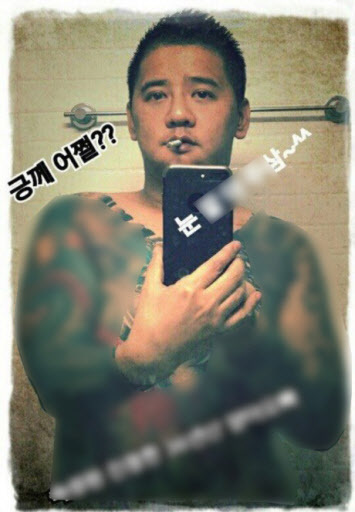 Tattoos are still considered taboo in Korea and only doctors are legally allowed to do tattoo art, although the law is not strictly enforced.
A Family Living in Fear
Financial concerns were only the beginning.
As investigators interviewed relatives, acquaintances, and others connected to the family, disturbing allegations began to emerge.
Prosecutors alleged that Lee exercised extreme control over those around him.
His wife, according to court records and media reports, endured years of abuse.
Investigators also alleged that she had been forced into prostitution to generate money for the household.
Those allegations shocked the nation. The image of a self-sacrificing husband and father was being replaced by that of a controlling and manipulative man.
A Tragic Death
In September 2017, Lee’s wife died by suicide.
The timing intensified public scrutiny.
Before her death, she had reportedly filed a criminal complaint alleging that she had been repeatedly sexually assaulted by Lee’s stepfather over a number of years.
Authorities investigated those allegations separately while treating her death as a suicide.
Her death became a turning point in the broader investigation into the family.
What had once appeared to be an isolated tragedy now seemed to investigators to be part of a much larger pattern of abuse and dysfunction.
 Murder suspect Lee Young-hak posted a YouTube video, in which he sings the song “The Love” while holding his dead wife’s photo, days after she committed suicide on Sept. 5. He is under investigation for the death of a friend of his 14-year-old daughter on Oct. 1 and abandoning her body in the mountains of the remote eastern county of Yeongwol. His daughter allegedly helped him during the murder. / Yonhap
The Public Image Crumbles
As details emerged, South Korea watched in disbelief.
News organizations that had once celebrated Lee’s resilience now reported on police searches, financial investigations, and allegations of abuse.
The contrast was staggering.
The man who had inspired countless charitable donations was now being investigated for crimes that seemed completely incompatible with the compassionate image he had carefully cultivated.
People who had followed the family’s journey for years struggled to reconcile the two versions of Lee Young-hak.
One was the father they had admired.
The other was the man investigators described.
 Lee Young-hak (Yonhap file photo)
The Daughter
Throughout these developments, Lee’s daughter remained at the center of public attention.
She had grown up under intense media scrutiny because of her medical condition. She had undergone numerous surgeries and was widely recognized by people who had followed the family’s story.
As investigators pieced together events, they also began examining the daughter’s role in what would become one of the country’s most disturbing criminal cases.
That revelation would shock the nation almost as much as the allegations against her father.
A Crime That No One Saw Coming
Just weeks after his wife’s death, events took an even darker turn.
According to prosecutors, Lee devised a plan involving his daughter’s 14-year-old middle-school friend.
The girl trusted the family.
She had no reason to believe she was walking into danger.
Investigators allege that Lee instructed his daughter to invite the girl to their home.
What happened after she arrived would horrify South Korea and permanently erase the image of “Molar Dad” as a national symbol of hope.
The case was no longer about donations.
It was no longer about fraud.
It had become a murder investigation.
And the worst was yet to come.
Part III: The Unthinkable Crime
By the autumn of 2017, the carefully constructed image of “Molar Dad” was already beginning to unravel.
Questions about donations. Allegations of abuse. The recent death of his wife.
But no one—not the public, not the media, and perhaps not even investigators—expected what would happen next.
Within weeks, South Korea would be confronted with a crime so shocking that it dominated national headlines and forever changed the legacy of a man once celebrated as a symbol of hope.
A Trusted Friendship
The victim was a 14-year-old middle school student and one of Lee’s daughter’s closest friends.
She had visited the family before and knew them well. To her, the invitation to stop by the house was nothing unusual.
According to prosecutors, Lee instructed his daughter to invite the girl to their home.
Believing she was simply visiting a friend, the teenager accepted.
She never returned home.
What Prosecutors Say Happened
According to court findings and the prosecution’s case, the girl was given sleeping medication after arriving at the house.
Once she became unconscious, prosecutors alleged that Lee sexually assaulted her.
When she later regained consciousness, investigators believe Lee feared she could identify him and report the crime.
Prosecutors said he then strangled the girl to death.
The crime stunned even experienced investigators because of its calculated nature and because the victim was a child who had trusted the family.
Disposing of the Evidence
After the killing, prosecutors alleged that Lee attempted to hide the crime.
Investigators said he enlisted the help of his teenage daughter in moving and disposing of the victim’s body in a mountainous area outside Seoul.
The disappearance triggered an intensive police search.
When officers began tracing the girl’s last known movements, evidence pointed directly to Lee’s home.
Surveillance footage, mobile phone records, witness statements, and forensic evidence gradually reconstructed the victim’s final hours.
The investigation moved quickly.
 His daughter admitted to assisting her father in disposing of the body. A hearing for her arrest was held Thursday at a Seoul court. The decision was not available as of press time.
The Arrest
Police arrested Lee Young-hak only days after the girl’s disappearance.
During questioning, he eventually admitted to killing the teenager.
Investigators also uncovered evidence supporting additional charges, including sexual assault and violations related to the handling of the victim’s body.
As more details became public, national outrage intensified.
The man once praised as one of South Korea’s most inspirational fathers had become the country’s most reviled criminal.
 Lee Young-hak, who confessed to sexually molesting and killing his teen daughter’s friend, walks into a courthouse to attend his sentencing trial on Feb. 21, 2018. (Yonhap)
The Daughter’s Role
One of the most heartbreaking aspects of the case involved Lee’s own daughter.
The court found that she had participated in luring her friend to the house and later helped her father dispose of the body.
Because she was still a teenager and had lived for years under her father’s influence, the case raised difficult questions about manipulation, coercion, and parental control.
The court ultimately convicted her for her role in the crime, though her sentence reflected her age and the circumstances considered during trial.
To many observers, she was both a participant and someone who had grown up in an environment dominated by fear and manipulation.
A Nation in Shock
South Korea struggled to process the revelations.
Television stations replayed footage from years earlier showing Lee smiling beside his daughter in hospitals.
Those images now stood in stark contrast to courtroom photographs of the same man in handcuffs.
People who had donated money to the family expressed feelings of betrayal.
Many questioned how someone presented for years as a compassionate father could allegedly commit such horrific crimes.
The case became a national conversation about trust, media narratives, and the danger of assuming that public appearances reflect private reality.
Justice in Court
In 2018, the courts found Lee guilty of murder and related offenses.
The judge described the crime as exceptionally cruel and noted that the victim had placed complete trust in the family.
Lee Young-hak was sentenced to death, the most severe punishment available under South Korean law.
His daughter also received a prison sentence for her role in the crime.
Although South Korea retains the death penalty, the country has observed an unofficial moratorium on executions since 1997.
As a result, Lee remains imprisoned despite receiving a death sentence.
The Legacy of “Molar Dad”
The “Molar Dad” case left scars that extended far beyond one family.
Charitable organizations began reviewing fundraising oversight.
Media outlets reflected on how inspirational stories are reported and whether sufficient scrutiny should accompany highly publicized fundraising campaigns.
The case also renewed discussions about domestic abuse, coercive control, and the hidden realities that can exist behind carefully maintained public images.
Perhaps the most tragic lesson was that sympathy alone is not proof of character.
Millions of South Koreans believed they knew Lee Young-hak because they had watched his story unfold on television.
In reality, investigators argued, they knew only the version he allowed the world to see.
Epilogue
The story of Lee Young-hak is remembered today not because of the disease that first brought him national attention, but because of the devastating contrast between appearance and reality.
A father who inspired hope.
A family that received extraordinary generosity from strangers.
A community that believed it was helping a child.
And, ultimately, a crime so disturbing that it transformed one of South Korea’s most inspiring human-interest stories into one of its darkest true-crime cases.
For many South Koreans, the name “Molar Dad” no longer symbolizes perseverance.
It stands as a reminder that evil can sometimes hide behind the most sympathetic faces—and that the people we think we know may be living lives no one else can see.
Where Are They Now?
Nearly a decade after the “Molar Dad” case shocked South Korea, its effects continue to be felt—not only by the families directly involved but also by the wider public that once embraced Lee Young-hak as a symbol of perseverance.
Lee Young-hak
Lee Young-hak remains incarcerated after being convicted of the rape and murder of his daughter’s 14-year-old friend, along with related offenses. South Korea’s courts sentenced him to death, the country’s highest criminal penalty.
However, South Korea has maintained an unofficial moratorium on executions since 1997. Although the death penalty remains legal, no executions have been carried out in decades. As a result, Lee continues to serve his sentence in prison, where he is expected to remain unless South Korea changes its policy on capital punishment.
Lee’s Daughter
Lee’s daughter was also convicted for her role in the crime after the court found that she helped lure her friend to the family home and later assisted her father in disposing of the victim’s body.
Because she was a juvenile at the time and had grown up under her father’s influence, many details about her identity and later life have remained protected under South Korean privacy laws. Since completing her legal proceedings, she has largely disappeared from public view, and there is little verified information about her current whereabouts.
The Victim’s Family
The victim’s family has largely remained out of the public spotlight. South Korean media have generally respected their privacy, identifying the victim only in limited ways because she was a minor.
Although years have passed, the loss of their daughter continues to stand at the center of one of South Korea’s most heartbreaking criminal cases.
The Donations
The “Molar Dad” scandal prompted renewed discussion throughout South Korea about charitable fundraising and public accountability.
Many of the individuals, businesses, and organizations that donated to Lee did so believing they were helping a father care for his seriously ill daughter. After the investigation, questions about how some of those funds were allegedly used led to calls for stronger oversight of public fundraising campaigns and greater transparency when charitable donations are collected for individuals.
A Lasting Legacy
Today, the name “Molar Dad” evokes a very different reaction than it once did.
What was once a story of hope, courage, and parental devotion is now remembered as a cautionary tale about deception, abuse, and the dangers of judging a person’s character solely by the image they present to the world.
The case remains one of South Korea’s most notorious modern true-crime stories and is still discussed in documentaries, crime programs, and legal analyses as an example of how appearances can conceal devastating truths.
Timeline of Events: The “Molar Dad” Case
Childhood–Adulthood
Lee Young-hak is diagnosed with cherubism. Lee grows up living with the rare hereditary jaw disorder known as cherubism, a condition that causes abnormal growth of the jaw and facial bones. The disease later becomes central to his public identity.
Early 2000s
His daughter is diagnosed with the same disease. Lee’s young daughter inherits cherubism, requiring multiple reconstructive surgeries and long-term medical treatment. Their story begins attracting public sympathy.
2000s–2010s
South Korea embraces “Molar Dad.” Television documentaries, newspaper stories, and charity campaigns introduce Lee to the nation as a devoted father sacrificing everything for his daughter’s care. The nickname “Molar Dad” (어금니 아빠) becomes widely recognized.
Over Several Years
Donations pour in. Private citizens, charities, businesses, and government assistance programs contribute an estimated ₩1–1.3 billion to help pay for Lee’s daughter’s medical care and living expenses.
Years Later
Questions begin to surface. Authorities receive information suggesting that some donated funds may have been misused. Investigators later allege that portions of the money were spent on Lee’s personal lifestyle rather than solely on medical treatment.
September 2017
Lee’s wife dies by suicide. Lee’s wife is found dead in what authorities determine to be a suicide. Before her death, she had reportedly filed a criminal complaint alleging repeated sexual assaults by Lee’s stepfather. Her death draws renewed police attention to the family’s circumstances.
September 30, 2017
A 14-year-old girl disappears. One of Lee’s daughter’s middle-school friends visits the family’s home after being invited there. She never returns home, prompting a missing-person investigation.
Early October 2017
Police discover the truth. Investigators trace the missing girl’s last known movements to Lee’s residence. Evidence, including surveillance footage, mobile phone records, and forensic findings, leads police to Lee.
October 2017
Lee Young-hak is arrested. Police arrest Lee on suspicion of murdering the teenage girl. Prosecutors later allege that he drugged, sexually assaulted, and strangled the victim before disposing of her body with assistance from his daughter.
Late 2017
Additional investigations expand. As the murder investigation continues, police also examine allegations involving the misuse of charitable donations and abuse within the family. Public confidence in the once-admired “Molar Dad” collapses.
February 2018
Court delivers its verdict. A South Korean court convicts Lee Young-hak of murder and related offenses. The judge sentences him to death, citing the brutality of the crime and the betrayal of the victim’s trust.
Lee’s teenage daughter is also convicted for her role in luring the victim and helping dispose of the body. She receives a prison sentence that reflects her age and the circumstances considered by the court.
2018–Present
Lee remains on death row. Although sentenced to death, Lee remains imprisoned because South Korea has observed an unofficial moratorium on executions since 1997. His case continues to be cited as one of the country’s most notorious modern true-crime cases.
Legacy
The “Molar Dad” case transformed one of South Korea’s most inspiring human-interest stories into one of its darkest criminal scandals. It prompted nationwide discussions about charitable accountability, media responsibility, domestic abuse, coercive control, and the hidden dangers of trusting carefully crafted public personas. Nearly a decade later, the case remains a powerful reminder that appearances can be deeply deceptive—and that the truth sometimes emerges only after unimaginable tragedy.
⚠️ Implications:
The Lee Young-hak, or “Molar Dad,” case had far-reaching implications for South Korea, exposing weaknesses in charitable oversight, revealing the hidden nature of domestic abuse, and prompting difficult conversations about public trust, media responsibility, and child protection. Nearly a decade later, it remains one of the country’s most influential modern criminal cases.
💰 1. Greater Scrutiny of Charitable Fundraising
- Lee Young-hak received an estimated ₩1–1.3 billion in donations and financial assistance after the public embraced his story as a father caring for a daughter with a rare genetic disorder.
- Following his arrest, investigators alleged that some of those funds had been diverted to personal expenses rather than exclusively supporting medical treatment.
- The revelations caused many donors to question how charitable funds are monitored once they reach individual recipients.
🔍 Implication: The case increased calls for stronger financial transparency, stricter auditing of public fundraising campaigns, and greater accountability for organizations and individuals entrusted with charitable donations.
📰 2. Media Responsibility and Public Perception
- For years, Lee was portrayed as an inspirational father through television programs and human-interest stories.
- The case demonstrated that compelling personal narratives do not always reflect a person’s private life.
- Journalists and broadcasters faced criticism over whether emotionally powerful stories should receive greater verification before becoming national campaigns.
🧩 Implication: News organizations may exercise greater caution when promoting individual fundraising campaigns, balancing compassion with responsible reporting and fact-checking.
🏠 3. Hidden Domestic Abuse
- Court proceedings and police investigations revealed allegations of prolonged abuse within the household that had remained largely invisible despite years of public attention.
- The case highlighted how coercive control and domestic violence can exist even in families widely admired by society.
- Victims often remain silent because of fear, dependence, or manipulation.
⚠️ Implication: The tragedy reinforced the importance of recognizing warning signs of domestic abuse and improving access to support services for vulnerable family members.
👧 4. Protecting Children from Exploitation
- The victim was a 14-year-old girl who trusted the family because of her friendship with Lee’s daughter.
- The case illustrated how offenders can exploit existing relationships and positions of trust to target vulnerable victims.
- It also raised complex questions about the influence parents can exert over their own children in criminal acts.
🛡️ Implication: Schools, parents, and law enforcement continue to emphasize safeguarding measures, education on grooming behaviors, and stronger protections for minors.
⚖️ 5. Debate Over the Death Penalty
- Lee was initially sentenced to death before the sentence was reduced to life imprisonment during the appeals process, a decision later upheld by South Korea’s Supreme Court.
- The case reignited public debate over capital punishment in a country that retains the death penalty in law but has not carried out an execution since 1997.
- Many citizens questioned whether life imprisonment adequately reflected the gravity of particularly brutal crimes.
📢 Implication: The case remains part of South Korea’s broader discussion about criminal sentencing, justice for victims, and the future of the death penalty.
🧠 6. The Psychology of Public Trust
- Millions of people believed they knew Lee Young-hak because they had followed his story through television and newspapers.
- His carefully cultivated image made it difficult for many to imagine he could commit violent crimes.
- The case demonstrated how public sympathy can sometimes be manipulated by individuals presenting only one side of their lives.
💬 Implication: The tragedy serves as a reminder that trust should be accompanied by accountability, particularly when large sums of public money or vulnerable individuals are involved.
🌍 7. A Lasting National Lesson
- Long after the trial ended, the “Molar Dad” case continues to be studied in South Korea by legal professionals, journalists, and criminologists.
- It is frequently cited in discussions about abuse hidden behind respectable public images, ethical fundraising, and the importance of investigative journalism.
- The case remains one of the country’s defining examples of how appearances can conceal profound deception.
📉 Implication: The legacy of the case continues to shape conversations about justice, transparency, victim protection, and society’s responsibility to look beyond public image when warning signs begin to emerge.
💬 Overall Takeaway:
The “Molar Dad” case is one of the most heartbreaking reminders that appearances can be profoundly deceiving. South Korea didn’t rally behind Lee Young-hak because he was famous or powerful—it rallied behind him because people believed they were helping a father and daughter facing an unimaginable medical struggle. Millions of won were donated out of compassion, and countless people invested not just money, but hope, into a family they believed represented courage and perseverance.
That is what makes the case so disturbing. According to the courts, the man who inspired a nation was living a double life—one that involved deception, abuse, and ultimately the horrific rape and murder of a child who trusted his family. The contrast between his public image and his criminal actions shattered public confidence and left many wondering how someone could hide such darkness behind a story that appeared so genuine.
The case also changed South Korea’s conversation about charitable giving, media responsibility, and domestic abuse. It highlighted the importance of transparency in fundraising, the need to recognize signs of coercive control within families, and the responsibility of journalists to balance compelling human-interest stories with careful scrutiny. At the same time, it reminded the public that victims of abuse often suffer in silence, even when the world sees only a picture of resilience.
What stays with me most is not the notoriety of Lee Young-hak, but the lives forever changed by his actions—the teenage girl whose future was stolen, the family left to grieve an unimaginable loss, the wife whose suffering remained largely unseen, and the daughter whose childhood unfolded under extraordinary circumstances. Their stories are a sobering reminder that true justice is measured not only by a court’s verdict, but by a society’s willingness to learn from tragedy, protect the vulnerable, and ensure that compassion is never exploited again.
SOURCES: YONHAP NEWS AGENCY – (LEAD) Prosecutors demand death sentence for ‘molar father’ in killing of teen girl
THE KOREA TIMES – Top court confirms life sentence on ‘molar father’