
Emergency crews outside an Aeon Mall in Kashima, Kumamoto Prefecture, on Tuesday after the second floor of the building collapsed in the wake of a major earthquake. | Defense Ministry / via JIJI
Published July 29, 2026
TOKYO, Japan — A powerful 7.1-magnitude earthquake struck Japan’s southern Kyushu region on Tuesday, injuring at least 50 people, damaging homes and infrastructure, disrupting transportation and power services, and prompting a temporary tsunami warning as emergency crews rushed to respond.
According to the Japan Meteorological Agency (JMA), the quake struck at a relatively shallow depth near Kumamoto Prefecture, producing strong shaking that was felt across much of Kyushu. The agency initially issued tsunami warnings for coastal communities before later lifting the advisory after monitoring confirmed that no major tsunami had developed.
Emergency responders, firefighters, police officers, and Japan’s Self-Defense Forces were mobilized to assist affected communities as authorities assessed the full extent of the damage.
Emergency Crews Respond to Widespread Damage
Officials reported that at least 50 people sustained injuries, most caused by falling debris, collapsing walls, and accidents during the powerful shaking. Rescue teams continued searching damaged buildings while emergency personnel responded to reports of structural collapses, fires, and isolated landslides.
Several roads suffered cracks and damage, while some buildings sustained structural failures that forced evacuations. Local governments opened emergency shelters for displaced residents and urged the public to remain away from damaged structures until inspections could be completed.
Hospitals across the region treated injured residents as authorities continued compiling damage reports from affected municipalities.
 An aerial view of rescue workers conducting search and rescue at Aeon Mall [Kyodo/via Reuters]
Power Outages and Transportation Disruptions
The earthquake caused widespread disruptions across southern Japan.
Rail operators temporarily suspended portions of the Kyushu Shinkansen and several local rail lines while engineers inspected tracks, bridges, and tunnels for possible damage. Flights at regional airports experienced delays, and sections of major highways were temporarily closed pending safety inspections.
 Smoke rises from a building in Uki, Kumamoto Prefecture, on Tuesday following a major earthquake. | Defense Ministry / via JIJI
Power outages affected thousands of households, while some communities also experienced temporary interruptions to water and telecommunications services. Several manufacturing facilities halted operations as a precaution while damage assessments were conducted.
Tsunami Warning Later Canceled
Immediately following the earthquake, the Japan Meteorological Agency issued tsunami warnings for portions of southern Japan’s coastline, advising residents in low-lying coastal communities to move to higher ground.
The warning was later lifted after officials confirmed that only minor sea-level fluctuations had been observed and that no destructive tsunami had formed.
Authorities nevertheless urged residents to remain cautious around coastal areas and continue monitoring official updates.
Authorities Warn of Strong Aftershocks
Japanese officials warned that powerful aftershocks remain possible in the coming days, increasing the risk of additional structural damage and landslides.
Residents were advised to prepare emergency supplies, avoid entering damaged buildings, and follow evacuation instructions if local authorities determine additional hazards exist.
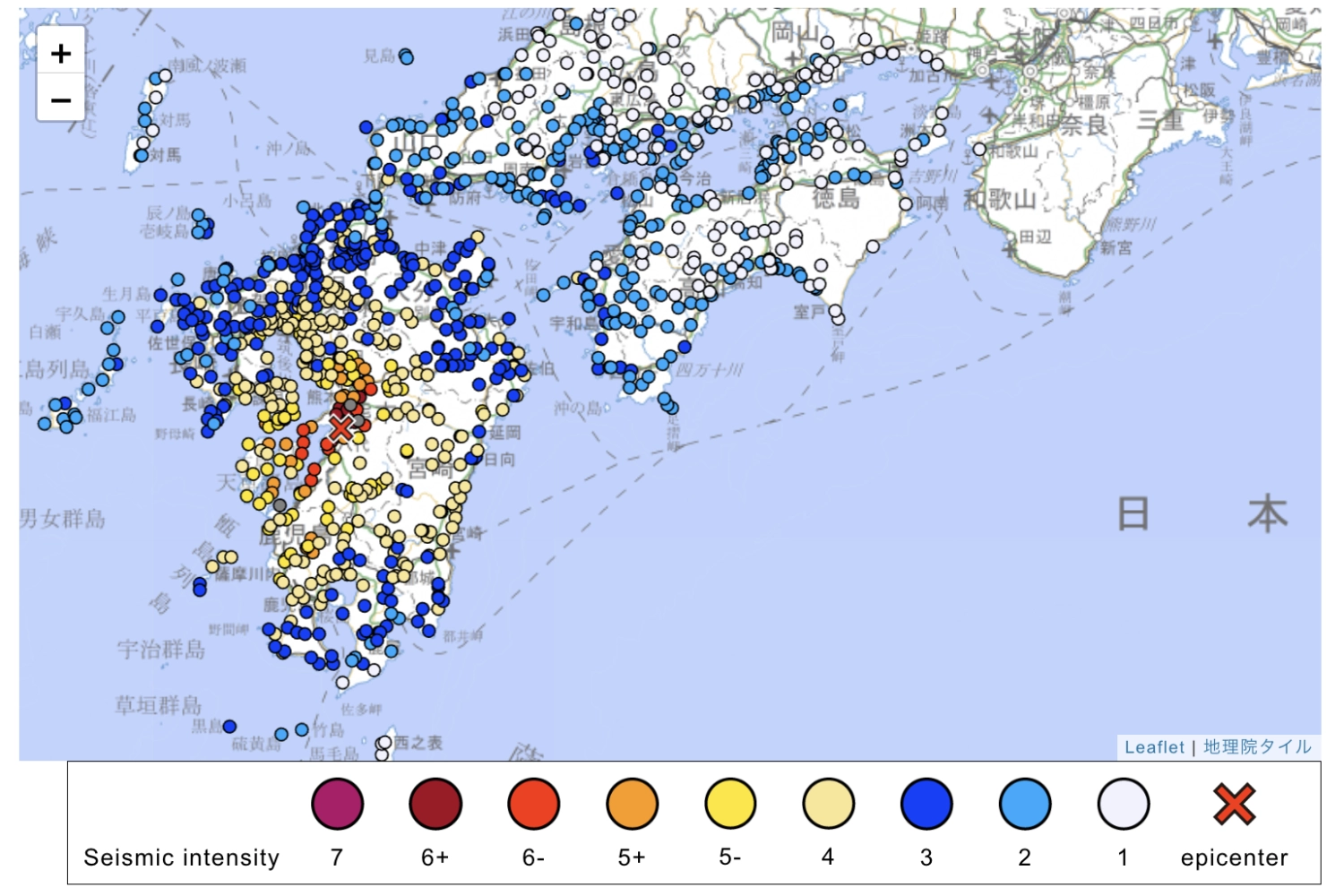 The epicenter and seismic intensity of Tuesday’s earthquake is shown on a weather agency map. | Japan Meteorological Agency
Japan’s advanced earthquake early-warning system provided many residents with several seconds of notice before the strongest shaking arrived, allowing trains to automatically slow or stop and giving people valuable time to seek shelter.
Japan’s Disaster Preparedness Once Again Tested
Japan sits along the Pacific “Ring of Fire,” making it one of the world’s most earthquake-prone countries. The nation experiences thousands of earthquakes each year and has invested heavily in strict building standards, emergency preparedness, and early-warning technology following previous catastrophic earthquakes.
Although Tuesday’s earthquake caused significant disruption across Kyushu, officials said Japan’s preparedness measures likely helped reduce the overall impact.
 Members of the Tokyo Metropolitan Police Department’s Special Rescue Team and Air Unit board a helicopter to head out to Kumamoto Prefecture to search for missing people following the magnitude 7.1 earthquake [AFP]
Recovery Efforts Continue
Government officials said emergency operations remain focused on assisting injured residents, restoring critical infrastructure, and completing inspections of damaged roads, railways, homes, and public facilities.
Authorities continue to assess the full extent of the earthquake’s impact while urging residents to remain alert for aftershocks and rely on official government advisories as recovery efforts continue.
⚠️ Implications:
The powerful 7.1-magnitude earthquake that struck Japan’s Kyushu region highlights the country’s continued vulnerability to major seismic events despite its advanced disaster preparedness. While the immediate tsunami threat has passed, the injuries, infrastructure damage, and service disruptions demonstrate the significant challenges posed by natural disasters in one of the world’s most earthquake-prone nations.
🇯🇵 1. Aftershocks Continue to Pose Serious Risks
- The Japan Meteorological Agency has warned that strong aftershocks may continue in the coming days.
- Damaged buildings, weakened roads, and unstable slopes increase the risk of additional injuries.
- Authorities are urging residents to remain vigilant and avoid entering structurally compromised buildings.
🔍 Implication: Communities in the affected region will likely remain on high alert until seismic activity subsides and safety inspections are completed.
🚑 2. Emergency Response and Recovery Operations Will Continue
- Rescue teams remain deployed to assist injured residents and assess damaged structures.
- Local governments have opened evacuation centers for displaced families.
- Engineers continue inspecting roads, bridges, railways, and public facilities before normal operations can fully resume.
⚠️ Implication: Recovery efforts may take days or weeks depending on the extent of infrastructure damage and ongoing aftershocks.
🚄 3. Transportation and Infrastructure Face Ongoing Disruptions
- Rail services, including portions of the Kyushu Shinkansen, were temporarily suspended for inspections.
- Highway closures, flight delays, and damaged roads have affected travel throughout the region.
- Power outages and interruptions to essential services have impacted thousands of residents.
🌐 Implication: Businesses, commuters, and supply chains may experience continued disruptions as authorities restore critical infrastructure.
🏥 4. Healthcare and Emergency Services Remain Under Pressure
- Hospitals are treating dozens of earthquake-related injuries while preparing for potential aftershocks.
- Emergency responders continue receiving calls involving damaged homes and public infrastructure.
- Local authorities are coordinating relief efforts to support affected communities.
📢 Implication: Emergency services will remain focused on life-saving operations and public safety until conditions stabilize.
🌍 5. Japan’s Disaster Preparedness Faces Another Real-World Test
- Japan’s earthquake early-warning system provided valuable seconds of advance notice before the strongest shaking.
- Strict building codes and emergency preparedness measures helped reduce the potential impact.
- Officials continue evaluating how existing disaster-response systems performed during the earthquake.
🛡️ Implication: The event is likely to reinforce Japan’s ongoing investment in disaster resilience, emergency planning, and infrastructure safety.
🌏 6. Economic and Regional Effects May Extend Beyond the Immediate Disaster
- Temporary shutdowns at manufacturing facilities and transportation networks could affect regional production and logistics.
- Businesses continue assessing structural damage before resuming normal operations.
- The earthquake serves as a reminder of how natural disasters can disrupt supply chains across Asia.
📈 Implication: While Japan’s economy is well-equipped to recover from major disasters, short-term disruptions to manufacturing, transportation, and commerce are expected as recovery efforts continue.
💬 Overall Takeaway:
Japan’s 7.1-magnitude earthquake serves as a stark reminder that even one of the world’s most prepared nations remains vulnerable to powerful natural disasters. Although the tsunami threat was lifted and widespread catastrophe was largely avoided, the injuries, infrastructure damage, and disruptions underscore the importance of rapid emergency response, resilient infrastructure, and continued public preparedness. As recovery efforts continue and authorities monitor for aftershocks, the focus remains on restoring essential services, ensuring public safety, and supporting affected communities while reinforcing Japan’s long-standing commitment to disaster resilience.
SOURCES: REUTERS – Japan quake kills at least two after blast at Kumamoto mall, one in building collapse
AL JAZEERA – Japan earthquake death toll rises to 18 as rescue efforts continue
JAPAN TODAY – Japan quake injures at least 50, disrupts power and travel