Published July 29, 2026
DUBAI, United Arab Emirates — Yemen’s Iran-backed Houthi movement is reportedly considering imposing transit fees on commercial vessels sailing through the strategic Bab el-Mandeb Strait, a move that could significantly escalate tensions in one of the world’s most important maritime trade corridors.
According to multiple sources familiar with the discussions, the Houthis are exploring the creation of a formal mechanism that would require commercial ships to pay for safe passage through waters under the group’s influence. The proposal comes just days after the Houthis announced a maritime blockade targeting Saudi Arabia and amid continuing instability across the Middle East.
Strategic Waterway at the Center of Global Trade
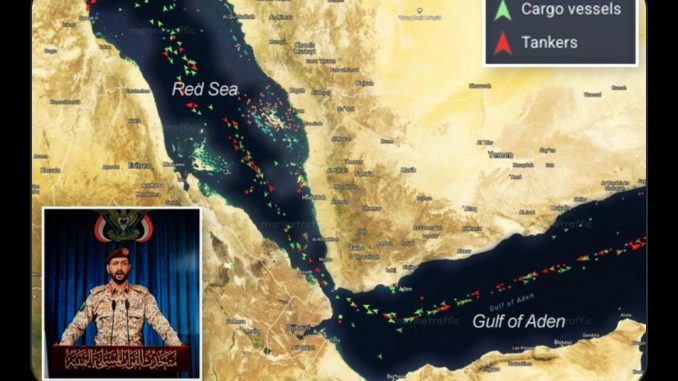
The Bab el-Mandeb Strait, located between Yemen and the Horn of Africa, connects the Red Sea to the Gulf of Aden and serves as a critical gateway to the Suez Canal. A substantial portion of global trade—including oil, liquefied natural gas, and container shipping—passes through the narrow waterway each year.
Shipping companies have already faced months of disruptions caused by Houthi missile and drone attacks, prompting many vessels to reroute around Africa’s Cape of Good Hope, adding significant costs and delays to international commerce.
Houthis Seek to Institutionalize Control
Sources told Reuters that the Houthis are considering establishing a regulatory authority that would oversee the collection of transit fees from commercial shipping. Iranian advisers are reportedly assisting with the planning, though no official fee structure has been publicly announced. China-linked vessels are reportedly expected to receive exemptions following separate discussions between Beijing and Houthi representatives.
If implemented, the plan would represent a significant expansion of the Houthis’ influence over one of the world’s busiest maritime chokepoints.
Shipping Industry Faces Growing Uncertainty
Maritime security experts say any attempt to charge passage fees through an internationally recognized shipping lane could create additional uncertainty for commercial operators already coping with increased insurance costs and security risks.
Many shipping companies have diverted vessels away from the Red Sea in recent months because of attacks on merchant ships, forcing longer voyages that increase fuel costs, delivery times, and freight rates. Industry analysts warn that additional financial demands could place even greater pressure on global supply chains.
Regional Tensions Continue to Escalate
The reported proposal comes amid broader instability involving Iran and its regional allies. Western governments have repeatedly accused Tehran of providing military and financial support to the Houthis, allegations Iran has denied while acknowledging political backing for the group.
The United States and allied naval forces continue conducting maritime security operations in the Red Sea, but officials acknowledge that protecting every commercial vessel remains a significant operational challenge given the size of the region and the evolving nature of Houthi attacks.
Global Economic Concerns Grow
Analysts warn that any sustained disruption to shipping through the Bab el-Mandeb Strait could have consequences far beyond the Middle East.
The waterway is a vital link between Europe, Asia, and Africa, and prolonged instability could contribute to higher transportation costs, increased energy prices, and delays affecting global supply chains. Businesses dependent on maritime shipping may continue facing higher insurance premiums and longer delivery times if security conditions deteriorate further.
While the Houthis have not formally announced a final decision regarding transit fees, the reported discussions underscore the growing strategic importance of maritime security as regional conflicts increasingly affect international trade routes.
⚠️ Implications:
The Houthis’ reported consideration of charging commercial vessels to transit the Red Sea marks a potential shift from military disruption to economic leverage over one of the world’s busiest maritime corridors. If implemented, the proposal could further complicate international shipping, increase transportation costs, and heighten geopolitical tensions in an already volatile region.
🚢 1. Global Shipping Costs Could Rise Further
- Commercial vessels may face additional expenses if transit fees are imposed.
- Shipping companies could continue rerouting vessels around the Cape of Good Hope to avoid security risks and added costs.
- Longer voyages would increase fuel consumption, insurance premiums, and delivery times.
🔍 Implication: Businesses and consumers worldwide could experience higher shipping costs and supply chain disruptions if Red Sea transit becomes more expensive or unpredictable.
⚠️ 2. Maritime Security Risks May Intensify
- The proposal follows months of Houthi missile and drone attacks on commercial shipping.
- Vessel operators may face difficult decisions about whether to pay fees, reroute, or risk operating in contested waters.
- International naval forces could face increased pressure to safeguard freedom of navigation.
🛡️ Implication: The Red Sea may remain one of the world’s highest-risk maritime corridors, requiring continued international security operations.
🌍 3. Regional Tensions Could Escalate
- Western governments have long accused Iran of supporting the Houthis, while Tehran denies directing the group’s military operations.
- Any formal system of charging vessels could deepen diplomatic tensions between Iran, regional states, and Western allies.
- The issue may become another point of contention in broader Middle East security discussions.
📢 Implication: The proposal could further complicate efforts to reduce regional tensions and restore stability to key international waterways.
💰 4. The Houthis Could Gain a New Source of Revenue
- Transit fees could provide the group with an additional stream of income beyond existing financial and logistical support.
- Additional revenue could strengthen the Houthis’ administrative and military capabilities if implemented.
- Questions remain regarding the legality and international recognition of any such fee collection.
⚠️ Implication: A successful fee system could alter the financial dynamics of the conflict while raising concerns among governments seeking to limit funding for armed groups.
⚖️ 5. International Law May Face New Challenges
- The Bab el-Mandeb Strait is a vital international shipping route governed by established principles of maritime law.
- Attempts by a non-state armed group to charge for passage could face significant legal objections.
- Governments and international organizations may consider diplomatic or legal responses if such a policy is introduced.
🌐 Implication: The proposal could trigger renewed debates over freedom of navigation, maritime law, and the protection of international trade routes.
📦 6. Global Supply Chains Could Face Renewed Pressure
- The Red Sea serves as a critical link between Asia, Europe, and Africa.
- Continued instability could delay deliveries of energy products, consumer goods, and industrial materials.
- Manufacturers and retailers may need to adjust logistics strategies if disruptions persist.
📈 Implication: Prolonged uncertainty in the Red Sea could have ripple effects across global commerce, affecting businesses, shipping markets, and consumers far beyond the Middle East.
💬 Overall Takeaway:
The Houthis’ reported consideration of charging commercial ships to transit the Red Sea reflects a potentially significant evolution in how armed groups can exert influence over critical international trade routes. Beyond the immediate security concerns, the proposal raises broader questions about the protection of global commerce, freedom of navigation, and the ability of non-state actors to leverage strategic chokepoints for political or financial gain.
For businesses, shipping companies, and consumers, the stakes extend well beyond the Middle East. The Red Sea is one of the world’s most important maritime corridors, carrying energy supplies, manufactured goods, food, and other essential cargo between Asia, Europe, and Africa. Any additional disruption—whether through security threats, increased insurance costs, or proposed transit fees—could contribute to higher transportation expenses, longer delivery times, and renewed pressure on already fragile global supply chains.
The development also highlights the growing intersection of regional conflicts and the global economy. As geopolitical tensions increasingly affect international shipping lanes, governments and naval coalitions may face mounting pressure to safeguard freedom of navigation and ensure that vital waterways remain open to commercial traffic. Whether the Houthis ultimately implement the proposal or not, the discussions alone underscore how instability in a single strategic region can have far-reaching economic and diplomatic consequences across the world.
SOURCES: BREITBART NEWS – Report: Yemen’s Iran-Backed Houthis Plan to Extort ‘Fees’ for Red Sea Shipping
REUTERS – Yemen’s Houthis considering fees for ships sailing through Red Sea, sources say
THE TIMES OF ISRAEL – Guided by Iran, Houthis may start charging for passage through Red Sea strait