Published April 19, 2026
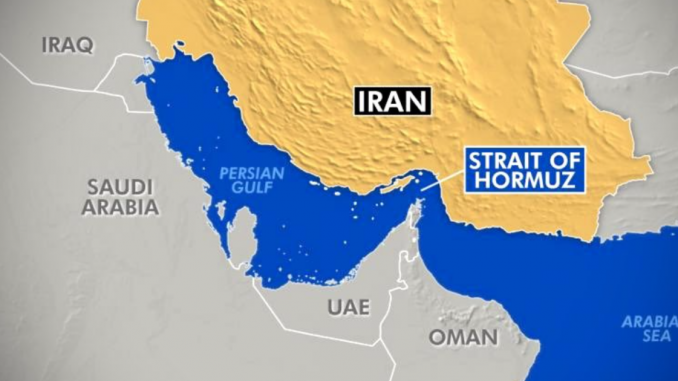
STRAIT OF HORMUZ — A tense maritime confrontation in one of the world’s most critical waterways is raising alarms globally after U.S. forces seized an Iranian-flagged cargo vessel attempting to pass through restricted waters, marking a sharp escalation in the ongoing standoff between Washington and Tehran.
U.S. President Donald Trump said the vessel ignored repeated warnings before being stopped by a U.S. Navy destroyer and taken into custody, in what analysts are calling a high-risk enforcement move in a region already on edge.
⚓ The Intercept: From Warning to Boarding
According to official statements and multiple reports, the incident unfolded in stages:
- The Iranian-flagged cargo ship approached the Strait despite an active U.S.-led restriction
- U.S. naval forces issued repeated warnings to halt
- The vessel allegedly continued moving forward
- A U.S. destroyer disabled the ship’s engine
- Marines boarded and secured control of the vessel
Trump described the operation bluntly, saying the ship was stopped by damaging its engine before being seized.
In practical terms:
this wasn’t just monitoring — it was direct military enforcement.
🌍 Why the Strait of Hormuz is a Global Flashpoint
Every day, it carries:
- Roughly one-fifth of the world’s oil supply
- Massive volumes of liquefied natural gas
- Commercial goods connecting Asia, the Middle East, and beyond
That means even a single incident can ripple across:
- Global fuel prices
- Shipping insurance costs
- International supply chains
In simple terms:
what happens in this narrow waterway doesn’t stay local — it affects the world.
🚨 Blockade VS Sovereignity: The Core Dispute
At the heart of the crisis is a fundamental disagreement:
- The U.S. is enforcing restrictions on Iranian-linked shipping
- Iran argues it has the right to operate in and around the strait
- Both sides accuse each other of violating international norms
Iran has repeatedly warned that if its ships are blocked, it may respond by restricting access for others — a move that could disrupt global energy markets overnight.
This creates a standoff where:
control of the water equals leverage over the global economy.
⚠️ A Region already under strain
The seizure comes amid a wider set of tensions:
- Ongoing disputes over Iran’s nuclear program
- Regional instability involving multiple countries
- Military buildup and naval patrols in the Gulf
- Fragile diplomatic efforts that have yet to produce lasting results
Instead of easing tensions, this incident risks becoming a turning point that hardens positions on both sides.
💥 What makes this incident different
Maritime confrontations in the Gulf are not new — but this one stands out for several reasons:
- Direct disabling of a vessel before boarding
- Clear public acknowledgment from U.S. leadership
- Occurring during a period of already heightened tension
- Tied directly to enforcement of a broader blockade strategy
In short:
this was not a warning shot — it was a decisive action.
🧠 The Strategy behind the move
From a strategic standpoint, the U.S. action signals:
- Willingness to enforce restrictions, not just announce them
- A push to control movement through critical trade routes
- Increased pressure on Iran’s economic and logistical channels
Meanwhile, Iran’s likely view:
- The move challenges its regional authority
- It sets a precedent for future interceptions
- It may require a response to maintain credibility
That’s where the risk increases — because each side now has something to prove.
🌐 Global Impact: More than just a regional issue
The effects are already being closely watched worldwide:
- Oil markets reacting to uncertainty
- Shipping companies reassessing routes
- Governments monitoring for escalation risks
- Energy-dependent economies bracing for volatility
Even without further conflict, the perception of instability can:
- Drive up fuel prices
- Slow down shipping traffic
- Increase costs for businesses and consumers
🔍 Critical View: A High-Risk Move in a High-Stakes Waterway
When you look past the headlines about the U.S. seizing an Iranian-flagged ship in the Strait of Hormuz, the situation raises some basic but important questions: how far should enforcement go, and what are the risks of pushing too hard in a place this sensitive?
⚠️ Enforcement vs. Escalation
On one hand, enforcing rules and protecting shipping lanes is important. If a country sets restrictions, it needs to show it can back them up.
But on the other hand:
- Disabling and boarding a foreign vessel is a serious step
- It can be seen as a direct challenge by the other side
- It increases the chance of retaliation
In simple terms:
strong action can bring order — but it can also trigger a response.
🌍 The Risk to Global Trade
The Strait of Hormuz isn’t just another location — it’s one of the most important trade routes in the world.
That means any tension there can quickly affect:
- Oil prices
- Shipping routes
- Everyday costs like fuel and goods
So even a single incident can have ripple effects far beyond the region.
🧠 Clear Rules Matter — Mixed Signals Don’t Help
One of the concerns in situations like this is clarity.
If rules about navigation, blockades, and enforcement aren’t clearly understood by everyone involved:
- Ships may take risks
- Military responses may escalate quickly
- Miscalculations become more likely
In plain language:
when the rules aren’t crystal clear, mistakes become more dangerous.
⚖️ Balancing Strength and Stability
There’s always a balance to strike:
- Show strength so rules are respected
- But avoid actions that could widen the conflict
Critics often point out that:
- Too little enforcement invites challenges
- Too much force can provoke escalation
Finding that middle ground is the real challenge — and it’s not easy in a tense region like this.
🔄 Cycle of Action and Reaction
In conflicts involving major powers, actions rarely happen in isolation.
- One side takes a strong step
- The other side feels pressure to respond
- The situation escalates step by step
That’s how localized incidents can turn into larger confrontations.
👥 On the Ground: What This Looks Like in Real Life
In a place like the Strait of Hormuz, big geopolitical moves don’t stay abstract — they show up quickly in everyday conditions for crews, businesses, and nearby communities.
⚓ For Ships and Crews: More Tension, More Risk
For sailors and cargo operators passing through the strait, the situation becomes more stressful overnight.
After an incident like a ship seizure, crews have to deal with:
- Stricter inspections and delays
- More military presence in the water
- Uncertainty about which routes are safe
- Higher risk of sudden confrontations
In simple terms:
what used to be a routine route now feels unpredictable.
🚢 Shipping Slowdowns and Delays
Shipping companies don’t wait for things to get worse — they react immediately.
That often means:
- Rerouting vessels to avoid high-risk zones
- Delaying departures until conditions are clearer
- Paying higher insurance costs for cargo
- Passing added costs down the supply chain
So even if you’re far from the Middle East, you might feel it later through higher prices or slower deliveries.
⛽ Energy Flow Becomes Uncertain
Because so much oil moves through the Strait of Hormuz, any disruption creates concern.
On the ground, that translates to:
- Traders watching for price spikes
- Governments monitoring fuel supply
- Businesses preparing for cost increases
It doesn’t take a full shutdown — even tension alone can move markets.
🚨 Military Presence Becomes More Visible
After a high-profile seizure, security increases.
People in and around the region may notice:
- More naval patrols
- More surveillance activity
- Faster response to any movement in the water
- A general sense that things are being watched closely
For locals, that can feel like living near a situation that could change quickly.
🔄 Uncertainty Becomes the New Normal
The biggest impact isn’t always immediate damage — it’s uncertainty.
- Will there be another interception?
- Will one side respond?
- Will shipping lanes stay open?
That kind of uncertainty affects decisions at every level, from governments to everyday workers.
🎯 The Final Word:
At the end of the day, what happened in the Strait of Hormuz shows how quickly a single action can raise the stakes in a place that the whole world depends on. Enforcing rules is important, but when it involves military force in such a sensitive area, it also increases the risk of pushback and wider tension. For many observers, the concern is simple: if actions like this keep escalating, it won’t just stay a regional issue — it could start affecting global trade, fuel costs, and stability in ways that are harder to control.
SOURCES: THE GATEWAY PUNDIT – US Seizes Iranian Cargo Ship Trying to Run Strait of Hormuz Blockade; Trump Says Navy Stopped Ship by ‘Blowing a Hole in the Engine Room’
AL JAZEERA – Trump says US seized Iranian ship trying to get past blockade near Hormuz
GMA NEWS NETWORK – Trump says US destroyer hit Iran cargo ship trying to evade blockade