
Why Are Thousands Fleeing Morocco? Economic Hardship, Unemployment, and Lost Hope Drive Mass Migration to Europe

Buy Me a Coffee

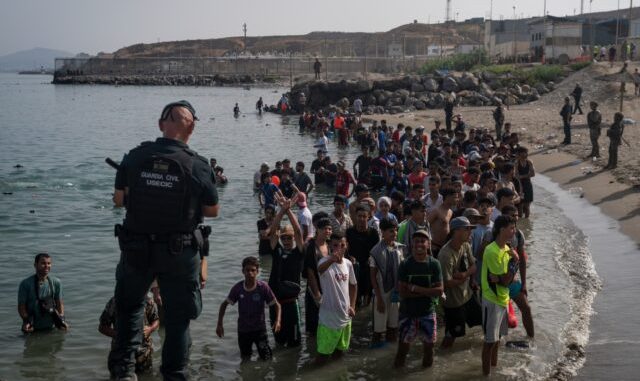
CEUTA, SPAIN - JULY 31: Migrants arriving to Tarajal beach after crossing the border between Spain and Morocco on July 31, 2026 in Ceuta, Spain. Spain's interior ministry has said it's deploying 60 members of the armed forces and an additional 30 Guardia Civil officers to Ceuta after tens of thousands of migrants entered the Spanish enclave in North Africa on Thursday. A large number of people swam through the Tarajal breakwater to enter the Spanish territory from neighboring Morocco, while others scaled the border fence. Some estimates have said that around 49,000 migrants made the crossing, with the surge of arrivals overwhelming migrant reception centres, with many sleeping on the streets overnight. (Photo by Adri Salido/Getty Images)
Reported by:

Cherry Meigh Timbol
News Content Editor
Published August 2 , 2026

CEUTA, Spain — As thousands of migrants continue making dangerous crossings into the Spanish enclave of Ceuta, a central question has emerged: What are they actually fleeing from? Unlike many migration crises driven primarily by war or armed conflict, experts say the latest exodus from Morocco is being fueled by a combination of economic hardship, rising unemployment, social inequality, and growing frustration over limited opportunities—especially among the country’s youth.

The recent migration surge saw tens of thousands of people enter Ceuta, Spain’s autonomous city on the northern coast of Africa, by swimming around border barriers or using makeshift flotation devices. The unprecedented influx overwhelmed local authorities and reignited debate across Europe over migration, border security, and the conditions pushing people to risk their lives for the chance of reaching the European Union.

A migrant runs from Spanish police officers as they cordon off access to the beach for people crossing from Morocco into the Spanish enclave of Ceuta, Friday, July 31, 2026. (AP Photo/Antonio Sempere)

A migrant runs from Spanish police officers as they cordon off access to the beach for people crossing from Morocco into the Spanish enclave of Ceuta, Friday, July 31, 2026. (AP Photo/Antonio Sempere)

Not Fleeing War—But Escaping Economic Despair

Unlike migrants escaping active conflict zones, many Moroccans attempting to reach Ceuta are leaving behind worsening economic conditions rather than armed violence.

Although Morocco has maintained relative political stability compared with several neighboring countries, many families continue struggling with rising living costs, limited employment opportunities, and widening income inequality. Young people have been particularly affected, with many believing they have little chance of building a stable future at home.

For countless migrants, Europe represents the possibility of employment, financial security, and a better quality of life—even if reaching it means undertaking dangerous and sometimes deadly journeys.

Youth Unemployment Fuels Growing Frustration

Economic experts point to youth unemployment as one of the most significant drivers behind the recent migration wave.

Many young Moroccans complete their education only to encounter limited job prospects, low wages, or unstable employment. Even those with professional qualifications often struggle to secure careers that provide long-term financial security.

As frustration grows, increasing numbers view migration not simply as an opportunity, but as their only realistic path toward improving their lives.

Many people are seen running along a beach while a solder stands facing the opposite direction.
Migrants run on the beach on Saturday, as they attempt to make their way past a Spanish soldier, following mass crossings of migrants on foot and by sea from Morocco into Spanish territory. (Fabian Bimmer/Reuters)

Social Media and Migration Networks Encourage the Journey

Modern communication has also played a significant role in the surge.

Through social media and online messaging platforms, migrants often share videos and stories of successful crossings into Europe, encouraging others to attempt the same journey. Information spreads rapidly, sometimes creating the perception that opportunities exist immediately across the border, despite the significant dangers and legal challenges involved.

Authorities warn that misinformation circulating online can underestimate the risks while fueling unrealistic expectations among prospective migrants.

Ceuta Becomes the Gateway to Europe

Ceuta occupies a unique position as one of only two Spanish territories located in North Africa. Because it forms part of Spain—and therefore the European Union—it has long served as one of Europe’s most sensitive migration entry points.

Many migrants believe that reaching Ceuta provides a stepping stone toward mainland Spain and eventually other European countries. This perception continues to attract large numbers despite strengthened border controls and the possibility of being returned to Morocco.

The latest mass arrivals placed enormous pressure on Spanish emergency services, humanitarian organizations, and border authorities tasked with responding to one of the largest migration surges in recent years.

Crowds of people rest on a shoreline on a sunny day.
Migrants rest in Ceuta, Spain, on Saturday, following recent mass crossings of migrants on foot and by sea from Morocco into Spanish territory. (Violeta Santos Moura/Reuters)

A Crisis Rooted in Opportunity Rather Than Conflict

The events unfolding in Ceuta highlight a growing reality facing Europe: not every migration crisis is driven by war.

For many Moroccans, the decision to leave is rooted in economic insecurity, limited social mobility, and diminishing confidence that their circumstances will improve. Analysts say these “push factors” continue driving migration even in countries that are politically stable.

While European governments debate border security and migration policy, experts argue that addressing the root causes—including unemployment, poverty, and economic inequality—will be essential to reducing future migration pressures.

As thousands continue risking dangerous crossings in search of opportunity, the situation in Ceuta illustrates that people do not flee only from conflict. Increasingly, they are fleeing hopelessness, believing that the possibility of a better future lies beyond their own borders.

https://youtu.be/Pt4snsdv_JM?si=wok1M-Nk1V75PBo1


👥 Public / Political Reactions:

The mass migration into Spain’s North African enclave of Ceuta has sparked strong reactions from political leaders, humanitarian organizations, and migration experts. While governments have emphasized border security and orderly migration, many organizations argue that the crisis also reflects deeper economic and social challenges facing Morocco and other parts of North Africa.

🇪🇸 Spanish Government
Spanish authorities described the unprecedented influx into Ceuta as a major humanitarian and border security challenge. The government deployed additional security personnel and emergency responders while coordinating with Moroccan authorities to manage the situation and facilitate the voluntary return of many migrants. Spanish officials also reaffirmed their commitment to protecting the European Union’s external border while respecting international humanitarian obligations.

🇲🇦 Moroccan Government
Moroccan authorities have worked with Spain to help stabilize the situation and assist in the return of many migrants. While the government has not characterized the departures as a reflection of national instability, it continues facing growing scrutiny over economic conditions, youth unemployment, and limited opportunities that many analysts believe are contributing to increased migration pressures.

🇪🇺 European Union
European Union officials expressed support for Spain in managing the sudden influx while reiterating the need for stronger cooperation with Morocco on migration management. EU leaders continue emphasizing the importance of balancing effective border security with the protection of migrants’ rights and addressing the root causes of irregular migration through economic development and regional partnerships.

🤝 Humanitarian Organizations
Humanitarian groups voiced concern over the dangerous conditions faced by migrants attempting to reach Ceuta, particularly those who crossed by sea. Aid organizations renewed calls for the protection of vulnerable migrants, expanded search-and-rescue efforts, and policies that address the humanitarian consequences of irregular migration while respecting international law.

🌍 Migration and Economic Experts
Migration specialists argue that the recent surge reflects more than a border security issue. Many point to persistent unemployment, rising living costs, income inequality, and limited economic opportunities as major factors pushing people to leave Morocco. Experts say that unless these underlying conditions improve, migration pressures toward Europe are likely to continue despite tighter border enforcement.


⚠️ Resulting Effects:

The mass migration into Ceuta has highlighted the growing impact of economic migration on Europe’s southern border. Beyond the immediate humanitarian response, the crisis has intensified debates over border security, migration policy, and the economic conditions driving thousands of Moroccans to leave their country in search of better opportunities.

🚨 1. Spain’s Border Security Has Come Under Greater Pressure
The sudden arrival of tens of thousands of migrants overwhelmed reception facilities and required Spanish authorities to deploy additional security personnel and emergency responders. Border operations in and around Ceuta have since been reinforced.

🛡️ Effect: Spain is expected to continue strengthening surveillance and border management while working closely with Morocco to prevent future mass crossings.

👥 2. Humanitarian Challenges Have Intensified
The large influx of migrants placed significant strain on emergency services, temporary shelters, and humanitarian organizations. Dangerous sea crossings also resulted in casualties, underscoring the risks faced by those attempting to reach Europe.

⚠️ Effect: Humanitarian agencies are likely to expand calls for safer migration pathways and stronger protections for vulnerable migrants.

📉 3. Morocco’s Economic Challenges Have Drawn Greater International Attention
The migration surge has renewed focus on unemployment, rising living costs, and limited economic opportunities facing many Moroccans, particularly young people seeking better prospects abroad.

🏛️ Effect: Increased international attention may place additional pressure on Morocco to address long-term economic and social issues contributing to outward migration.

🇪🇺 4. European Migration Policy Faces Renewed Scrutiny
The events in Ceuta have reignited discussions across the European Union over border protection, asylum procedures, and cooperation with neighboring countries to manage irregular migration.

🤝 Effect: European governments may pursue stronger coordination on migration management while balancing border security with humanitarian responsibilities.

📱 5. Migration Networks May Encourage Further Crossings
Images and reports of the mass crossings have spread widely through social media and migrant communities, potentially encouraging others facing similar economic hardships to attempt the journey.

🌍 Effect: Authorities may face continued migration pressure unless the underlying economic factors driving departures are effectively addressed.

📈 6. Economic Migration Is Expected to Remain a Major Regional Challenge
The crisis has demonstrated that migration is increasingly driven not only by armed conflict but also by persistent poverty, unemployment, and limited opportunities for economic advancement.

🧭 Effect: Unless economic conditions improve and legal migration opportunities expand, Europe is likely to continue experiencing periodic migration surges from North Africa and other neighboring regions.


🔮 Future Outlook:

The migration surge into Ceuta has underscored that economic hardship and limited opportunities can drive large-scale migration even in the absence of armed conflict. As Morocco and European governments work to manage the immediate crisis, long-term solutions will likely depend on improving economic conditions, strengthening border cooperation, and addressing the factors that continue pushing people to leave.

🇲🇦 1. Morocco Will Face Growing Pressure to Address Economic Challenges
The latest migration wave has drawn renewed attention to youth unemployment, rising living costs, and limited job opportunities across Morocco. Addressing these issues is expected to remain a key domestic priority.

📈 Outlook: Unless meaningful economic reforms and employment opportunities expand, many Moroccans—particularly young people—may continue seeking opportunities abroad.

🇪🇸 2. Spain Is Likely to Strengthen Border Security
Spanish authorities are expected to maintain heightened security around Ceuta while improving surveillance, emergency response capabilities, and coordination with Moroccan officials to manage future migration surges.

🛡️ Outlook: Border enforcement is likely to become more robust, although authorities acknowledge that security measures alone may not prevent future crossings.

🇪🇺 3. The European Union Will Continue Reviewing Migration Policies
The Ceuta crisis has renewed debate within the European Union over border management, asylum procedures, and cooperation with neighboring countries on migration issues.

🤝 Outlook: EU member states are expected to pursue stronger partnerships with Morocco while seeking a balance between effective border control and humanitarian responsibilities.

🌍 4. Economic Migration Will Remain a Major Challenge
Experts believe the factors driving migration from Morocco—economic inequality, unemployment, and hopes for a better future—are unlikely to disappear quickly.

⚠️ Outlook: Europe may continue experiencing periodic migration surges as long as significant economic disparities persist between North Africa and the European Union.

👥 5. Humanitarian Concerns Will Continue to Shape the Debate
International organizations are expected to keep advocating for the protection of migrants, improved rescue operations, and policies that reduce the risks associated with dangerous sea crossings.

🕊️ Outlook: Humanitarian considerations are likely to remain central to future discussions on migration management and regional cooperation.

🧭 6. Long-Term Solutions Will Depend on Addressing Root Causes
While stronger border controls may help manage immediate migration flows, many analysts argue that lasting progress will require sustained investment in economic development, education, and job creation in countries of origin.

🌐 Outlook: Unless the underlying drivers of migration are addressed, Ceuta is likely to remain one of Europe’s most active migration flashpoints, with future surges continuing to test both regional cooperation and European migration policy.


🧩 Bottom Line:

The recent migration surge into Ceuta has highlighted that large-scale migration is not driven solely by war or political instability. For many Moroccans, the decision to leave reflects mounting economic hardship, high youth unemployment, rising living costs, and limited opportunities—factors that have led thousands to risk dangerous journeys in search of a better future.

🏛️ Spain and the European Union continue emphasizing the need to protect the bloc’s external borders while managing migration in an orderly and humane manner. European leaders have also stressed the importance of strengthening cooperation with Morocco to improve border management and address the broader challenges contributing to irregular migration.

⚖️ Morocco has worked with Spain to manage the aftermath of the mass crossings while facing renewed attention over the economic and social conditions that many analysts say are encouraging outward migration. Although the country remains relatively stable compared with parts of the region, persistent unemployment and limited economic prospects continue to weigh heavily on many citizens, particularly young people.

📄 Migration experts and humanitarian organizations argue that stronger border controls alone are unlikely to resolve the issue. They contend that addressing the root causes—including job creation, economic development, education, and legal migration pathways—will be essential to reducing long-term migration pressures.

🌍 The implications extend beyond Morocco and Spain. The events in Ceuta have reignited broader European debates over migration policy, border security, humanitarian responsibilities, and economic cooperation with neighboring countries. They also underscore the growing challenge of managing migration driven by economic inequality rather than armed conflict.

➡️ Bottom Line: The Ceuta migration crisis serves as a powerful reminder that people often leave not only to escape violence, but also to escape poverty, unemployment, and the loss of hope for a better future. Unless those underlying conditions improve, Europe is likely to continue facing migration pressures that cannot be solved by border enforcement alone.


SOURCES: BREITBART NEWS – The Situation in Morocco: What Are Migrants ‘Fleeing’ From?
TIME MAGAZINE – Why Thousands of Moroccan Migrants Crossed Into the Spanish Exclave Ceuta
AP NEWS – Tens of thousands of migrants voluntarily leave after crossing into Spanish territory of Ceuta


 

0 0 votes
Article Rating
Subscribe
Notify of
0 Comments
Oldest
Newest Most Voted