Reported by:

Cherry Meigh Timbol
News Content Editor
Published August 15, 2026
GARDEN CITY, N.Y. — President Donald Trump has said he intends to declare the Strait of Hormuz a territory of the United States once Iran is defeated, escalating his rhetoric over the strategically vital waterway amid the continuing U.S.-Iran conflict.
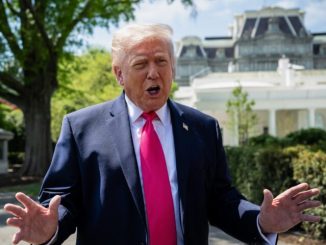
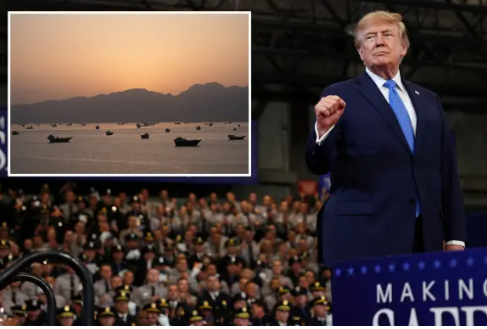
Speaking at a political event in New York on Friday, August 14, Trump said the United States would soon make the dramatic territorial claim after completing what he described as the defeat of Iran.
“After we finish defeating Iran — which is being very badly defeated — pretty soon I’ll be declaring the Hormuz Strait a territory of the United States,” Trump said.
The comments were reported by the New York Post and Mediaite and have drawn international attention because the waterway is an international maritime passage bordering Iran and Oman.
Trump Links Territorial Claim to Iran War
Trump presented the proposed move as part of his broader strategy for dealing with Iran and securing the waterway.
The Strait of Hormuz has become one of the central flashpoints of the conflict. Iran has asserted control over maritime traffic in the area, while the United States has sought to reopen the passage to international shipping. Reuters reported Friday that oil shipments through the strait had effectively collapsed, with the disruption placing additional pressure on global energy markets.
Trump has also argued that the United States is paying a significant economic price for confronting Tehran, particularly through higher gasoline prices.
The president urged Americans to tolerate higher fuel costs, arguing that preventing Iran from obtaining a nuclear weapon justified the economic consequences. Reuters reported that U.S. gasoline prices had risen significantly over the previous year.
Strait of Hormuz at Center of Global Energy Crisis
The approximately 21-mile-wide Strait of Hormuz is one of the world’s most important energy chokepoints, connecting the Persian Gulf with the Gulf of Oman and the Arabian Sea.
A prolonged disruption to shipping through the waterway can affect oil and gas supplies far beyond the Middle East, putting pressure on fuel prices, transportation costs and global inflation.
The current conflict has already severely disrupted maritime traffic. Reuters reported that no crude-oil shipments were detected transiting the strait on Friday, a dramatic change from normal conditions.
Trump Criticizes U.S. Allies
Trump’s announcement also came amid continuing criticism of U.S. allies for not doing more to secure the waterway.
The president has repeatedly expressed frustration with European and Asian countries that depend heavily on energy transported through Hormuz but have been reluctant to participate directly in the U.S. military effort.
The New York Post reported that Trump again criticized NATO allies for their limited contribution to securing the passage.
Trump’s position is that countries benefiting from the waterway should share more of the burden of protecting it.
Iran Rejects U.S. Claims of Control
Trump’s declaration comes as Tehran continues to challenge Washington’s claims regarding the waterway.
Iran has maintained that the Strait of Hormuz falls under its authority and has resisted U.S. efforts to impose a new security arrangement.
Iranian officials have pushed back against Trump’s latest statement, while international observers have questioned what practical or legal mechanism the United States could use to transform an international waterway into U.S. territory.
The seriousness of Trump’s statement—and whether it represents an established U.S. policy rather than political rhetoric—remains unclear. The Guardian noted that the implications of the declaration were not immediately clear.
New Sanctions Threatened Against Tehran
Trump’s comments also coincided with warnings from Treasury Secretary Scott Bessent that Washington was preparing additional economic measures against Iran.
Bessent said the United States would impose measures that had “never been seen” against Tehran as early as the following week.
The threatened sanctions would add another layer of pressure on an Iranian economy already suffering from severe inflation and currency instability.
Trump has portrayed those economic difficulties as evidence that Tehran is being weakened by the U.S. campaign. The New York Post reported that he cited Iran’s economic deterioration as a sign that his administration’s pressure strategy was working.
Diplomatic Efforts Remain Uncertain
Despite Trump’s declaration that Iran is being defeated, diplomatic efforts to end the conflict remain unsettled.
A previous preliminary peace arrangement has broken down, while negotiations surrounding the Strait of Hormuz have become a major obstacle to any broader settlement. Al Jazeera reported that control of the waterway has become a central sticking point in ceasefire discussions.
The United States has sought the reopening of the waterway, while Tehran has continued to resist Washington’s demands.
The result is a volatile situation in which military, economic and diplomatic pressures are converging around one of the world’s most important maritime routes.
International Implications
Any attempt by Washington to formally claim the Strait of Hormuz as U.S. territory would have enormous geopolitical consequences.
Such a move would potentially put the United States into direct confrontation not only with Iran but also with other countries bordering or relying upon the waterway. It could also trigger a major international debate over maritime sovereignty, freedom of navigation and the status of international waterways.
For global markets, the immediate concern would remain whether oil and commercial shipping can safely resume normal passage.
🧩 Bottom Line:
President Donald Trump’s declaration that he intends to make the Strait of Hormuz a U.S. territory after defeating Iran marks a dramatic escalation in Washington’s rhetoric over the strategically vital waterway.
The statement comes as shipping through Hormuz remains severely disrupted, oil markets face continued uncertainty and Washington prepares additional economic pressure on Tehran. Whether Trump’s territorial proposal becomes an actual policy remains unclear, but the announcement underscores how central control of the Strait of Hormuz has become to the U.S.-Iran confrontation.
SOURCES: THE NEW YORK POST – Manifest destiny Trump says he’ll declare Strait of Hormuz a US territory after defeating Iran
MEDIAITE – JUST IN: Trump Says He’ll Declare the Strait of Hormuz as ‘US Territory’