
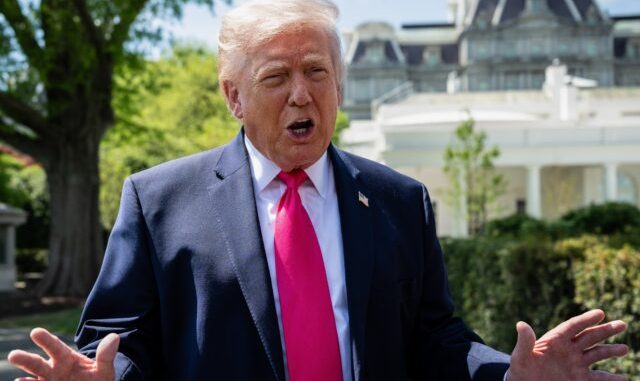
President Donald Trump has warned the Islamist regime in Tehran that if it refuses to accept his deal, the United States will once again start to bomb the country, including “every single” bridge and power plant.
Published April 20, 2026
Tensions between the United States and Iran are escalating rapidly after President Donald Trump issued a stark warning that Tehran must accept a deal or face possible strikes on major infrastructure, including bridges, power plants, and other critical systems, while diplomatic efforts are being redirected through Pakistan in an attempt to keep negotiations alive.
The latest statements come at a time when military pressure is already building in key global waterways, and both sides appear to be preparing for a prolonged standoff rather than a quick resolution.
🚨 “No more Mr. Nice Guy” message signals tougher stance
President Donald Trump reportedly delivered one of his strongest warnings yet, framing the situation as a final opportunity for Iran to reach an agreement before facing consequences.
The reported warning included possible targeting of:
- transportation infrastructure such as bridges and highways
- electrical grids and power plants
- industrial facilities tied to national output
- economic pressure points critical to daily operations
In simple terms:
the message was that if diplomacy fails, infrastructure could become a target.
⚓ Military pressure already active at sea
While the rhetoric is escalating on land, enforcement actions are already underway at sea.
Recent developments include:
- U.S. naval operations restricting Iranian maritime movement
- seizure of Iranian-flagged cargo vessels in disputed waters
- increased patrols in strategic shipping lanes
- enforcement actions tied to ongoing blockade measures
These actions are centered around one of the world’s most sensitive waterways — the Strait of Hormuz — where a large portion of global oil shipments pass.
In plain language:
control of this route means control over a major part of global energy flow.
🌍 Diplomatic talks shifted as pressure increases
At the same time, diplomatic channels are being adjusted in an effort to keep communication alive.
Reports indicate:
- negotiations are being redirected through Pakistan
- earlier talks have stalled or shown limited progress
- key issues remain unresolved, including nuclear restrictions and sanctions
- both sides remain far apart on core demands
This shift suggests that while diplomacy is still active, it is under significant strain.
💥 Why the situation is becoming more volatile
The current phase is defined by multiple pressure points happening at once:
- strong military enforcement at sea
- aggressive rhetoric on potential land-based targets
- stalled negotiations with no clear breakthrough
- rising concerns over regional stability
The combination increases the risk of miscalculation, especially if either side misreads the other’s intentions.
🔍 Critical View: What this escalation strategy really means
Looking at President Donald Trump’s warning tied to Iran and possible strikes on infrastructure, the main issue isn’t just the strong language — it’s the strategy behind mixing diplomacy with direct military pressure at the same time.
⚠️ Pressure tactics can work, but they can also harden positions
The idea behind threatening infrastructure like bridges and power plants is to force urgency in negotiations. But critics argue it can also backfire.
They point out that:
- the other side may become less willing to compromise
- public pressure inside Iran could push leaders to resist more strongly
- negotiations may stall instead of speed up
In simple terms:
strong pressure can sometimes make people dig in instead of give in.
⚓ Military actions raise the risk of miscalculation
With naval enforcement already happening in places like the Strait of Hormuz, critics say the situation becomes more fragile.
Concerns include:
- ships misreading intentions
- small incidents turning into bigger clashes
- rapid escalation in crowded waterways
In plain language:
the more forces are in close contact, the easier it is for something to go wrong.
🧠 Mixed messaging makes the situation harder to read
Another concern is that diplomacy and military pressure are happening at the same time.
That creates confusion like:
- are talks the priority or is pressure the priority?
- is escalation a threat or a strategy?
- what happens if negotiations fail?
When signals are mixed, it becomes harder for either side to predict the next step.
🌍 Global impact is not limited to the region
Even though the focus is Iran, the effects can spread quickly:
- oil prices react to tension
- shipping routes become more cautious
- insurance costs rise
- global markets become more sensitive
In simple terms:
even talk of conflict can affect prices and trade worldwide.
⚖️ The core debate: strength vs stability
Supporters of the strategy see it as necessary pressure to force a deal. Critics see a risk of escalation without a clear off-ramp.
So the real question becomes:
- does pressure bring faster agreement?
- or does it reduce the chances of compromise?
🔄 Why escalation risk is the biggest concern
The pattern critics worry about looks like this:
- strong warning is issued
- military presence increases
- the other side responds defensively
- trust decreases further
- negotiations become harder
In simple terms:
each step forward can also make the next step more difficult.
👥 On the Ground: What this tension feels like in real life
On the ground, the situation around U.S.–Iran tensions and the Strait of Hormuz is not just about political warnings or military statements. It shows up in practical concerns about safety, trade, and uncertainty in daily operations.
⚓ Shipping and crews are the first to feel it
For sailors and shipping companies moving through the Strait of Hormuz, the environment becomes more cautious.
They are dealing with:
- tighter security checks before entering the area
- longer waiting times for clearance
- rerouting decisions to avoid risk zones
- higher insurance costs for cargo
In simple terms:
what used to be a normal shipping lane now feels like a high-alert zone.
⛽ Energy markets react fast, even without conflict
Even without direct fighting, the oil and energy sector responds quickly to tension.
On the ground in global markets, this looks like:
- price fluctuations in oil futures
- traders reacting to political statements
- shipping companies adjusting schedules
- governments monitoring supply risks
In plain language:
just the possibility of disruption is enough to move prices.
🚨 Military presence increases caution
As tensions rise, military activity in the region becomes more visible.
This includes:
- more naval patrols in key waterways
- increased monitoring of commercial vessels
- faster response times to incidents
- tighter coordination between allied forces
For people working in and around shipping routes, this creates a constant sense of watchfulness.
🧠 Uncertainty affects decisions before anything happens
Even without a major incident, uncertainty changes behavior.
- companies delay investments
- shipping routes are reviewed more carefully
- businesses plan for worst-case scenarios
- governments prepare contingency plans
So the impact starts early — even before any action is taken.
⚖️ People are focused on stability, not strategy
Most people directly affected are not thinking about diplomacy or military strategy.
They are focused on:
- whether trade routes stay open
- whether costs will rise
- whether escalation could happen suddenly
- whether operations remain predictable
In simple terms:
they want stability more than anything else.
🔄 Why tension matters even without conflict
The key issue is that nothing has to “break” for consequences to appear.
- shipping slows down
- prices move
- caution increases
- planning becomes more conservative
That means the effect is real even before any major escalation.
🎯 The Final Word:
At the end of the day, the situation between the United States and Iran, including the warnings about possible strikes and the ongoing pressure in places like the Strait of Hormuz, shows how quickly diplomacy and military pressure can overlap in a high-risk region. While the goal may be to push for a deal and prevent long-term conflict, critics argue that strong threats and visible military activity can also increase tension and make negotiations harder. In simple terms, the concern is that trying to force quick results through pressure may raise the chances of miscalculation, while still leaving global trade, energy prices, and regional stability exposed to uncertainty.




