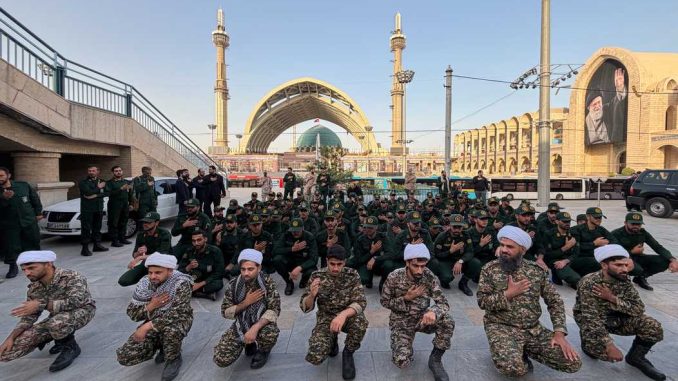
The Islamic Republic of Iran continued to saber-rattle over the weekend and increased their bellicose rhetoric as more reports of their attacks on shipping in the Strait of Hormuz poured in.
Reported by:

Cherry Meigh Timbol
News Content Editor
Published September 21, 2026
WASHINGTON/TEHRAN — Iran has warned that any renewed U.S. military offensive could trigger a broader response involving new weapons, new targets and an expanded battlefield, as President Donald Trump weighs his next steps in the conflict.
The warning came as tensions remained high around the Strait of Hormuz, while diplomatic activity surrounding the United Nations General Assembly created a potential opportunity for direct communication between Washington and Tehran.
Iran Warns of New Weapons
Iranian Revolutionary Guard spokesman Hossein Mohebbi said Iran would change its weapons, tactics and targets if another U.S. offensive were launched.
Iranian officials have also warned that previously untouched locations could become targets in a renewed conflict.
Tehran has not publicly provided detailed technical information about the weapons it claims are available. Consequently, the precise capabilities of the systems referenced by Iranian officials cannot be independently established from their public statements.
Iran has nevertheless continued to emphasize that it is prepared for a prolonged confrontation.
Trump Weighs Several Options
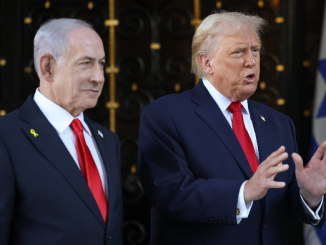
Trump has said he is considering several approaches toward Iran as the conflict continues.
Those options include military action, continued economic pressure and diplomatic negotiations.
Trump has also indicated that he could be open to meeting Iranian President Masoud Pezeshkian during the United Nations General Assembly in New York.
The possibility of direct talks comes despite months of military confrontation and sharply differing positions between Washington and Tehran.
U.S. officials have said that any negotiations would require Iran’s representatives to have sufficient authority to reach an agreement.
Strait of Hormuz Remains a Major Flashpoint
The Strait of Hormuz has become one of the most important pressure points in the conflict.
The narrow waterway connects the Persian Gulf with the Gulf of Oman and is a major route for international energy shipments.
Commercial traffic through the strait has fallen sharply compared with levels recorded before the conflict.
Maritime incidents have also increased concerns about the safety of ships operating in the area.
Reports of vessels being struck by projectiles have added to concerns over the security of one of the world’s most important energy corridors.
Diplomatic Opening at the United Nations
Despite the military rhetoric, diplomatic activity has continued.
Pezeshkian is expected to participate in the United Nations General Assembly, creating a possible opportunity for contact with American officials.
Trump has said he would be willing to consider meeting with the Iranian president.
The possibility of a meeting is significant because direct communication between Washington and Tehran has remained limited amid the ongoing conflict.
Iran has also communicated conditions for potential negotiations through intermediaries, while the United States continues to maintain economic pressure on Tehran.
Regional Conflict Adds to Tensions
The confrontation between the United States and Iran is taking place alongside conflicts involving Iranian-backed groups elsewhere in the Middle East.
In Yemen, Houthi forces remain active while tensions involving Saudi Arabia and other regional governments continue.
The instability has affected shipping routes, energy markets and military deployments throughout the region.
The Red Sea and Strait of Hormuz have consequently become interconnected parts of a broader regional security crisis.
Global Energy Markets Under Pressure
The disruption around the Strait of Hormuz has raised concerns about global oil supplies.
Any prolonged reduction in shipping through the waterway could affect international energy markets because of the large volume of oil and other commodities normally transported through the region.
Oil prices have also responded to expectations surrounding possible diplomatic developments.
Markets therefore remain sensitive to both military developments and signals from Washington and Tehran regarding negotiations.
A Critical Moment for Washington and Tehran
Iran’s latest warning does not independently establish what new weapons or military capabilities Tehran could deploy in a renewed conflict.
It does, however, signal that Iranian officials are publicly preparing for the possibility of further confrontation while leaving open the possibility of diplomacy.
For Washington, the choices under discussion involve military pressure, economic measures and negotiations.
For Tehran, the threat of expanding the conflict comes as shipping through the Strait of Hormuz remains disrupted and regional tensions continue.
With Trump and Pezeshkian potentially in New York at the same time, the coming days could bring both intensified military pressure and renewed diplomatic activity.
For now, the two governments remain publicly divided, while the Strait of Hormuz continues to serve as a central pressure point for the conflict and the global energy market.
🧩 Bottom Line:
Iran is signaling that it is prepared to expand the conflict and use previously undisclosed capabilities if further U.S. military action occurs, although the specific weapons it claims to possess have not been independently verified. At the same time, Trump is weighing military, economic and diplomatic options, leaving open the possibility of negotiations. With tensions surrounding the Strait of Hormuz and regional shipping still elevated, the conflict continues to carry significant consequences for Middle Eastern security and global energy markets.
SOURCES: REDSTATE – Iran Claims ‘Astonishing’ New Weapons As Trump Weighs Three Options to End the Conflict
FOX NEWS – Iran claims world will be ‘astonished’ by new weapons, Trump in ‘deciding mode’
THE WASHINGTON TIMES – Iran says it has new weapons, threatens to ‘change the geography of the war’ if Trump orders attacks