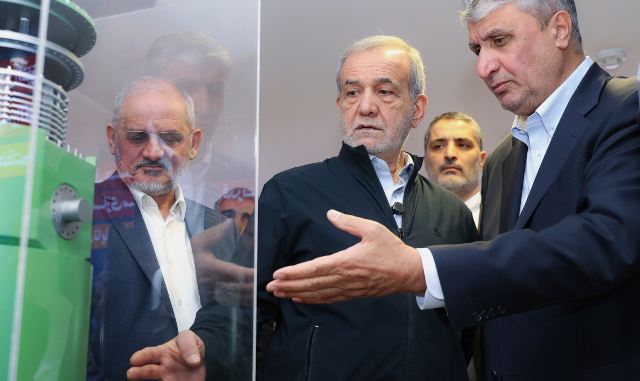
Mohammad Eslami, head of the Atomic Energy Organization of Iran (AEOI), boasted on Tuesday that Iran has “reached the level of developed countries in nuclear science and technology.”
Reported by:

Cherry Meigh Timbol
News Content Editor
Published October 13, 2026
TEHRAN, Iran — Iran’s top nuclear official has claimed that the country has reached the level of developed nations in nuclear science and technology, citing advances in domestic manufacturing, scientific expertise and industrial systems despite restrictions on foreign assistance and damage to infrastructure.
Mohammad Eslami, head of the Atomic Energy Organization of Iran (AEOI) and a vice president, made the statement on Tuesday, October 13, during a ceremony marking National Standard Day in Tehran, according to Iran’s state-run Islamic Republic News Agency (IRNA).
Eslami said Iran was now producing equipment and systems needed by its domestic industries. He attributed the progress to the country’s scientific talent, creativity and management capabilities, presenting nuclear technology as a tool for national development.
The claim comes as Iran’s nuclear program remains a major source of international disagreement, particularly over uranium enrichment, international inspections and concerns about the potential military applications of nuclear technology.
Domestic Manufacturing and Scientific Development
Eslami said restrictions on foreign suppliers had encouraged Iran to develop and manufacture domestic alternatives for industrial equipment, including control systems and instrumentation used to maintain industrial processes.
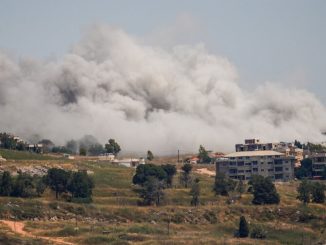
He also referred to damage caused by U.S. and Israeli strikes on Iranian industrial infrastructure. According to his account, the inability to obtain foreign equipment or repairs had increased the need for domestic technological solutions.
Eslami added that the average age of specialists contributing to Iran’s scientific and technological achievements in the nuclear field was approximately 35, highlighting the role of younger professionals in the country’s research and development efforts.
The Iranian official did not provide independent comparative data demonstrating that the country’s overall nuclear capabilities were equivalent to those of developed nations.
Nuclear Technology and Iran’s Position
Iran maintains that its nuclear program serves peaceful purposes, including electricity generation, scientific research, industrial development and medical applications. Tehran has repeatedly rejected allegations that it is seeking to develop nuclear weapons.
Eslami reiterated that opposition to Iran’s access to nuclear technology would not prevent the country from continuing its scientific development. His remarks also reflected Tehran’s position that it has the right to pursue nuclear technology under international agreements.
However, the distinction between civilian nuclear activities and potential military applications remains central to the international dispute over Iran’s program.
Uranium Enrichment Remains a Key Issue
Uranium enrichment is one of the most contentious aspects of Iran’s nuclear activities. Enriched uranium can be used for civilian nuclear fuel, but material enriched to sufficiently high levels can also be used in nuclear weapons.
In an October 7 report, Reuters outlined continuing uncertainty over Iran’s enrichment capacity following U.S. and Israeli strikes on its nuclear facilities. The report said the International Atomic Energy Agency (IAEA) had previously estimated that Iran possessed 440.9 kilograms of uranium enriched to up to 60% purity before the attacks.
Reuters also reported that the IAEA had not been able to establish how much of that material survived the strikes or determine its precise location. Iran had not permitted inspectors to return to the affected sites at the time covered by the report.
The status of Iran’s remaining nuclear infrastructure and enriched uranium stocks therefore remains an important factor in assessing the country’s capabilities. Eslami’s latest statement did not provide new independently verified figures on enrichment levels, stockpiles or the operational status of damaged facilities.
International Dispute Continues
The United States and Israel have raised concerns about the implications of Iran’s nuclear activities, while Tehran insists that its program is peaceful and that it will not abandon its nuclear technology ambitions.
Iran’s latest declaration emphasizes its claimed progress in scientific research and domestic technological production. However, the broader question of its nuclear capabilities involves more than scientific expertise or equipment manufacturing; it also depends on the condition of its facilities, its uranium stockpiles, enrichment capacity and the ability of international inspectors to verify its activities.
For now, Eslami’s remarks represent the Iranian government’s assessment of its technological progress, rather than an independently verified international determination that Iran’s nuclear capabilities match those of developed countries.