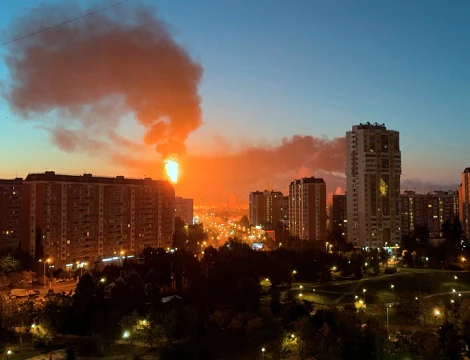
Flame and smoke are seen rising from Moscow’s oil refinery in the southeast of the city following a large-scale Ukrainian drone attack last month. (AP)
Reported by:

Cherry Meigh Timbol
News Content Editor
Published October 12, 2026
The United States is reportedly increasing pressure on Ukraine to stop striking Russian oil refineries, warning that continued attacks could put critical military assistance at risk. The reported move comes as President Donald Trump pushes for an energy ceasefire between Moscow and Kyiv, with the conflict’s impact on fuel supplies and prices adding urgency to diplomatic efforts.
According to Reuters, citing a Financial Times report published October 11, U.S. officials have contacted Ukrainian and European counterparts to press for an end to Ukrainian attacks on Russian energy infrastructure. The reported warnings include potentially suspending intelligence-sharing and the mechanism used to procure American weapons for Ukraine. Reuters said it could not independently verify the report, and the White House had not immediately responded to a request for comment.
The reported pressure presents Ukrainian President Volodymyr Zelenskyy with a difficult strategic choice: maintain attacks intended to weaken Russia’s ability to finance and sustain its war, or comply with Washington’s demands to preserve access to vital military support.
Trump’s energy ceasefire initiative puts Kyiv under pressure

Zelenskyy said Ukraine supported a ceasefire but was awaiting further details from Washington. He also reported that Russian forces continued striking Ukrainian energy facilities, including a power plant in Kharkiv.
The uncertainty surrounding the announcement complicates Washington’s efforts to secure a pause in attacks. Kyiv has argued that any agreement must be reciprocal, rather than requiring Ukraine to stop targeting Russian energy infrastructure while Russian strikes on Ukrainian power facilities continue.
According to Reuters, the reported U.S. warnings over weapons procurement and intelligence-sharing emerged alongside Trump’s ceasefire initiative.
Why Russian oil refineries matter to Ukraine’s war strategy
Russian oil infrastructure has become an important target in Ukraine’s campaign to disrupt Moscow’s war economy.
Refineries process crude oil into fuels used by civilian industries, transportation networks and military logistics. Attacks can interrupt production, force costly repairs and create additional pressure on Russia’s energy sector.
Ukraine has used long-range drones to strike targets deep inside Russian territory, seeking to impose economic and logistical costs beyond the immediate battlefield.
However, the strategy also carries diplomatic risks. Russian energy infrastructure is economically significant, and attacks can affect fuel markets at a time when the United States is concerned about energy prices.
Washington’s reported position reflects a clash between its effort to negotiate a ceasefire and Kyiv’s argument that attacks on Russian assets are part of its defense against Moscow’s continuing invasion.