Reported by:

Cherry Meigh Timbol
News Content Editor
Published November 19, 2026
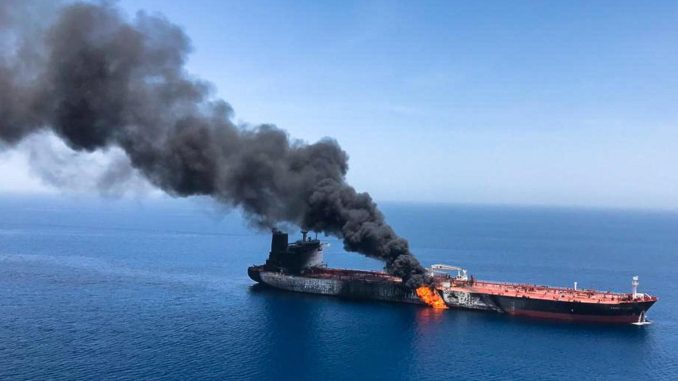
A tanker operated by a company belonging to the United Arab Emirates’ state-owned Abu Dhabi National Oil Company (ADNOC) was attacked in the Strait of Hormuz, leaving 11 crew members injured and one person missing, as escalating hostilities between Iran and the United States threaten international shipping and regional security.
ADNOC Logistics & Services confirmed on Wednesday, November 18, that one of its vessels had been attacked the previous evening while operating in the strategically important waterway. The company said the remaining crew members had been safely evacuated, while search and rescue operations continued for the missing crew member.
The incident adds to growing concerns over maritime security in the Strait of Hormuz, a critical international shipping route connecting the Persian Gulf with the Gulf of Oman and the Arabian Sea.
The waterway is particularly important to global energy markets because it previously carried approximately one-fifth of the world’s oil and petroleum liquids consumption. Continued disruptions could affect international oil supplies, shipping costs and energy prices.
US-Iran Military Confrontation Intensifies
The tanker incident occurred amid renewed military exchanges between Iran and the United States.
On November 17, US fighter jets struck an Iranian Revolutionary Guard missile-launching site on Qeshm Island, located near the Strait of Hormuz. A US military official described the operation as a defensive response to Iranian attacks targeting American personnel and military assets.
Iranian forces had earlier claimed responsibility for targeting a US-operated radar installation in Bahrain. American and Bahraini authorities said the incoming drones were intercepted.
Iran subsequently launched attacks targeting American military installations in Kuwait, while Bahrain also reported intercepting additional Iranian aerial attacks.
The developments demonstrate how quickly the confrontation could spread across the Gulf region, particularly as several countries host American military facilities.
Iranian Claims About Tanker Incidents
Iranian military-linked media have also reported that several commercial vessels struck naval mines near the Strait of Hormuz.
However, these claims have not been independently verified in their entirety. Maritime monitoring organizations have separately reported incidents involving commercial vessels being struck by unidentified projectiles, highlighting the continuing risks to international shipping.
The distinction between independently confirmed attacks and claims made by parties involved in the conflict remains important in assessing the situation.
Diplomatic Efforts Continue
Despite the escalating military confrontation, diplomatic efforts to prevent a wider regional conflict remain underway.
Qatar has continued engaging with Iranian officials in an effort to narrow differences between Tehran and Washington. Iranian Foreign Minister Abbas Araghchi also held discussions with Omani officials concerning maritime security and diplomatic options.
Oman has played an important role in previous negotiations involving Iran and the United States, making it a significant channel for potential diplomatic progress.
However, disagreements over maritime access, military operations and Iran’s nuclear program continue to complicate efforts to achieve a lasting agreement.
Global Energy Security at Risk
The continued disruption of shipping through the Strait of Hormuz has raised concerns among energy producers, governments and international markets.
The International Energy Agency has warned that the Middle East crisis represents an unprecedented threat to global energy security. Prolonged restrictions on maritime traffic could increase transportation costs, disrupt petroleum deliveries and place additional pressure on consumers.
Countries dependent on imported oil and natural gas could face higher energy costs if the situation deteriorates further.
The Philippines and other Asian economies are particularly exposed to developments affecting international energy shipments because of their dependence on imported fuel.