Published October 15, 2025
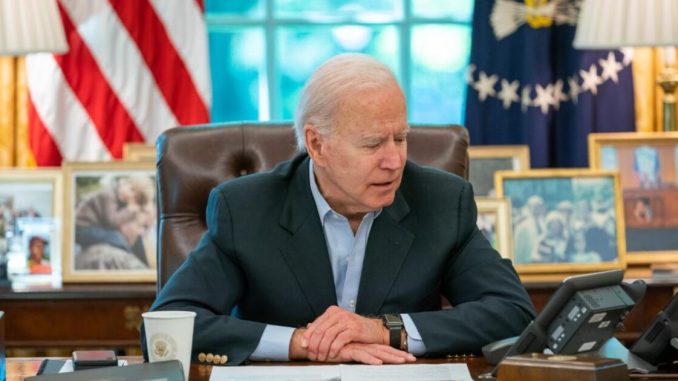
President Joe Biden’s reaction to the recent peace deal between Israel and Hamas has sparked criticism and political backlash after his remarks appeared to highlight the very failures his administration has been accused of throughout the Middle East crisis.
Following the agreement that secured the release of the last living hostages and brought an uneasy ceasefire, Biden issued a statement expressing gratitude and claiming his administration “worked relentlessly” to bring the deal to life. He said he was “deeply grateful and relieved that this day has come—for the last living 20 hostages, for the families reunited, and for the civilians in Gaza receiving aid.”
However, rather than earning praise, Biden’s statement drew sharp reactions from critics who saw it as an attempt to take credit for a diplomatic achievement built on the foundation of the previous administration’s foreign policy. Many pointed out that the peace deal followed the momentum of the Abraham Accords—agreements that reshaped Middle East alliances and strengthened Israel’s position through power and deterrence, not concessions.
Observers argue that Biden’s words were more political than principled. His so-called “relentless efforts” often resulted in failure, with examples such as the Gaza aid pier project that collapsed after facing logistical and security issues. Others claim Biden’s foreign policy decisions were driven less by strategy and more by domestic political calculations—particularly efforts to maintain support from Muslim voters in Michigan, a crucial battleground state.
His statement, critics say, only reminded Americans of his administration’s weakness on the world stage. While the president tried to project leadership, his track record—marked by chaotic withdrawals, shifting messages, and strained relations with long-standing allies—made his self-congratulation ring hollow.
Meanwhile, many believe that the groundwork for this peace breakthrough was laid years earlier. The previous administration’s approach—prioritizing American strength, backing Israel firmly, and isolating terrorist groups—set a precedent that current officials are still benefiting from. The new deal, they say, is more a product of that foundation than any fresh initiative from Biden’s team.
In short, Biden’s remarks may have been meant to showcase success, but they ended up underscoring the gap between his words and his record. What was meant to be a moment of triumph for his administration instead reminded both Americans and U.S. allies of an uncomfortable reality: leadership built on optics rather than strength rarely delivers lasting peace.
 Implications
1. Political Damage for Biden
The articles imply that President Biden’s attempt to claim credit for the peace deal has hurt his credibility instead of helping it.
By highlighting his administration’s “relentless efforts,” the narrative backfires—reminding the public of his perceived failures in foreign policy, especially in the Middle East.
This could reinforce the public perception of weak leadership and poor diplomacy, which might further erode his political standing both at home and abroad.
2. Strengthening Trump’s Foreign Policy Legacy
Both pieces strongly suggest that the success of the peace deal is rooted in the Trump-era approach—characterized by direct pressure, strong alliances, and clear messaging.
If this framing spreads widely, it may bolster Trump’s reputation as the leader who achieved real peace progress and could set the stage for a political narrative that contrasts “Trump’s results” with “Biden’s failures.”
3. Domestic Electoral Impact
By accusing Biden of acting out of concern for Muslim voters in Michigan rather than strategic national interest, the article implies domestic political motives in his foreign policy.
If that view gains traction, it may alienate both Jewish-American voters who feel betrayed and centrist voters who view foreign policy as an arena where politics shouldn’t interfere.
This could influence key swing states where trust in national security and Israel policy plays a significant role.
4. Foreign Relations and Diplomatic Perception
The articles suggest that U.S. credibility as a peacemaker is diminished under Biden, potentially weakening America’s standing among Middle Eastern allies.
Israel may interpret Biden’s response as lukewarm or politically calculated, while adversaries like Iran and Hamas could see it as a sign of U.S. indecision or weakness, impacting future negotiations.
5. Media and Public Opinion Divide
Because the sources (Western Journal and Gateway Pundit) have conservative audiences, this framing could deepen partisan divides in how Americans interpret the same event.
Conservative readers may see Biden’s statement as an “admission of failure,” while liberal or mainstream outlets may interpret it as a “measured response to a complex situation.”
This contributes to media polarization and selective trust in news narratives.
6. Moral and Strategic Accountability
The article also raises a deeper moral implication: it suggests that Biden’s foreign policy prioritizes optics over outcomes, potentially valuing domestic approval more than saving lives or securing peace.
If this interpretation sticks, it may prompt public demands for accountability regarding how humanitarian crises are handled and how much political image influences real-world decisions.
 Overall Takeaway:
President Biden’s attempt to celebrate the peace deal only underscored what Americans have seen for years — a pattern of weak leadership, poor judgment, and misplaced priorities. While he tried to claim credit for a diplomatic breakthrough, his own words exposed how little his administration actually accomplished. The so-called “relentless efforts” he mentioned produced confusion, not peace, and political appeasement, not principle.
The contrast could not be clearer: under President Trump, America projected strength and results. The Abraham Accords, the defeat of ISIS, and the firm stance with Israel showed that real peace comes from power, not apologies. Under Biden, America’s foreign policy drifted — focused more on pleasing political blocs than protecting allies or advancing national interests.
In the end, Biden’s “backfire moment” is more than just a gaffe. It’s a reminder that when America’s leaders put politics before principle, the world becomes less stable, our allies lose faith, and our enemies gain ground. The peace achieved today stands as a testament not to Biden’s diplomacy, but to the strong foundation of deterrence and respect built under the previous administration.
SOURCES: THE WESTERN JOURNAL – Backfire: Biden Finally Responds to Peace Deal, But with Unexpected Admission That He Failed on Everything
THE GATEWAY PUNDIT – Backfire: Biden Finally Responds to Peace Deal, But with Unexpected Admission That He Failed on Everything