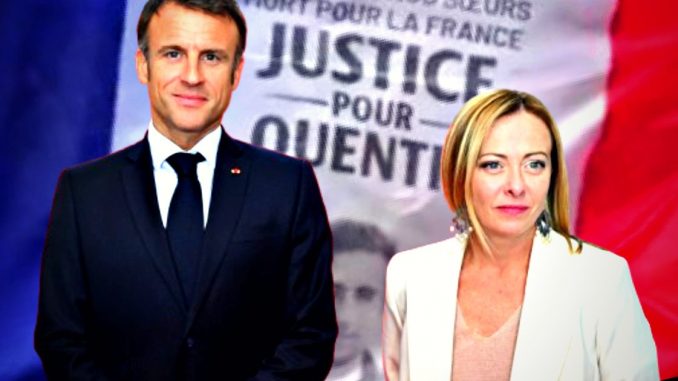
Macron and Meloni sparring over the death of French conservative activist Quentin Deranque – Wiki Commons
Published February 20, 2025
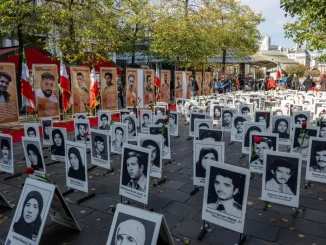
Patriots for Europe is seeking a minute of silence int he European Parliament for Quentin Deranque, a French far-right activist who died after a brawl with left-wing activists in Lyon, during a session dedicated to the anniversary of Russia’s full-scale invasion of Ukraine.
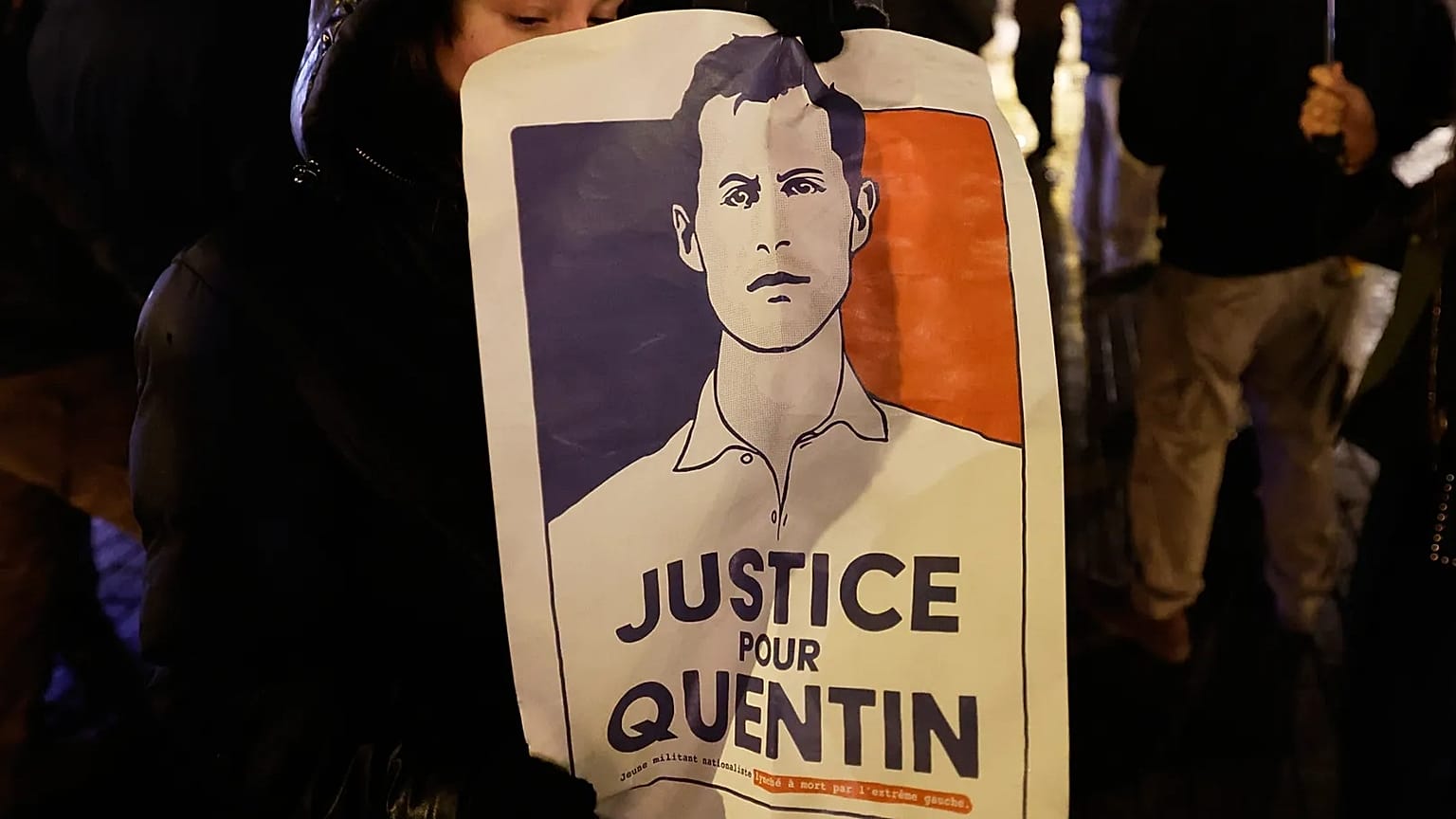
The fatal beating of 23‑year‑old French activist Quentin Deranque in Lyon has ignited intense political debate across Europe — exposing deep divides over extremism, political violence, and how nations should respond.
A Fatal Attack in Lyon
On February 12, 2026, Deranque was involved in a violent confrontation on the sidelines of a demonstration in Lyon. The protest was tied to an event featuring a speaker from the far‑left party La France Insoumise (LFI), and clashes erupted between rival groups. Deranque suffered severe blunt‑force injuries during the melee and died in hospital two days later from brain trauma.
French prosecutors have since arrested at least 11 people in connection with the incident, and seven are being pursued for potential murder charges, including individuals linked to radical left‑wing movements.
Official Responses in France
French authorities, including President Emmanuel Macron, have condemned the violence. Macron has emphasized that “violence has no place in society” and insisted that all responsible be brought to justice, while also calling for calm and restraint amid rising tensions ahead of municipal elections.
Interior Minister Laurent Nuñez described the beating as a serious act of disorder and underscored the need for a robust legal response. Prosecutors have stressed the ongoing nature of the investigation and the importance of differentiating political narratives from evidence.
Copyright AP Photo
International Reaction: Macron vs. Meloni
The case has also spilled into diplomatic and political arenas — most notably between French President Emmanuel Macron and Italian Prime Minister Giorgia Meloni.
Meloni, a leader of Italy’s conservative government, publicly condemned Deranque’s death, calling it “a wound for all of Europe” and warning of a broader climate of “ideological hatred” sweeping the continent.

Macron responded sharply, telling reporters that foreign leaders should avoid commenting on internal French affairs. He was quoted saying leaders who advocate nationalism and defend non‑interference should “stay at home” rather than weigh in on France’s internal political situation.
Italy’s government countered that Meloni’s remarks were meant as solidarity with France and a warning about the dangers of political polarization, not interference. Meloni later reiterated that she did not intend to meddle in French domestic matters.
Wider Political Impact
The killing has intensified scrutiny of political violence and extremist movements in Europe. In France, the episode has strained relations between mainstream parties, emboldened right‑wing figures to demand stronger action against radical left‑wing groups, and weakened prospects for cooperation with LFI ahead of the all‑important 2027 presidential election.
At the European level, France’s far‑right delegation has sought recognition of Deranque in the European Parliament, underscoring how the incident resonates beyond French borders.
 Implications
-
Rise of Political Violence as a Tool – The attack signals that extremist factions are willing to use physical aggression to silence voices advocating traditional principles and lawful activism. If left unchecked, this could normalize violence as a political tactic.
-
Erosion of Public Safety for Civic Engagement – Citizens and activists who engage in public debate may face increased risk, discouraging participation in democratic and civic life. The murder raises urgent questions about how governments protect lawful assemblies.
-
Strained International Relations – The clash between Macron and Meloni highlights tensions between nations over political ideology and intervention. Diplomatic rifts may deepen when domestic incidents are interpreted as broader ideological battles.
-
Mobilization of Supporters of Traditional Values – The tragedy could galvanize those who prioritize law, order, and societal stability to demand stronger protections for free speech, public safety, and accountability for extremists.
-
Warning for European Societies – The incident is a wake-up call that failing to confront radicalism and enforce public order risks destabilizing social cohesion, eroding trust in institutions, and undermining the moral framework that sustains civic life.
 Overall Takeaway:
The tragic death of Quentin Deranque underscores a deeper crisis in Europe: the erosion of personal safety for those advocating traditional values and civic engagement. This incident highlights how unchecked radicalism and political violence threaten the very foundations of free speech and democratic discourse. The sharp exchanges between Macron and Meloni reflect not just diplomatic tension, but a broader struggle over the future direction of European society — whether it will protect law-abiding citizens and their beliefs, or allow ideological extremism to dictate the rules. Ensuring justice for Deranque and safeguarding public debate are crucial steps toward reaffirming order, responsibility, and respect for differing viewpoints across the continent.
SOURCES: THE GATEWAY PUNDIT – Brutal Murder of Conservative Activist Quentin Deranque by French Antifa Thugs Unleashes Fierce Debate Between Failing Macron and Conservative Italian PM Meloni
EURONEWS – French far right asks European Parliament to mark death of activist Quentin Deranque