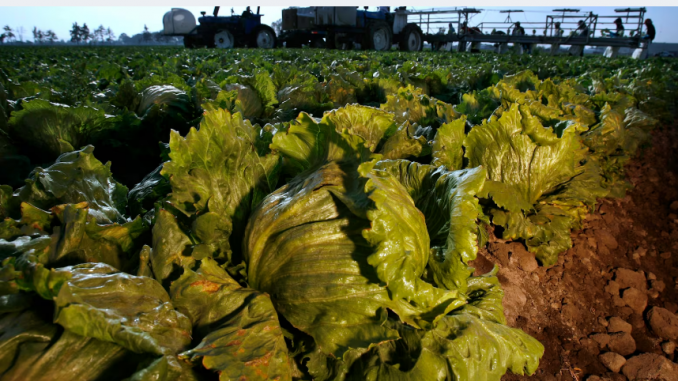
Lettuce are seen on a field at Taylor Farms in the Mexican town of Doctor Mora in March 26, 2008. (Guillermo Arias / AP Photo)
by Diana Zapata • News Writer /Editorial Specialist
Published August 15, 2026
WASHINGTON — A major outbreak of cyclosporiasis, a parasitic intestinal illness caused by Cyclospora cayetanensis, has infected thousands of people across the United States, with the Centers for Disease Control and Prevention reporting 13,895 laboratory-confirmed, domestically acquired cases since May 1, 2026.
The CDC’s latest surveillance data show confirmed cases in 47 states, Washington, D.C., and Puerto Rico. The agency’s figures underscore the scale of a summer foodborne illness crisis that has involved multiple investigations and has prompted federal and state health officials to intensify efforts to identify contaminated food sources.
Two Deaths and Hundreds of Hospitalizations Reported
The outbreak has also resulted in serious illnesses.
The CDC’s surveillance data report 740 hospitalizations and two deaths among the domestically acquired cases reported since May 1.
Health officials caution that the confirmed case count does not necessarily represent the full number of infections. Many people with cyclosporiasis may never seek medical care, while others may not be tested for the parasite. The CDC also notes that it can take weeks for recent illnesses to be investigated and classified.
Iceberg Lettuce Linked to Major Multistate Outbreak
One major outbreak has been traced to iceberg lettuce processed by Taylor Farms de Mexico.
According to the CDC, epidemiological and traceback investigations found that contaminated iceberg lettuce was responsible for illnesses in a multistate outbreak. The lettuce was distributed to consumers, restaurants and retailers in multiple states.
The investigation found that some infected people had eaten iceberg lettuce at Taco Bell locations, while others reported exposure to recalled Taylor Farms products.
Taylor Farms de Mexico recalled iceberg lettuce sourced from central Mexico in July, and the CDC says the recalled products’ best-by dates have now passed and the products should no longer be available in stores or restaurants.
Nearly 9,500 Cases Tied to One Major Outbreak
Although the national CDC surveillance figure is approaching 14,000 confirmed domestic cases, the specifically identified Taylor Farms-linked multistate outbreak accounted for 9,481 illnesses across 17 states as of the CDC’s Aug. 13 update.
The outbreak had resulted in at least 398 hospitalizations and two deaths in Michigan. Illnesses associated with that outbreak began June 14 and continued to be reported through Aug. 3.
The distinction is important: not every U.S. Cyclospora case is necessarily connected to the recalled lettuce outbreak. The CDC continues investigating other outbreaks and illnesses that appear unrelated.
Michigan Among Hardest-Hit States
Michigan has emerged as a major center of the outbreak.
Reuters reported that Michigan had recorded more than 13,900 cyclosporiasis cases, although a substantial portion of the recent increase was attributed to a backlog in laboratory processing. Health officials said the pace of new infections appeared to be slowing.
Michigan officials have also lifted earlier warnings against eating lettuce after determining that the implicated products should no longer be circulating in the marketplace.
What Is Cyclospora?
Cyclosporiasis is an intestinal infection caused by the microscopic parasite Cyclospora cayetanensis.
The illness typically causes watery diarrhea, often accompanied by stomach cramps, nausea, fatigue, loss of appetite and other gastrointestinal symptoms.
Unlike some foodborne illnesses that resolve quickly, Cyclospora infections can persist for weeks and may return after appearing to improve.
Fresh produce is a known vehicle for Cyclospora transmission, particularly produce that is consumed raw or with minimal cooking.
Federal Investigation Continues
The Food and Drug Administration and CDC continue to investigate the outbreak and other clusters of cyclosporiasis.
The FDA has also been conducting inspections and traceback work related to the contaminated lettuce supply chain. Recent reporting indicates that investigators have been examining facilities in Mexico connected to the affected produce.
The federal investigation is significant because the national case count includes infections that may have different sources.
The CDC specifically warns that the current national increase should not automatically be attributed to a single outbreak.
Health Officials Say Consumers Should Not Avoid Produce
Despite the scale of the outbreak, federal health officials are not advising Americans to stop eating fresh fruits and vegetables.
The FDA recently urged consumers to maintain confidence in fresh produce while announcing updated food-safety guidance for fresh-cut products. The guidance emphasizes sanitation, supplier verification, refrigeration and supply-chain controls designed to reduce the risk of pathogens including Cyclospora, Salmonella, E. coli and Listeria.
The agency has said the implicated lettuce has been removed from the market.
What Consumers Should Know
Consumers should continue following official recall notices and practice basic food-safety precautions.
Fresh produce should be handled carefully, with hands, utensils and preparation surfaces cleaned before and after food preparation.
Anyone experiencing persistent or severe diarrhea, particularly after a potential exposure to contaminated food, should contact a healthcare professional for evaluation and testing.
💬 Overall Takeaway:
The United States is confronting an unusually large Cyclospora outbreak, with the CDC reporting 13,895 confirmed domestically acquired cases since May 1, spanning nearly the entire country.
A major multistate outbreak has been traced to contaminated iceberg lettuce from Taylor Farms de Mexico, but federal investigators continue examining additional illnesses and possible sources.
With hundreds of hospitalizations and two reported deaths, the outbreak has become one of the country’s most significant foodborne illness stories of the summer.
Health officials say the immediate threat from the recalled lettuce has diminished, but continued surveillance remains essential as laboratories process delayed reports and investigators work to determine whether other sources are contributing to the nationwide rise in Cyclospora infections.
SOURCES: REUTERS – Michigan cyclosporiasis cases rise 11% in a week, even as new cases slow
CDC – Surveillance of Cyclosporiasis