Published February 20, 2025
In a major Supreme Court decision this week, the U.S. Supreme Court struck down President Donald Trump’s use of emergency authority under the International Emergency Economic Powers Act (IEEPA) to impose broad tariffs on foreign nations — a ruling that has set off robust debate over executive power, national security, and the separation of powers.
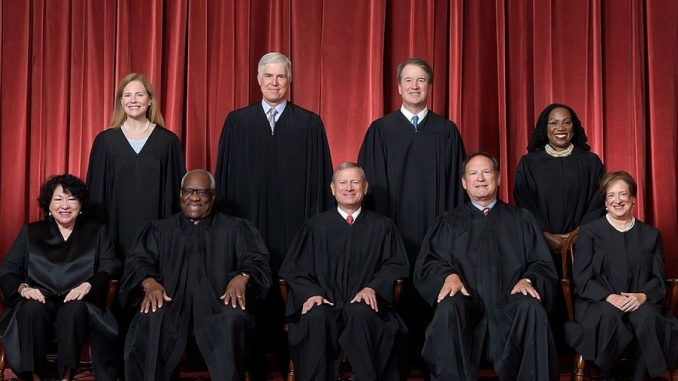
While the majority held that the statute does not clearly authorize the executive branch to levy tariffs against imports during a declared emergency, three conservative justices — Justices Brett Kavanaugh, Clarence Thomas, and Samuel Alito — issued a strongly worded dissenting opinion. These justices argued that the Court’s decision “handcuffs” the President’s authority to respond to foreign threats and undermines longstanding statutory and historical precedent.
What the Majority Held
In its 6‑3 ruling, the Supreme Court — led by Chief Justice John Roberts — determined that IEEPA’s language, which allows the President to “regulate… importation” during national emergencies, does not encompass the sweeping tariff authority that the Trump administration purported to exercise. The majority applied the so‑called major questions doctrine, emphasizing that such a far‑reaching exercise of economic power requires clear authorization from Congress.
The decision invalidates the tariff measures Trump enacted upon declaring emergencies tied to illegal drugs entering the United States and chronic trade deficits with foreign trading partners. According to the majority, tariffs are such an economically and politically significant tool that only Congress can delegate that power if it intends to do so explicitly.
Dissent: “Major Constitutional and National Security Concerns”
In their dissent, Justices Kavanaugh, Thomas, and Alito called out the majority’s interpretation as overly restrictive and harmful to the Presidency’s ability to defend national interests:
🔹 Justice Kavanaugh argued the statutory text and historical practice show that permitting the President to regulate importation includes the ability to impose tariffs, especially in times of declared emergency. He also warned that the decision could force the government to refund billions of dollars in collected duties — a “mess” for the Treasury and global markets.
🔹 Justice Thomas challenged the majority’s reliance on nondelegation and major‑questions reasoning, asserting that importing was never understood as a core private right that would bar Congress from delegating related regulatory authority to the executive. He pointed out that early legislative practices routinely entrusted presidents with foreign commerce regulation.
🔹 Justice Alito joined the dissent, aligning with Kavanaugh’s concerns about limitations on executive authority in national security and foreign affairs matters, signaling broad agreement that the ruling curtails presidential flexibility at critical times.
Together, the three justices argued the majority’s approach effectively ties the President’s hands when responding to emergent threats from abroad — including economic coercion, illicit drug flows, and trade imbalances — and disrupts a traditionally broad understanding of delegated emergency powers.
Read the ruling below:
 Implications of the Supreme Court Ruling on Executive Power
The Supreme Court’s decision to strike down President Trump’s use of emergency tariff authority carries far-reaching consequences, both legally and strategically. The dissenting justices warn that this ruling could unintentionally weaken the President’s ability to respond decisively to foreign threats, and a deeper look at the implications reveals why this could matter for the nation.
1. Limits on Executive Flexibility
By narrowing the scope of the International Emergency Economic Powers Act (IEEPA), the Court effectively restricts the President’s ability to act quickly during international crises. Dissenting opinions argue that in situations such as emergent trade manipulations, hostile foreign economic strategies, or sudden threats from illicit flows, delays caused by judicial or legislative checks could put the nation at a disadvantage. The decision signals that even well-defined emergency powers may face legal challenges, potentially creating a chilling effect on executive action in urgent matters.
2. National Security Risks
The dissent emphasizes that restricting the President’s emergency authority could compromise the country’s ability to defend its interests abroad. Measures like tariffs, sanctions, or other economic tools have historically been critical in deterring adversaries or responding to aggressive foreign tactics. By tying the executive branch’s hands, the ruling may unintentionally embolden adversaries who rely on rapid or flexible U.S. responses to achieve strategic goals.
3. Increased Congressional Responsibility
The decision may shift pressure to Congress to clarify the legal boundaries of presidential authority. Lawmakers could face calls to explicitly authorize certain emergency powers, creating both opportunities and challenges. While clearer guidance could strengthen the legal basis for executive action, it may also politicize decisions about national security and economic defense, leaving critical measures vulnerable to partisan debate or delays.
4. Judicial Precedent and Future Cases
This ruling sets a precedent for judicial intervention in executive decisions on major national security and economic issues. The “major questions” doctrine applied by the majority suggests that courts will scrutinize future exercises of broad authority closely, potentially limiting the President’s discretion in areas traditionally entrusted to the executive. This may redefine the balance of power between the branches, raising questions about how much latitude future administrations will have to respond to foreign threats.
5. Political and Strategic Tensions
The dissent highlights a fundamental tension: balancing statutory limits with the practical need for executive flexibility in protecting national interests. While the majority emphasizes caution and legislative clarity, the dissent warns that overly restrictive interpretations could leave the nation vulnerable at moments when swift action is critical. This divide is likely to shape ongoing debates over executive authority, emergency powers, and the proper role of courts in national security matters.
 Overall Takeaway:
The Supreme Court’s ruling marks a pivotal moment in the ongoing debate over the balance of power between the Presidency and Congress. While the majority emphasizes legal caution and strict statutory interpretation, the dissenting justices warn that restricting the President’s authority could weaken America’s ability to respond to foreign threats and safeguard national security.
By limiting the executive branch’s flexibility in emergency situations, the Court has sparked a broader conversation about the role of swift presidential action in defending U.S. interests abroad. Lawmakers, legal experts, and policymakers will now face the challenge of clarifying the boundaries of emergency powers — a debate that will shape the nation’s security and economic strategy for years to come.
Ultimately, the decision underscores the tension between judicial oversight and practical executive action, leaving a critical question unresolved: how much power should the President hold when protecting the country from evolving foreign threats?
SOURCES: THE GATEWAYPUNDIT – Three Justices WARN Majority Is Handcuffing President Trump’s Ability to Fight Foreign Threats — Here’s What the Three Justices Said in Their Dissent