Published March 12, 2025
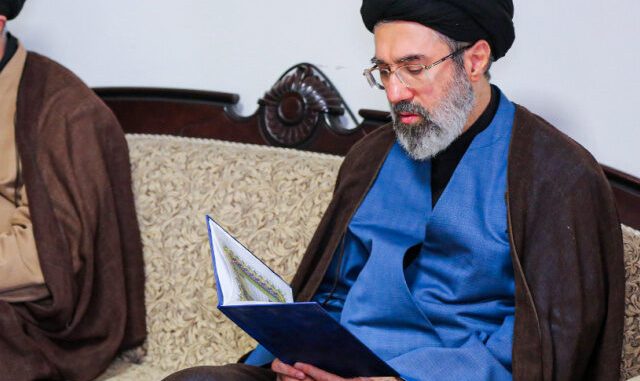
The rise of Mojtaba Khamenei to the position of Supreme Leader of Iran is triggering intense debate among analysts and policymakers across the world.Following the death of his father, Ali Khamenei, during the escalating regional conflict, the relatively unknown but deeply connected cleric has suddenly become the most powerful figure in the Islamic Republic.
While many outside observers once viewed Mojtaba as a behind-the-scenes figure, recent reports suggest that his leadership could usher in an even more aggressive phase for Iran’s regime. Experts warn that the new leader may be more ideologically rigid and more closely aligned with the country’s powerful security apparatus than his predecessor.
From Shadow Power to Supreme Leader
For years, Mojtaba Khamenei operated largely out of public view while building influence within the Iranian system. Analysts say he developed strong relationships with the powerful Islamic Revolutionary Guard Corps (IRGC), the military force responsible for protecting the Islamic Republic and projecting Iranian power abroad.
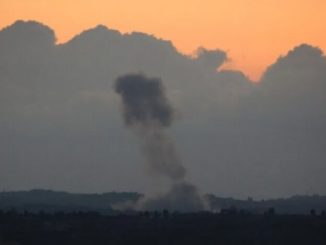
Those ties helped him emerge as the leading candidate to succeed his father after the elder Khamenei was killed during the early stages of the current conflict involving U.S. and Israeli strikes on Iranian targets.
Iran’s Assembly of Experts ultimately confirmed Mojtaba as the country’s third Supreme Leader, marking a historic moment for the Islamic Republic. For the first time since the 1979 revolution, leadership effectively passed from father to son, a move critics say resembles a dynastic transfer of power rather than a purely religious selection.
Why Some Experts Say He Could Be “More Dangerous”
Several analysts argue that Mojtaba Khamenei may prove even more confrontational than his father.
First, his deep alignment with the IRGC suggests the military establishment may wield even greater influence in shaping Iran’s policies. The Revolutionary Guard has long been responsible for Iran’s regional proxy networks and missile programs, making its political dominance a major concern for Western and regional governments.
Second, Mojtaba’s political background has been forged almost entirely within Iran’s hard-line power structure. Observers say he helped enforce internal repression and consolidate control over security institutions during his father’s rule.
Some experts therefore describe him as potentially “his father on steroids,” suggesting a leadership style that may double down on confrontation with the West and Israel while strengthening Iran’s internal security state.
A Leadership Shrouded in Uncertainty
Complicating matters further is the mystery surrounding Mojtaba’s current condition. Reports indicate he may have been injured during the same wave of airstrikes that killed his father and other family members, and he has yet to appear publicly since assuming power.
The absence has fueled speculation about how firmly he controls the government and whether real authority may temporarily reside with military figures inside the Revolutionary Guard.
Despite these questions, Iran’s leadership structure has rallied around him, with senior officials and commanders pledging loyalty as the country navigates an increasingly volatile regional war.
What It Means for the Region
The elevation of Mojtaba Khamenei comes at a moment when tensions in the Middle East are already reaching historic levels. The ongoing conflict involving Iran, the United States, and Israel threatens to reshape the geopolitical landscape of the region.
If Mojtaba governs with the same ideological commitment attributed to him by analysts—combined with strong backing from Iran’s military establishment—the result could be a more assertive and unpredictable Iran on the world stage.
For governments across the region and beyond, the question now is whether the new Supreme Leader will consolidate power quietly behind the scenes or take a more direct role in shaping Iran’s confrontational foreign policy.
Either way, his rise marks the beginning of a new chapter in Iran’s leadership—one that could carry profound consequences for the Middle East and global security.
 Public / Political Reactions
Mojtaba Khamenei’s rise has sent shockwaves across the Middle East and the Western world. Analysts note that public sentiment inside Iran is tightly controlled, but the international reaction has been sharply critical. Western policymakers express concern over Iran’s potential for heightened aggression, particularly toward U.S. forces and regional allies.
1. Tight Control Inside Iran: Domestic public sentiment is largely unknown due to strict government oversight, but analysts believe the leadership change is being presented as a consolidation of power rather than a shift in policy.
2. Western Alarm: Policymakers in the U.S. and Europe have expressed concern that Mojtaba Khamenei’s hardline approach could increase tensions in the region, making diplomacy less effective.
3. Neighboring Nations on Alert: Countries like Israel, Saudi Arabia, and the UAE are reportedly stepping up security measures, anticipating more aggressive Iranian actions in nearby conflict zones.
4. Calls for Stronger Deterrence: Analysts suggest that Western governments may need to reinforce military presence and support regional allies to counter a potentially more confrontational Iran.
5. Media and Expert Commentary: International experts emphasize that Mojtaba’s close ties to the Revolutionary Guard could make Iran’s foreign policy more unpredictable, raising concerns about escalation in proxy conflicts across the Middle East.
Neighboring countries are reportedly accelerating security measures, wary that a hardline leader with deep Revolutionary Guard connections could expand proxy conflicts in Iraq, Syria, Lebanon, and Yemen. In Washington and Brussels, officials caution that a more unpredictable Iran may demand stronger deterrence measures, as previous attempts at diplomacy are unlikely to influence this new leadership.
 Resulting Effects
Mojtaba’s leadership is already projected to have several tangible effects:
Regional Instability:
Iran’s involvement in proxy wars could escalate as the new leader prioritizes military strength over diplomacy. Nations like Israel, Saudi Arabia, and the UAE may need to reinforce defenses, anticipating more aggressive maneuvers in Syria, Lebanon, and Gaza.
U.S. Strategic Calculations:
Analysts argue that America and its allies must reassess their Middle East strategies, as a more aggressive Iran could force a recalibration of troop deployments and military assets in the region.
Economic Pressure:
Increased sanctions or tightening of existing ones could follow, as governments seek to limit Iran’s access to global financial networks and weapons supply chains.
Diplomatic Isolation:
Mojtaba’s rise may solidify Iran’s hardline stance, reducing the likelihood of meaningful engagement with Western nations and heightening the risk of further confrontation.
 Future Outlook
Looking ahead, Mojtaba Khamenei’s rule appears poised to deepen Iran’s commitment to a confrontational foreign policy. Observers predict:
- A sharper focus on missile development and nuclear capabilities, with little room for negotiation.
- Stronger ties between the Supreme Leader and the Revolutionary Guard, potentially sidelining moderate voices within Iran’s political system.
- An era of increased unpredictability in the region, where the balance of power may shift quickly and traditional diplomatic channels could fail.
The combination of ideological rigidity and military alignment could make Iran more resistant to international pressure, heightening the potential for conflicts that could draw in both regional and global powers.
 Bottom Line
Mojtaba Khamenei’s ascent marks a pivotal moment for Iran and the broader Middle East. Analysts warn that his leadership style—rooted in hardline ideology and bolstered by military influence—could make Iran even more assertive than under his father.
The international community faces a challenging calculus: whether to strengthen deterrence and strategic alliances or risk being outmaneuvered by a state whose internal cohesion and regional ambitions are likely to grow. For nations invested in regional stability, the era of Mojtaba Khamenei is shaping up to be one of heightened vigilance and cautious preparation.