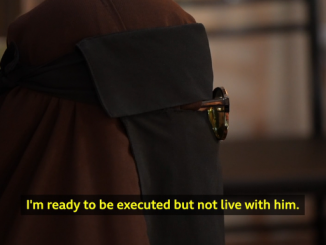
Greenlandic citizens protest forced sterilization
Reported by:

Cherry Meigh Timbol
News Content Editor
Published August 31, 2026
Greenland is moving to establish a Truth and Reconciliation Commission to examine one of the darkest chapters in its modern history: a decades-long campaign in which thousands of Greenlandic Inuit women and girls were subjected to contraception, often without their knowledge or consent.
The decision follows the release of two expert reports examining whether the campaign amounted to genocide. While the reports agreed that women’s human rights were violated, they differed over the scope of the abuses and whether the evidence could establish genocidal intent.
Thousands of Women and Girls Were Affected
According to a joint Danish-Greenlandic investigation, approximately 4,000 Greenlandic women and girls received intrauterine devices (IUDs) or contraceptive injections between 1966 and 1991.
Some of those affected were reportedly as young as 12.
Many procedures were carried out without valid consent, and documented consequences included heavy bleeding, infections, scarring of the fallopian tubes, hysterectomies and, in some cases, the loss of the ability to have children.
The campaign was designed in part to reduce birth rates and family sizes in Greenland. Danish authorities at the time viewed population reduction as connected to efforts to improve living standards and social and health conditions on the Arctic island.
Experts Disagree Over Genocide
The latest investigation has not produced a unanimous conclusion over whether the campaign constituted genocide.
One report, prepared by Dalee Sambo Dorough and Miriam Cullen, found a reasonable basis to conclude that Greenlandic Inuit women experienced involuntary contraception that violated their rights to equality, privacy, family life and freedom from cruel, inhuman or degrading treatment.
However, the experts said the available evidence did not establish genocidal intent based on the contraceptive practices alone.
A separate report by Jonas Christoffersen and Jensine Nedergaard also acknowledged that women had been harmed but found insufficient evidence that authorities or health professionals intended to destroy Greenland’s population.
The disagreement is significant because international law requires proof of specific intent to destroy, in whole or in part, a protected national, ethnic, racial or religious group for an act to meet the legal definition of genocide.
Denmark May Still Have Breached Its Obligations
The findings do not completely clear Denmark of responsibility.
Dorough and Cullen concluded there was a reasonable basis to believe Denmark breached its obligations under the UN Genocide Convention after authorities were alerted in 1969 to the potential risk posed by the program and allegedly failed to take appropriate action.
The experts stressed, however, that only a competent court could ultimately determine whether Denmark had violated the convention.
That distinction is important. A finding that the program did not meet the legal threshold for genocide does not mean the underlying conduct was lawful or acceptable.
Greenland Wants the Truth Established
Greenlandic Prime Minister Jens-Frederik Nielsen announced that the government would establish a reconciliation commission to continue examining the country’s history.
Nielsen said the process should focus not simply on assigning blame but on uncovering the truth and creating the foundation for genuine reconciliation.
Greenland’s Justice Minister Marianne Paviasen said the government could not determine on its own whether genocide had occurred and that the question would remain open for further examination.
The proposed commission is expected to provide another opportunity for victims and their families to have their experiences documented.
Denmark Has Apologized and Approved Compensation
The Danish government has already acknowledged the harm suffered by women subjected to the campaign.
Danish Prime Minister Mette Frederiksen previously apologized to affected women, describing their treatment as systematic discrimination.
On Thursday, Denmark also approved compensation of 300,000 Danish kroner—approximately $46,700—for each affected woman.
Greenland’s government has also issued apologies for cases occurring after Greenland assumed responsibility for its healthcare system in 1992.
Victims Describe Deep and Lasting Trauma
The human consequences of the program extend far beyond the historical record.
Inger Platou, one of the women affected, told Reuters that she discovered an IUD had been inserted without her consent after being told she was undergoing a minor medical procedure.
She later said complications left her unable to become pregnant and ultimately adopted two children.
Her account illustrates why the controversy remains deeply personal for many Greenlanders decades after the campaign began.
For victims, the debate over the precise legal classification does not erase what happened to them.
A Dark Chapter in Greenland-Denmark Relations
The controversy has also reopened broader questions about Greenland’s relationship with Denmark.
Greenland remains a self-governing territory within the Kingdom of Denmark while pursuing a long-term path toward greater autonomy and potential independence.
The forced contraception scandal is therefore part of a much larger historical debate over Denmark’s treatment of Greenland’s Indigenous population.
At the same time, Reuters noted that the issue has become politically sensitive because of renewed American interest in Greenland and President Donald Trump’s stated desire for greater U.S. control over the strategically important Arctic territory.
Both the reports’ authors and the women involved have cautioned against allowing their experiences to be turned into ammunition in contemporary geopolitical disputes.
The Debate Is Far From Over
The disagreement between the expert reports means the genocide question is unlikely to disappear.
Greenland’s Siumut party has called for the question to be considered by an independent international court, while the reconciliation commission could broaden the historical examination beyond the contraception campaign itself.
One report specifically noted that determining whether genocidal intent existed could require consideration of other alleged violations involving Denmark’s treatment of Greenland’s Inuit population, including the removal of children to Danish families. Those issues were outside the original report’s mandate.
What Happens Next?
The creation of a Truth and Reconciliation Commission could give Greenland a broader mechanism to investigate the historical record, hear testimony from survivors and examine how government policies affected Indigenous families.
It could also provide a framework for Greenland and Denmark to address unresolved questions without allowing the controversy to become solely a political battle.
The central questions will be whether additional evidence emerges, whether the investigation expands into other historical practices and whether Denmark’s responsibility goes beyond the compensation and apologies already offered.
“Breaking the silence, some of them recount the trauma they felt when the IUD was inserted into their uterus. Many say they did not give their consent. This forced sterilization will have serious consequences. Some have infections and become sterile. Others repress the memory and discover, years later during a medical examination, the presence of this contraceptive that prevents them from having children.”
🧩 Bottom Line:
Greenland’s decision to pursue a Truth and Reconciliation Commission is significant because the issue is about much more than whether a particular legal definition—such as genocide—can ultimately be applied.
Thousands of women and girls were subjected to reproductive procedures without proper consent, and the consequences for some were permanent. That reality deserves to be confronted honestly, regardless of what legal label is ultimately attached to it.
The disagreement between the expert reports also demonstrates why the historical record needs to be examined carefully. Calling something genocide carries a specific legal meaning requiring evidence of intent, while refusing to call it genocide should never be interpreted as saying the victims were not seriously wronged.
For me, the most important part of this story is the women themselves. Their experiences should not become a political weapon for Denmark, Greenland, the United States or anyone else. They deserve the truth, accountability where warranted and recognition of the harm they endured.
Greenland now has an opportunity to ensure that this chapter of its history is not buried beneath political arguments. A genuine reconciliation process should put the victims first—and make sure that what happened to them is remembered, investigated and never repeated.