
Published July 29, 2026
WASHINGTON, D.C. — A contentious Senate hearing examining the federal government’s response to the COVID-19 pandemic erupted into heated exchanges Wednesday after former White House Chief Medical Adviser Dr. Anthony Fauci repeatedly invoked his Fifth Amendment right against self-incrimination, declining to answer questions from Republican lawmakers investigating pandemic-era decisions and the origins of COVID-19.
The hearing, chaired by Sen. Rand Paul (R-Ky.), focused on longstanding Republican concerns over the government’s handling of the pandemic, federal funding for coronavirus-related research, and transparency surrounding the origins of COVID-19. Before questioning began, Fauci stated that, on the advice of his legal counsel, he would invoke the Fifth Amendment in response to questions that could expose him to criminal liability.
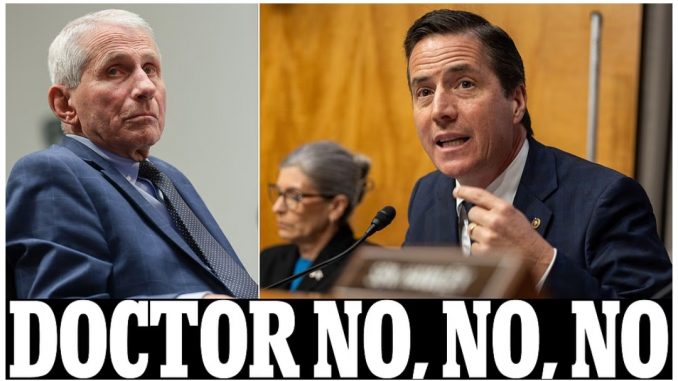
Tensions escalated throughout the hearing as several Republican senators sharply criticized Fauci’s refusal to testify. Among the most vocal was Sen. Bernie Moreno (R-Ohio), who condemned Fauci’s leadership during the pandemic and accused him of avoiding accountability, using profanity during an emotional exchange that underscored the hearing’s combative tone.
 Bernie Moreno grilled Anthony Fauci on Capitol Hill on Wednesday
 Former Director of the National Institute of Allergy and Infectious Diseases (NIAID) Dr. Anthony Fauci testifies before the Senate Committee on Homeland Security and Government Affairs on Capitol Hill
 Members of the audience, who say they were negatively impacted by their skepticism to Covid-19 precautions, stood behind up Fauci, at the urging of US Senator Bernie Moreno
Republicans Intensify Scrutiny of Pandemic-Era Decisions
Republican members questioned Fauci on topics including National Institutes of Health (NIH) funding, research conducted through international partners, public health guidance issued during the pandemic, and communications involving coronavirus research.
Sen. Rand Paul argued that Congress has a responsibility to determine whether federal officials provided accurate and complete information regarding COVID-19, including research connected to the Wuhan Institute of Virology. Paul maintained that Fauci’s refusal to answer questions prevented lawmakers from obtaining information they believe remains unresolved.
Paul concluded the hearing by announcing that the committee is expected to vote on whether to hold Fauci in contempt for refusing to answer lawmakers’ questions.
Fauci Says Legal Advice Prompted His Decision
In his opening statement, Fauci insisted that invoking the Fifth Amendment should not be interpreted as an admission of wrongdoing.
He argued that years of political criticism, repeated calls for criminal prosecution, and the public release of portions of his personal diary by Sen. Paul created legal risks that made remaining silent the appropriate course of action. Fauci also described Paul’s efforts as an “unhinged” campaign against him.
Legal experts generally note that invoking the Fifth Amendment is a constitutional right intended to protect individuals from self-incrimination and does not, by itself, establish guilt or innocence.
 Dr. Fauci reacts while being questioned by the Senate Homeland Security and Governmental Affairs Committee
 Senator Josh Hawley, a Missouri Republican, spoke in front of a board featuring a quote from an e-mail attributed to Greg Folkers, former Chief of Staff to Fauci, which discussed an award Fauci was applying for in recognition of his work during the pandemic
Attorney Removed During Heated Proceedings
The hearing grew more contentious when one of Fauci’s attorneys attempted to address the committee without recognition from the chair.
After repeated interruptions, Sen. Paul directed Capitol Police to remove the attorney from the hearing room, saying only Fauci was permitted to testify before the committee. The incident further heightened tensions between Republican lawmakers and Fauci’s legal team.
Democrats Defend Fauci and Criticize the Investigation
Democratic members of the committee argued that the hearing largely revisited issues previously examined through congressional investigations and scientific reviews.
They defended Fauci’s decades of public service and criticized the proceedings as politically motivated, emphasizing that constitutional protections apply equally to all witnesses appearing before Congress. Democrats also warned that continued personal attacks against public health officials could discourage future scientific leadership.
Political Debate Over COVID-19 Continues
The hearing reflects the continuing political divide over the origins of COVID-19, government research funding, and the federal response to the pandemic.
Conservative media outlets, including the Daily Mail and others, highlighted Fauci’s repeated invocation of the Fifth Amendment and the confrontational exchanges with Republican senators. Those characterizations reflect the editorial perspectives of those publications and are distinct from the factual record of the hearing itself.
Supporters of Fauci argue that multiple previous investigations have not established criminal wrongdoing by the former health official and caution against interpreting his constitutional decision to remain silent as evidence of misconduct. Meanwhile, Republican lawmakers have indicated that congressional oversight of pandemic-related decisions will continue in the months ahead.
⚠️ Implications:
Dr. Anthony Fauci’s decision to invoke the Fifth Amendment during a high-profile Senate hearing has intensified the political debate surrounding the U.S. government’s response to the COVID-19 pandemic. While invoking the Fifth Amendment is a constitutional right and does not imply guilt, the hearing is likely to fuel continued congressional investigations, partisan divisions, and public debate over transparency, accountability, and the origins of COVID-19.
🏛️ 1. Congressional Oversight Is Likely to Intensify
- Republican lawmakers have indicated they intend to continue investigating pandemic-era decisions.
- Additional hearings, document requests, and witness testimony may follow.
- Some committee members have discussed potential contempt proceedings related to the hearing.
🔍 Implication: Congressional scrutiny of COVID-19 policies and government decision-making is expected to continue.
⚖️ 2. The Fifth Amendment Will Remain a Point of Political Debate
- Fauci stated he invoked the Fifth Amendment based on legal advice.
- Legal experts note that exercising the Fifth Amendment is a constitutional protection and does not establish guilt or innocence.
- Political opponents and supporters are likely to continue offering sharply different interpretations of his decision.
⚠️ Implication: Public debate over the meaning and political impact of Fauci’s decision is likely to remain highly polarized.
🦠 3. COVID-19 Origins and Research Funding Will Continue to Receive Scrutiny
- Lawmakers continue examining federal funding for coronavirus research and oversight of international research partnerships.
- Questions surrounding the origins of COVID-19 remain the subject of ongoing political and scientific discussion.
- Investigations may seek additional records and testimony from government agencies and researchers.
📢 Implication: The origins of COVID-19 and related research funding are likely to remain major topics of congressional oversight.
🇺🇸 4. Political Divisions Over the Pandemic Persist
- Republicans largely argue that greater accountability is necessary regarding pandemic policies.
- Democrats contend that many of the issues have already been extensively reviewed and caution against politicizing public health.
- The hearing reflected the continued partisan divide over the government’s pandemic response.
🌐 Implication: COVID-19 is expected to remain a politically divisive issue, particularly as future public health policies are debated.
📱 5. Public Trust in Institutions May Continue to Be Tested
- High-profile congressional hearings often shape public perceptions of government agencies and public officials.
- Conflicting political narratives surrounding the pandemic continue to influence public opinion.
- Transparency and accountability remain central concerns for many Americans.
🛡️ Implication: Public confidence in government institutions and public health leadership may continue to be influenced by ongoing investigations and political discourse.
🌍 6. The Hearing May Influence Future Public Health Policy
- Policymakers may revisit how federal agencies communicate during national health emergencies.
- Discussions about scientific transparency, agency oversight, and emergency decision-making are likely to continue.
- Lessons from the pandemic may shape future preparedness strategies and congressional oversight.
📈 Implication: The hearing could contribute to future reforms involving public health governance, emergency response, and government accountability.
💬 Overall Takeaway:
For millions of Americans, the COVID-19 pandemic was never just a political issue—it was deeply personal. Families lost loved ones without the chance to say goodbye, healthcare workers spent months on the front lines under extraordinary pressure, businesses closed their doors, students saw their education disrupted, and countless people experienced financial hardship, isolation, and lasting physical or emotional effects. Years later, many continue to live with the consequences of those losses.
Against that backdrop, Dr. Anthony Fauci’s Senate appearance and his decision to invoke the Fifth Amendment have become more than a legal or political event. For some Americans, particularly those who believe government officials have not been fully transparent about the origins of COVID-19 and pandemic-era decisions, the hearing reinforces calls for greater accountability and a more complete public record. Others argue that Fauci’s constitutional right against self-incrimination should not be interpreted as evidence of guilt and caution against drawing conclusions before any legal process or additional investigations are completed.
Regardless of where people stand politically, the hearing reflects a broader reality: many questions about the pandemic continue to resonate because the human cost was so immense. More than a million people in the United States lost their lives to COVID-19, while millions more around the world were affected. Behind every statistic is a family that lost a parent, spouse, child, sibling, friend, or colleague—losses that continue to shape communities years later.
The hearing also highlights the enduring importance of public trust. During a public health emergency, confidence in scientific institutions, government agencies, and elected officials can influence how people respond to health guidance and crisis management. Ongoing debates over transparency, research funding, and decision-making demonstrate that rebuilding and maintaining that trust remains an important challenge.
As congressional investigations continue, the focus for many Americans extends beyond political disagreements. There is a continued desire for clear answers, accountability where warranted, and lessons that can better prepare the nation for future public health emergencies. Whether those answers emerge through congressional oversight, scientific research, or legal proceedings, the pandemic’s legacy will continue to influence public policy, healthcare, and national debate for years to come.
Ultimately, the hearing serves as a reminder that the COVID-19 pandemic was one of the most consequential events in modern history. Its impact reached every corner of society, affecting lives, livelihoods, and institutions in profound ways. While opinions remain sharply divided over the government’s response, there is broad agreement that future generations deserve a better understanding of what happened, how critical decisions were made, and what can be done to better protect the public when the next global health crisis inevitably arrives.
SOURCES: DAILYMAIL ONLINE – Furious senator explodes at stone-faced Fauci as as he refuses to comment more than 100 TIMES during fiery Covid grilling: ‘Who the f*** do you think you were for doing that?’
SOUTH CHINA MORNING POST – Fauci refuses to answer questions at heated Senate hearing on Covid-19 origins




Fauci’s Diary Reveals Collusion With Obama to Debunk Beagle Torture Program