Published April 10, 2026
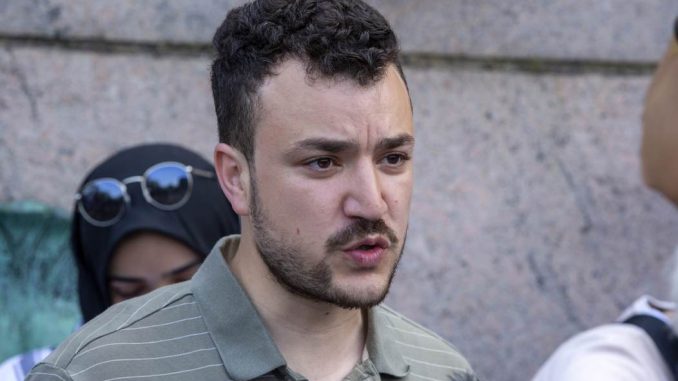
A major immigration ruling this week has pushed activist Mahmoud Khalil significantly closer to deportation, intensifying a case that has rapidly become a national flashpoint over immigration enforcement, political activism, and U.S. foreign policy.
In a decisive move, the Board of Immigration Appeals (BIA) denied Khalil’s attempt to dismiss his deportation proceedings—clearing the way for the federal government to continue its effort to remove him from the country.
The decision underscores the federal government’s broad authority in immigration matters and signals that courts may be reluctant to intervene early in cases tied to national interest concerns.
A Critical Turning Point in the Case
The BIA ruling represents one of the most consequential developments in Khalil’s legal battle to remain in the United States.
By rejecting his motion to terminate the case, the board effectively affirmed that the government has presented sufficient grounds to proceed with deportation. While not the final step, the decision places Khalil on a narrowing legal path, where future appeals face steeper challenges and stricter standards.
Immigration experts note that once a case reaches this stage, reversing course becomes significantly more difficult—especially when national policy considerations are involved.
How the Case Began
Khalil, a former Columbia University student, first came into the spotlight following his involvement in pro-Palestinian campus demonstrations that drew national attention amid heightened tensions in the Middle East.
Authorities later detained him, initiating deportation proceedings that quickly escalated into a broader legal and political controversy.
While Khalil has not been charged with a criminal offense, immigration law operates under a different standard than criminal courts. Federal officials are not required to prove criminal wrongdoing to pursue removal, a key distinction that has shaped the trajectory of this case.
The Government’s Argument
At the center of the government’s case is a rarely invoked provision of immigration law allowing deportation when a non-citizen’s presence is deemed to have potential adverse consequences for U.S. foreign policy.
Officials argue that Khalil’s activities—particularly in the context of politically sensitive demonstrations—fall within that scope.
In addition, authorities have raised concerns over alleged discrepancies in Khalil’s immigration filings, including his green card application. While those claims are separate from the broader policy argument, they add another layer to the government’s case.
Taken together, these factors have allowed officials to build a multifaceted legal strategy aimed at securing his removal.
Legal Hurdles and Court Rulings
Khalil’s legal team has attempted to challenge the case through multiple avenues, including federal courts. However, earlier rulings have largely forced the dispute back into the immigration system.
A federal appeals court determined that Khalil must first exhaust all remedies within immigration courts before pursuing broader constitutional claims. That decision significantly limited his ability to seek immediate relief outside the system.
As a result, the BIA ruling now carries even greater weight, as it comes within the very system the courts have required him to navigate.
An immigration appeals board has denied Mahmoud Khalil’s latest bid to dismiss his deportation case, a largely expected ruling that brings the former Columbia University graduate student and Palestinian activist one step closer to re-arrest and possible expulsion.
The Board of Immigration Appeals issued the final order of removal on Thursday, according to Khalil’s lawyers. The board’s rulings are not public, and an inquiry to the U.S. Department of Justice was not immediately returned.
Khalil said he was not surprised by the ruling, which he called “biased and politically motivated.” His attorneys said he cannot be lawfully detained or deported as he pursues a separate case in the federal court system.
“The only thing I am guilty of is speaking out against the genocide in Palestine — and this administration has weaponized the immigration system to punish me for it,” Khalil said in a statement.
The Board of Immigration Appeals sets precedent in the byzantine immigration court system, which is controlled by the Department of Justice — and increasingly under the influence of the Trump administration.
A Broader Debate: Immigration vs. Free Speech
The case has ignited strong reactions across the political spectrum, highlighting a growing tension between immigration enforcement and First Amendment concerns.
Supporters of the ruling argue that the United States has both the legal right and responsibility to remove non-citizens whose presence may conflict with national interests. They contend that immigration status is a privilege—not a right—and that the government must retain flexibility in matters involving foreign policy.
Critics, on the other hand, warn that the case could set a troubling precedent. They argue that using immigration law in this way risks targeting individuals based on political expression rather than unlawful conduct.
The debate reflects a deeper national divide over how far the government should go in balancing civil liberties with security and diplomatic considerations.
What Comes Next
Following the BIA’s decision, Khalil’s options are increasingly limited but not entirely exhausted.
He may still seek review in federal court, potentially challenging the legal basis of the deportation order or the process itself. However, such appeals are often difficult to win, particularly after immigration authorities have issued a final ruling.
In the meantime, deportation could move forward unless a court grants a stay.
Why This Case Matters
Beyond the fate of one individual, the Khalil case could have far-reaching implications.
It may serve as a test case for how aggressively the federal government can use immigration law in politically sensitive situations. It also raises fundamental questions about the rights of non-citizens in the United States—especially those engaged in controversial activism.
As similar cases emerge, the outcome here could shape future enforcement strategies and legal challenges for years to come.
🔍 Critical View: Immigration Authority, National Interest, and the Limits of Activism
The ruling in the Mahmoud Khalil case is more than just another immigration decision—it highlights a growing tension between national sovereignty, political activism, and the rule of law. At its core, this case forces a difficult but necessary question: should non-citizens be allowed to remain in the United States when their actions intersect with sensitive foreign policy concerns?
Several key issues emerge from this controversy.
1. Immigration Is a Privilege, Not an Absolute Right
One of the central principles underscored by this case is that residency in the United States—especially for non-citizens—is conditional.
Immigration law has long given the federal government broad authority to determine who can enter and remain in the country. This includes the power to revoke that privilege when national interests are at stake. Critics often frame deportation as a punitive measure, but legally, it is an administrative process rooted in sovereignty.
The Khalil case reinforces the idea that immigration status comes with expectations—and when those expectations are called into question, consequences follow.
2. National Interest and Foreign Policy Concerns
A major focal point in this case is the government’s use of a rarely applied provision tied to foreign policy implications.
This raises an important issue: the United States does not operate in a vacuum. Actions taken within its borders—especially by foreign nationals—can have ripple effects on diplomatic relationships and global stability.
Allowing individuals to engage in activities that may complicate or undermine foreign policy objectives presents risks that policymakers cannot easily ignore. The government’s argument suggests that maintaining control over such situations is not only lawful, but necessary.
3. The Boundaries of Political Activism
Political activism is a protected and deeply rooted part of American culture—but the extent of that protection differs for citizens and non-citizens.
This case draws attention to a critical distinction: while free expression is a constitutional value, immigration status may place limits on how far that expression can go without consequence.
The broader concern is whether activism that intersects with international conflicts should be treated differently when carried out by individuals who are not U.S. citizens. The Khalil case suggests that there are, in fact, boundaries—and that crossing them can trigger legal repercussions.
4. Rule of Law vs. Selective Enforcement
Another underlying issue is consistency.
Supporters of stricter enforcement argue that immigration laws must be applied evenly, regardless of the political context. If exceptions are made based on public pressure or ideological alignment, it risks undermining the credibility of the entire system.
From this perspective, the ruling is less about one individual and more about reinforcing the principle that laws must be upheld as written—not selectively interpreted.
5. Precedent for Future Cases
Finally, this case may set the tone for how similar situations are handled moving forward.
If the government is successful in pursuing deportation under foreign policy grounds, it could open the door for broader use of this legal tool. That possibility raises both strategic opportunities and legitimate concerns—but it undeniably shifts the landscape.
Future cases involving politically active non-citizens may increasingly be evaluated through this same lens.
👥 On the Ground: Enforcement Reality, Campus Climate, and Community Impact
While legal arguments and political debates dominate headlines, the situation surrounding Mahmoud Khalil is also playing out in real time across campuses, communities, and enforcement agencies. On the ground, the case reveals how national policy decisions translate into lived experiences—affecting not just one individual, but institutions, students, and the broader public.
Several key dynamics are emerging.
1. Federal Enforcement Is Becoming More Visible
One immediate reality is the increased visibility of immigration enforcement actions tied to high-profile cases.
Authorities are no longer operating quietly in the background when cases involve politically sensitive issues. Instead, enforcement is becoming more direct and public-facing, signaling that immigration laws will be actively applied—even in environments like universities that have traditionally operated with a degree of separation from federal intervention.
This shift sends a clear message: no setting is exempt when it comes to enforcing federal law.
2. Campus Tensions and Administrative Pressure
Universities are finding themselves at the center of the storm.
Administrators must now navigate competing pressures—maintaining open spaces for expression while also ensuring compliance with federal regulations. On the ground, this has translated into heightened tensions among student groups, faculty, and leadership.
Some students view enforcement actions as necessary to maintain order and accountability, while others see them as a chilling effect on activism. The result is a campus environment that is increasingly polarized, with institutions struggling to strike a balance.
3. A Chilling Effect—or a Return to Boundaries?
A key question being debated is whether cases like this discourage free expression or simply reinforce limits that already exist.
From one perspective, visible enforcement may cause some individuals—particularly non-citizens—to think twice before engaging in politically charged demonstrations. From another, it reflects a reassertion of long-standing legal boundaries that distinguish between rights afforded to citizens and the conditions placed on non-citizens.
On the ground, the impact is clear: behavior is changing, whether out of caution or compliance.
4. Public Reaction and Community Divides
Beyond campuses, the case is fueling broader community reactions.
Many Americans see enforcement actions as a sign that the government is taking immigration laws seriously, particularly in situations that intersect with national interests. Others worry about fairness and whether similar cases are being handled consistently across different groups.
These differing views are not abstract—they are shaping conversations in workplaces, neighborhoods, and online spaces, reflecting a wider divide over how immigration policy should be enforced.
5. Operational Challenges for Authorities
Carrying out enforcement in high-profile cases is not without complications.
Agencies must coordinate legal processes, manage public scrutiny, and ensure that actions are carried out within the bounds of the law. When a case draws national attention, every step—from detention to court proceedings—faces heightened examination.
This creates operational pressure but also reinforces the importance of executing enforcement actions with precision and accountability.
🎯 The Final Word:
SOURCES: FOX NEWS – Anti-Israel agitator Mahmoud Khalil one step closer to deportation with immigration board ruling
TOWNHALL – Palestinian Activist Mahmoud Khalil Is One Step Closer to Deportation After This Immigration Board Ruling
REDSTATE – ‘Palestinian’ Activist’s Appeal Denied, Path to Removal Now Clearer