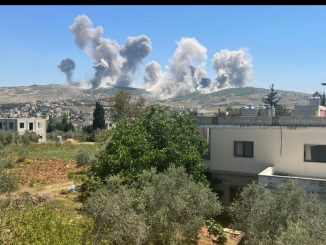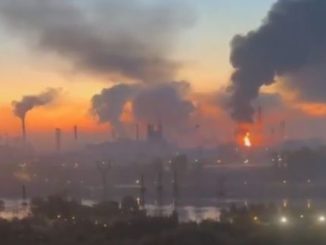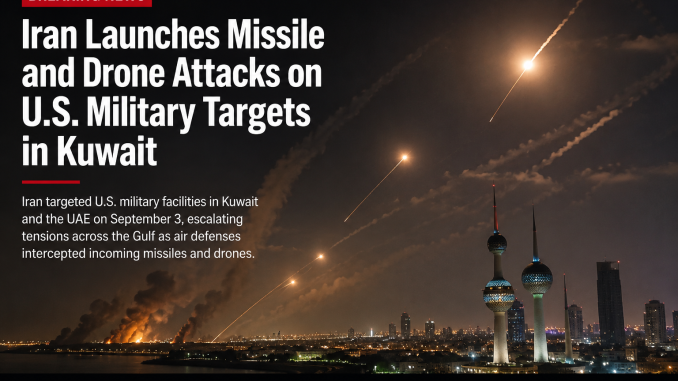
Smoke rises near Kuwait City as missile-defense systems engage incoming projectiles following reports of Iranian missile and drone attacks targeting U.S. military assets in Kuwait on September 3, 2026
Reported by:

Cherry Meigh Timbol
News Content Editor
Published September 4, 2026
KUWAIT CITY — Iran launched a new wave of missile and drone attacks targeting U.S. military facilities in Kuwait on Thursday, September 3, sharply escalating tensions across the Gulf as the wider conflict between Washington and Tehran continues.
Kuwaiti authorities said their air defenses were engaged against incoming Iranian missiles and drones. Kuwait condemned what it described as continued Iranian aggression and warned that the attacks posed a direct threat to the country’s security and stability.
Iran’s military said it targeted U.S. military infrastructure at Ahmad al-Jaber Air Base in Kuwait. Iranian state media reported that missiles and drones were used against satellite communications systems, equipment depots and aircraft hangars at the facility.
The Iranian military also claimed that U.S. positions and radar systems at Al-Minhad Air Base in the United Arab Emirates were targeted in the same operation.
Kuwait activates air defenses
The Kuwaiti Armed Forces confirmed that hostile missile and drone attacks were underway Thursday and said its air-defense systems were responding.
The developments came amid a renewed cycle of attacks between Iran and the United States following U.S. strikes against Iranian military positions linked to operations around the strategically important Strait of Hormuz.
Iran has increasingly targeted U.S. military facilities in Gulf countries that host American forces, including Kuwait, as Tehran seeks to retaliate against Washington without directly restricting its attacks to Iranian territory.
Reports indicated that Kuwaiti air defenses intercepted incoming weapons. However, claims concerning the extent of damage to U.S. facilities and Iranian claims of casualties have not been independently verified.
U.S. bases increasingly drawn into conflict
Kuwait hosts important U.S. military infrastructure and has become increasingly exposed as the conflict expands beyond Iran’s borders.
Ahmad al-Jaber Air Base is operated by the Kuwaiti Air Force and also supports U.S. military operations. Iran’s latest attack therefore represents another direct challenge to American forces stationed in the Gulf.
The attacks have also placed Washington’s regional partners in an increasingly difficult position. Kuwait, the UAE, Bahrain, Qatar and other countries host U.S. forces while publicly seeking to avoid becoming direct participants in the war.
Kuwait has repeatedly emphasized that its territory and airspace should not be used to launch attacks against Iran, while also condemning Iranian attacks against its territory.
Conflict threatens wider Gulf stability
The latest strikes come as the United States and Iran remain locked in a dangerous confrontation over the Strait of Hormuz, one of the world’s most important energy corridors.
The waterway has already experienced major disruption as Iran has threatened commercial shipping and the United States has increased military operations aimed at keeping the route open.
The escalation has pushed oil prices higher and raised fears that continued attacks could draw additional Gulf states directly into the conflict. Reuters reported that Brent crude had risen above $96 a barrel amid renewed fighting and concerns surrounding shipping through the strait.
The situation also threatens to undermine diplomatic efforts to contain the conflict. U.S. Vice President JD Vance said Washington would not resume talks while Iran continues attacks affecting commercial shipping, while Iranian officials have warned that further U.S. military action will trigger additional retaliation.
A widening regional confrontation
Iran’s latest attacks demonstrate how quickly the conflict can spill across national borders.
What began as direct U.S.-Iran military confrontation is increasingly involving American installations located throughout the Gulf, putting countries such as Kuwait and the UAE in the line of fire despite their efforts to avoid becoming parties to the conflict.
For Kuwait, the immediate priority remains protecting its territory and population. For Washington, the attacks present another challenge to the security of thousands of American personnel and military assets deployed throughout the region.
With neither side showing signs of backing down, the latest missile and drone attacks underscore the growing risk that the conflict could develop into a much broader regional war.
🧩 Bottom Line:
Iran’s September 3 missile-and-drone strikes against U.S. military positions in Kuwait mark a significant expansion of the conflict beyond Iranian territory. Kuwait confirmed that its air defenses engaged incoming Iranian weapons, while Iran said it targeted U.S. military infrastructure at Ahmad al-Jaber Air Base.
The attacks demonstrate the growing risk to U.S. forces and American allies across the Gulf, while the continuing confrontation around the Strait of Hormuz threatens to turn the Iran-U.S. conflict into a broader regional crisis.
SOURCES: REUTERS – Iran buries victims of reported US wedding attack, fires on Kuwait
ARAB NEWS – Kuwait says Iran’s continued aggression a ‘direct threat’ to its security and stability
THE JERUSALEM POST – Iran targets US military bases in Kuwait with missile, drone strikes as conflict continues – report