Mojtaba Khamenei has not been seen in public since the start of US-Iran war
Published August 9, 2026
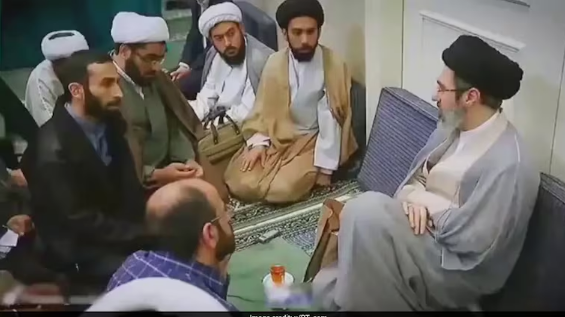
TEHRAN — Iran has released rare footage purportedly showing Supreme Leader Mojtaba Khamenei, apparently seeking to counter mounting speculation over his health and whereabouts as the war with the United States enters another critical phase.
The video, released through Iranian media, shows Khamenei appearing in public and interacting with people. However, the footage is undated, making it difficult to independently establish when it was recorded. Reports circulating online have described it as months old, while Iranian authorities have presented the footage as evidence that the Supreme Leader remains alive and active.
The release comes as questions surrounding Khamenei’s health coincide with growing uncertainty inside Washington over whether further military escalation against Iran can achieve President Donald Trump’s objectives.
Gen. Dan Caine, chairman of the Joint Chiefs of Staff, has reportedly privately urged senior Trump administration officials to consider an “off-ramp” from the conflict, warning that additional escalation could backfire and that airpower alone may not be sufficient to accomplish the administration’s stated goals.
Iran Turns to Video Amid Questions About Khamenei
The footage appears designed to send a simple message: Mojtaba Khamenei is alive and remains in control.
That message is particularly significant because the Supreme Leader has largely remained out of public view since taking power following the death of his father, Ayatollah Ali Khamenei, earlier this year.
The absence has generated persistent speculation about his health and ability to govern. Iranian authorities have previously released statements and footage intended to demonstrate his continued leadership.
The latest video, however, does not establish when it was recorded. NDTV and other reports have noted that footage involving Khamenei has previously circulated without independent verification.
Adding to the uncertainty, Reuters reported Sunday that Iranian President Masoud Pezeshkian recently met Khamenei in late July. Iranian state media said the meeting addressed military affairs, energy management, currency policy and international economic relations.
That report provides a separate indication that Khamenei has remained involved in Iran’s leadership, even as his limited public appearances continue to fuel speculation.
This footage is old, from before the war. It was first circulating in March. It’s telling Iran’s regime’s Mehr News feels the need to circulate old video of Mojtaba.
Foreign press reports, including Russian and Chinese state channels, have been reporting the footage soon on the heels of Iranian state media circulating it…
U.S. Military Leadership Reportedly Seeks an Off-Ramp
The video drama comes against an increasingly consequential debate inside the Trump administration over the future of the Iran war.
According to reports citing people familiar with the discussions, Gen. Caine has expressed concern that expanding military operations could produce unintended consequences and potentially fail to accomplish Trump’s objectives. He has reportedly raised the issue with senior officials including CIA Director John Ratcliffe, Secretary of State Marco Rubio and Vice President JD Vance.
One report characterized Caine’s position as a search for an “off-ramp” from the conflict.
The reported concerns represent a potentially important warning from the nation’s highest-ranking military officer.
The fundamental question is no longer simply whether the United States has the ability to conduct additional strikes, but whether doing so would produce the political and strategic outcome Washington wants.
Trump Administration Signals No Retreat
Despite the reported concerns from Caine, Defense Secretary Pete Hegseth has publicly projected a very different message.
CBS reported that Hegseth said the United States was “accelerating, not decelerating” its military campaign against Iran, indicating that the administration was not publicly signaling a withdrawal or major reduction in operations.
That creates a potentially significant divide between the administration’s public posture and the reported private concerns of senior military leadership.
If military planners believe additional escalation carries diminishing returns, policymakers will have to weigh those warnings against Trump’s stated objectives and the administration’s broader strategy.
Why Khamenei’s Status Matters
The question surrounding Khamenei’s health is more than a matter of Iranian political theater.
The Supreme Leader occupies a central position within Iran’s political and military structure. His ability to communicate with the government, military and Islamic Revolutionary Guard Corps is therefore closely watched by both allies and adversaries.
Any prolonged uncertainty surrounding his condition could create questions about Iran’s chain of command, particularly during wartime.
At the same time, Tehran has a strong incentive to project stability.
A visibly functioning Supreme Leader could reassure supporters, discourage perceptions of regime weakness and signal to foreign governments that Iran remains capable of continuing negotiations or military operations.
The Information War Intensifies
The competing narratives surrounding Khamenei highlight another dimension of the conflict: information warfare.
Iran has an incentive to demonstrate that its leadership remains intact.
The United States and its allies, meanwhile, have an interest in accurately assessing Iran’s leadership structure, military capabilities and willingness to continue fighting.
That makes every photograph, video and official statement potentially significant.
But the lack of a verifiable recording date means the latest footage should not automatically be treated as definitive proof of Khamenei’s current physical condition.
Strait of Hormuz Remains a Critical Pressure Point
The broader conflict also continues to carry major international economic implications because of the strategic importance of the Strait of Hormuz.
Any prolonged disruption to the waterway could affect global energy supplies and increase pressure on oil markets.
Reports indicate that Iranian officials have been engaged in discussions involving Oman over management of the strait, suggesting that diplomacy remains possible even as military operations continue.
That creates a complicated environment for Washington: military pressure may be intended to force Tehran toward concessions, but excessive escalation could make negotiations more difficult.
⚠️ Implications:
💬 Overall Takeaway:
The release of an undated video purportedly showing Iran’s Supreme Leader Mojtaba Khamenei comes at a critical moment in the U.S.-Iran conflict, as Tehran attempts to project stability while questions continue over the Supreme Leader’s health and the future of Iran’s leadership.
At the same time, reports that Gen. Dan Caine is urging caution over further escalation highlight a growing strategic dilemma for Washington. The United States must balance military pressure against the risk of a wider regional war, while Iran must demonstrate that its leadership and government remain capable of functioning under sustained pressure.
Ultimately, the direction of the conflict may depend on whether military escalation produces meaningful concessions from Tehran or instead creates a prolonged confrontation with increasingly serious consequences for U.S. forces, regional stability, global energy markets and the broader international security environment.
SOURCES: ZEROHEDGE – Iran’s Mehr Releases Video Of Supreme Leader Mojtaba Khamenei For ‘First Time’ – Except It’s Old
NDTV WORLD – Iran Releases Undated Video Of Mojtaba Khamenei Amid Health Rumours