As conflicting reports swirl around the fate of Iran’s ayatollah, President Donald Trump’s remarks have intensified speculation about a possible leadership vacuum inside one of America’s most powerful adversaries—and what it could mean for the future of the Middle East.
by Diana Zapata • News Writer /Editorial Specialist
Published August 26, 2026
The question dominating Washington, Tehran and intelligence circles is as extraordinary as it is consequential:
Is Iran’s Ayatollah dead?
President Donald Trump has reignited global speculation by declaring that Iran’s supreme leader is no longer alive, while acknowledging that uncertainty still surrounds the country’s leadership. His remarks have fueled fresh debate over whether the Islamic Republic is entering its most unstable political transition in nearly four decades.
But beyond the headlines lies a far more important story—one about power, succession and the future of one of America’s most formidable adversaries.
The Remark That Changed the Conversation
Speaking at the White House, Trump suggested that no one truly knows who is leading Iran.
“We don’t know who their leader is,” Trump said, adding that conflicting reports have circulated about the ayatollah’s condition and that Iranian officials have offered little public clarity.
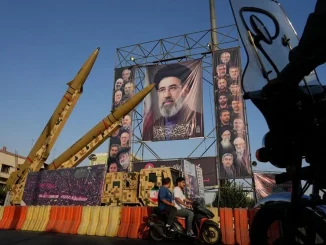
His comments came months after U.S. and Israeli military strikes reportedly targeted senior Iranian leadership, triggering widespread speculation about the fate of the country’s ruling clerics.
The uncertainty has become a geopolitical issue in itself.
Why Iran’s Supreme Leader Matters
Unlike most presidents or prime ministers, Iran’s Supreme Leader is the highest political, military and religious authority in the country.
The position controls:
-
The Iranian Armed Forces
-
The Revolutionary Guard
-
Nuclear policy
-
Foreign affairs
-
Judicial oversight
-
Key appointments across government
For nearly 40 years, that authority was concentrated in one man: Ayatollah Ali Khamenei.
His leadership shaped Iran’s confrontations with the United States, Israel and much of the Middle East.
If that era has truly ended, the consequences extend far beyond Tehran.
A Leadership Vacuum—or Strategic Silence?
One of the most intriguing aspects of Trump’s remarks is what hasn’t been confirmed.
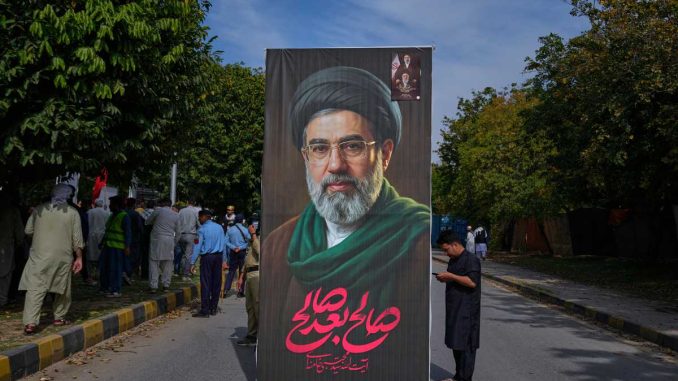
Some reports claim Iran quietly elevated Ayatollah Mojtaba Khamenei, the late leader’s son, to succeed him. Other reports suggest he may have been seriously wounded during subsequent strikes, while Tehran has provided few convincing public appearances to settle the speculation.
That uncertainty creates three possibilities:
-
Iran already has a functioning supreme leader.
-
A succession struggle is unfolding behind closed doors.
-
The regime is deliberately concealing its leadership to preserve stability.
None of those scenarios has been officially confirmed.
Why Washington Is Watching Closely
For U.S. intelligence officials, leadership uncertainty inside Iran is more than political drama—it is a national security question.
A weakened or divided leadership could affect:
-
Iran’s nuclear negotiations
-
Proxy militias across the Middle East
-
Relations with Russia and China
-
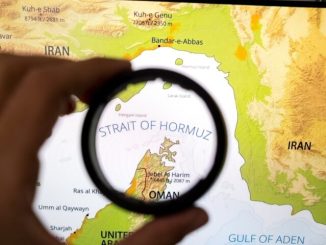
Maritime security in the Persian Gulf
-
The future of sanctions and diplomacy
Trump has repeatedly argued that Iran’s leadership has been severely weakened following military operations, suggesting the regime faces its greatest internal challenge in decades.
Whether that assessment proves accurate remains to be seen.
The Human Dimension
Behind the geopolitical chessboard are nearly 90 million Iranians whose futures may depend on decisions made by a small circle of clerics and military leaders.
Some Iranians have long opposed the Islamic Republic and called for democratic reforms.
Others remain deeply loyal to the revolutionary system established in 1979.
A leadership transition—whether orderly or chaotic—could determine which vision prevails.
A Region Holding Its Breath
Middle East analysts have often described Iran as the cornerstone of the region’s balance of power.
Any uncertainty at the top inevitably raises difficult questions:
-
Will Hezbollah receive the same level of support?
-
Will Iran’s regional strategy change?
-
Could rival factions compete for control?
-
Is diplomacy more likely—or is confrontation becoming inevitable?
For now, definitive answers remain elusive.
What is clear is that the world is watching Tehran more closely than at any point in recent memory.
💬 Overall Takeaway:
History rarely announces the end of an era with complete certainty. Sometimes it arrives through conflicting reports, unanswered questions and moments of extraordinary ambiguity.
Whether Iran’s ayatollah is truly gone or whether the regime is carefully managing a secretive transition, the larger story is about what comes after absolute power. As I see it, the real challenge is not simply identifying Iran’s next leader—it is understanding whether the country moves toward greater openness, deeper authoritarianism or prolonged instability.
For the United States and its allies, patience may prove just as important as power.