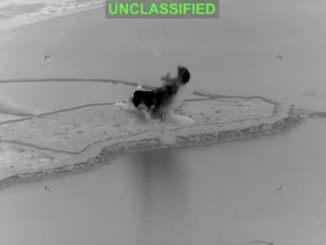
The Panama Canal is a vital waterway in the Western Hemisphere – Foreign Powers still have their sights on it.
Published April 7, 2026
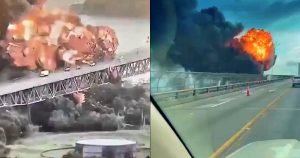
A massive explosion and fire erupted Monday afternoon near the Bridge of the Americas — the vital crossing at the Pacific entrance to the Panama Canal — killing at least one person and injuring several others, officials said.
The blast occurred around 4:12 p.m. in the La Boca area of Panama City, where fuel tanker trucks were being refueled near the base of the iconic span that connects Panama City to surrounding communities.
Fireballs and Chaos Beneath a Critical Link
Security footage from the scene captured a huge fireball and thick plumes of black smoke rising up toward the underside of the bridge — a structure that has stood for more than 60 years and serves as a key transport link over the canal.
Local fire officials and first responders rushed to the site as multiple tanker trucks ignited and flames raced through the fuel depot. Fire crews battled the inferno for hours, bringing the blaze under control while rescuing injured workers and firefighters.

A graphic showing where the explosion on the Bridge of the Americas occurred.
Casualties and Emergency Response
Authorities confirmed that at least one worker at the fuel facility was killed in the explosion, believed to have been trapped among the burning tankers.
In addition:
- Two firefighters were injured battling the blaze and suffered second-degree burns.
- Other personnel and emergency responders were treated for smoke inhalation, though their conditions were not immediately life-threatening.

One person was killed in the massive fireball.
Bridge Closed as Safety Inspections Begin
Panamanian officials ordered the Bridge of the Americas closed to traffic as engineers and safety teams inspected the structure for potential damage caused by the intense heat and flame exposure.
The closure has disrupted a major transportation artery connecting Panama City with western suburbs and key logistics routes — raising concerns about both local traffic and regional commerce.

A fireball on the Bridge of the Americas left one dead.
Canal Operations Unaffected … For Now
Despite the severity of the explosion, Panama Canal operations were reported to be running normally, with no direct impact on vessel traffic through the interoceanic waterway. Canal authorities stressed that the blast occurred outside the canal itself.
However, the location of the incident — right at the Pacific entrance — has raised alarms due to the canal’s critical role in global shipping and trade.

A firefighter at the site of an explosion on the Bridge of the Americas on April 6, 2026.
Investigation and Ongoing Questions
Panamanian prosecutors have opened an investigation into the cause of the explosion, with early efforts focused on determining whether safety protocols at the fuel facility were properly followed.
Officials have also suspended the concession of the affected port area as part of the inquiry, underscoring the seriousness of the incident and the potential for regulatory consequences.
Public Reaction and Next Steps
Shocking videos and social media footage of the blast have circulated widely, capturing the intensity of the fireball beneath the bridge and prompting questions about infrastructure safety near critical transport hubs.
With inspections still underway and the cause yet to be fully determined, Panama’s government and emergency services face significant pressure to ensure both public safety and the stability of a key global commerce route.
Officials have not indicated when the bridge will reopen but say the structure will remain closed until engineers can confirm it is safe for traffic.
🔍 Critical View: Panama Canal Explosion Highlights Infrastructure Risks and Oversight Failures
The massive explosion beneath the Bridge of the Americas at the Panama Canal is more than a tragic accident — it is a stark reminder of the vulnerabilities inherent in critical infrastructure and the consequences of lax oversight. While officials investigate the cause, the incident raises pressing questions about safety protocols, regulatory enforcement, and the broader implications for regional and global commerce.
1. Infrastructure Vulnerabilities
The Bridge of the Americas is a vital artery connecting Panama City with the western provinces and supporting international trade. The explosion, reportedly involving fuel trucks near the bridge, underscores how a single lapse in safety can threaten both human lives and the continuity of critical transportation networks.
- Heat and fire from the explosion may have compromised structural integrity.
- The closure of the bridge disrupts traffic, logistics, and commerce, revealing how dependent the region is on a single critical crossing.
2. Safety Protocols and Accountability
Initial reports suggest the blast originated near a fuel depot, raising questions about whether proper safety measures and emergency procedures were in place.
- Were fuel handling and storage protocols sufficient?
- Were inspections and compliance checks carried out rigorously?
Failures in oversight not only endanger workers and first responders but can also trigger cascading consequences for surrounding communities and infrastructure.
3. Emergency Response and Public Safety
While emergency personnel responded quickly, the fact that two firefighters were injured and several others required treatment highlights the real human cost of preventable accidents.
- Adequate training, equipment, and preparedness are essential to protect both civilians and responders.
- Delays or gaps in response can exacerbate disasters and increase casualties.
4. Economic and Global Implications
The Panama Canal is a critical chokepoint in international trade, moving goods between the Atlantic and Pacific oceans.
- Any disruption, even temporary, can affect shipping schedules and global supply chains.
- Energy and commodity markets are particularly sensitive to disruptions near the Pacific entrance.
This incident demonstrates that infrastructure safety is not just a local concern—it has worldwide economic repercussions.
5. Lessons for Future Oversight
The explosion under the Bridge of the Americas should serve as a wake-up call for government regulators, facility operators, and transportation authorities:
- Critical infrastructure requires constant monitoring, investment, and rigorous safety standards.
- Accountability and enforcement must be consistent and uncompromising.
- Public safety and economic stability depend on proactive risk management, not reactive measures.
👥 On the Ground: Panama Canal Bridge Explosion Exposes Immediate Risks and Regional Vulnerabilities
As smoke and flames rise from the Bridge of the Americas in Panama City, the human and economic impact of the explosion is being felt firsthand. While officials work to assess damage and investigate the cause, those on the ground — workers, first responders, and nearby residents — are confronting the immediate consequences of a disaster at one of the world’s most critical infrastructure points.
This incident offers a window into the realities of life near a major commercial artery and highlights the risks, response challenges, and broader vulnerabilities that must be addressed moving forward.
1. First Responders and Human Impact
Firefighters and emergency personnel arrived quickly at the scene, facing intense heat, fuel-fed flames, and collapsing debris.
- Two firefighters were injured battling the blaze, and others were treated for smoke inhalation.
- Civilians and nearby workers were evacuated as the fire raged, highlighting how quickly a localized incident can escalate into a larger humanitarian concern.
This illustrates the critical importance of preparedness, protective equipment, and rapid response protocols in industrial and transport hubs.
2. Infrastructure and Transportation Disruption
The explosion forced the Bridge of the Americas to close, severing a key route connecting Panama City to western provinces.
- Commuters and commercial transport face significant delays, demonstrating the region’s dependence on a single bridge for both local travel and international logistics.
- The potential structural damage from intense heat emphasizes the fragility of aging infrastructure under extreme stress.
The closure has immediate economic and social consequences for workers, shipping companies, and local communities.
3. Safety Protocols and Preventable Risks
Preliminary reports suggest that fuel trucks were involved in the explosion near a storage facility.
- Questions remain about whether safety protocols were properly followed.
- Oversight lapses or inadequate enforcement can convert routine operations into catastrophic events.
On the ground, residents and workers see first-hand how neglect or gaps in regulatory enforcement can put lives and commerce at risk.
4. Regional and Economic Stakes
The Panama Canal is a strategic international trade route, moving goods between the Atlantic and Pacific oceans.
- Any disruption near the Bridge of the Americas, even temporary, can ripple through global shipping and commodity markets.
- Oil, fuel, and shipping companies are directly affected, making the incident a matter of both local safety and international economic concern.
Those on the ground experience the dual impact of human tragedy and economic uncertainty.
5. Lessons in Preparedness and Vigilance
The immediate response and ongoing investigation underscore several critical lessons:
- Safety and infrastructure management cannot be reactive; constant vigilance is necessary.
- Training, equipment, and enforcement must be prioritized to protect both workers and surrounding communities.
- Real-time monitoring and risk mitigation strategies are essential in areas critical to both national and global commerce.
🎯 The Final Word: Vigilance, Accountability, and Strength Are Non-Negotiable
The explosion beneath the Bridge of the Americas is a stark reminder that critical infrastructure cannot be taken for granted. Lives were lost, workers and first responders were injured, and global commerce faced immediate disruption — all consequences of lapses in safety, oversight, or preparedness. Moving forward, rigorous enforcement of protocols, proactive risk management, and swift accountability must guide decisions affecting vital infrastructure. Weakness, complacency, or delayed action is not an option when human lives and the stability of strategic trade routes are on the line.
SOURCES: THE GATEWAY PUNDIT – SHOCK VIDEOS: Major Explosion Under Panama Canal’s Bridge of the Americas Kills at Least One – Investigation Under Way
THE NEW YORK POST – Wild video shows fireball consume Panama Canal’s Bridge of the Americas, killing one
AP NEWS – Bridge over Panama Canal closed after a truck explosion kills 1 person
CHINA DAILY – 1 killed, several injured in fire near Panama Canal