
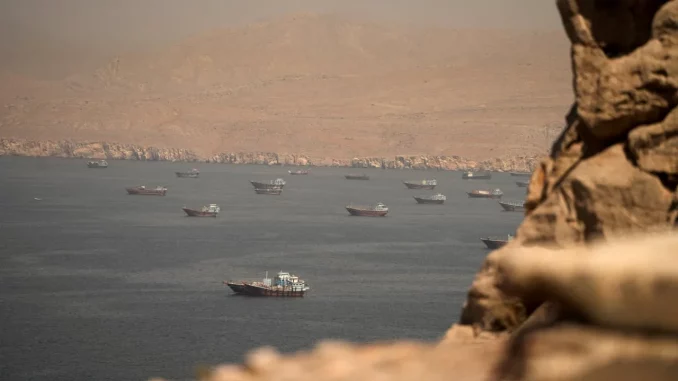
Vessels at the Strait of Hormuz, as seen from Musandam, Oman, June 18, 2026 (photo credit: REUTERS/STRINGER/FILE PHOTO)
Reported by:

Cherry Meigh Timbol
News Content Editor
Published August 4 , 2026
Oman has pushed back against circulating claims of broader diplomatic negotiations involving the United States and Iran, emphasizing its limited role as a regional mediator amid rising tensions over the Strait of Hormuz.
Recent reports and statements from U.S. President Donald Trump suggested that talks with Iran were underway and could lead to a rapid agreement to reopen the strategic waterway. However, both Iran and regional sources have denied the existence of direct U.S.–Iran negotiations, clarifying that any discussions are strictly indirect and limited in scope.
Crucially, Oman’s involvement has been mischaracterized in some claims, with officials and diplomatic sources indicating that Muscat is not hosting or facilitating the kind of high-level U.S.–Iran talks being publicly suggested. Instead, Oman’s role remains focused on technical or regional dialogue, particularly around maritime safety and potential arrangements for shipping routes through the Hormuz Strait.
Iran has also reinforced this position, stating that it is not engaged in negotiations with Washington, directly contradicting Trump’s assertions. Iranian officials confirmed that any ongoing discussions are exclusively with Oman, centered on managing navigation and de-escalating risks in the vital shipping corridor.
The conflicting narratives have added to uncertainty in global markets and diplomacy. The Strait of Hormuz remains a critical chokepoint for global energy supplies, and any suggestion of a deal—or breakdown in communication—has immediate geopolitical and economic implications.
Analysts say Oman’s firm stance in rejecting exaggerated claims highlights its traditional diplomatic approach: acting as a quiet intermediary rather than a public broker of major geopolitical agreements. The denial also underscores the broader lack of clarity surrounding current efforts to ease tensions in the region.
As of now, no confirmed comprehensive agreement has been reached, and both regional actors and global powers continue to navigate a fragile and uncertain diplomatic landscape.
👥 Public / Political Reactions:
🇺🇸 United States
U.S. health authorities have confirmed the first deaths linked to a Cyclospora outbreak, raising concerns over foodborne illnesses and public health safety.
- The Centers for Disease Control and Prevention (CDC) is monitoring the outbreak and coordinating with state health agencies.
- Officials emphasized that Cyclospora infections are preventable and treatable when detected early.
- Federal and state agencies are working to trace the contaminated food source.
➡️ Position: The United States is prioritizing outbreak investigation, public awareness, and food safety measures to prevent further fatalities.
🏥 Michigan Health Officials
Michigan authorities reported the first confirmed deaths associated with the Cyclospora parasite in the United States.
- State health departments are leading investigations into the source of contamination.
- Officials have linked cases to potential exposure through fresh produce.
- Local agencies are urging residents to seek medical attention if symptoms appear.
➡️ Position: Michigan officials are focused on containment, source tracing, and protecting public health at the state level.
🌍 International Health Community
Global health experts are closely observing the outbreak as Cyclospora cases occasionally emerge in multiple countries.
- Specialists highlight that the parasite is commonly spread through contaminated food and water.
- International health bodies stress improved monitoring of agricultural and food distribution systems.
- Experts warn that global food supply chains increase the risk of cross-border outbreaks.
➡️ Position: The international health community is emphasizing stronger food safety standards and global cooperation.
👥 Public Response
Public reaction has been driven by concern over food safety and the risks of contaminated produce.
- Consumers are becoming more cautious about washing and preparing fresh fruits and vegetables.
- Awareness of foodborne parasites has increased following reports of the deaths.
- Many individuals are seeking information on symptoms and prevention.
➡️ Position: Public sentiment reflects heightened concern and increased vigilance regarding food consumption and hygiene.
🏛️ Broader Impact
The outbreak has renewed attention on food safety systems and public health preparedness in the United States.
- The incident highlights vulnerabilities in the handling and distribution of fresh produce.
- It may prompt stricter regulations and inspections within the food industry.
- Health authorities are likely to increase surveillance for similar outbreaks nationwide.
➡️ Position: The Cyclospora outbreak is being viewed as a critical reminder of the importance of food safety, early detection, and coordinated public health response.
⚠️ Resulting Effects:
The dispute over claims of U.S.–Iran negotiations and Oman’s rejection of those reports has increased diplomatic uncertainty surrounding the Strait of Hormuz. The conflicting statements have created concerns over regional stability, energy security, and the future of diplomatic efforts between Tehran and Washington.
1. Increased Diplomatic Uncertainty
The conflicting statements from Iran, Oman, and the United States have created confusion over the status of negotiations.
🕊️ Oman’s rejection of claims has challenged reports suggesting direct diplomatic talks.
🇮🇷 Iran continues denying direct negotiations with Washington.
🌍 International observers are monitoring whether any real diplomatic channel exists.
➡️ Result: Conflicting statements → increased uncertainty over diplomatic progress.
2. Greater Importance of Oman’s Mediation Role
Oman’s position as a regional intermediary has gained more attention amid the dispute.
🇴🇲 Muscat continues to emphasize its limited role in facilitating communication.
🤝 Oman’s neutrality remains important in preventing further escalation.
📢 The rejection of exaggerated claims highlights the sensitivity of its diplomatic role.
➡️ Result: Oman’s mediation → greater focus on neutral diplomatic channels.
3. Impact on Strait of Hormuz Stability
The uncertainty has increased concerns over one of the world’s most important shipping routes.
🚢 Shipping companies are watching developments closely due to regional tensions.
🛢️ Energy markets remain sensitive to any possible disruption.
⚠️ Military or political escalation could affect maritime security.
➡️ Result: Rising tensions → increased risks for global shipping and energy markets.
4. Iran-U.S. Relations Remain Strained
The dispute highlights continuing disagreements between Tehran and Washington.
🇮🇷 Iran rejects claims of direct talks and maintains its position on negotiations.
🇺🇸 The United States continues expressing interest in reducing tensions.
⚖️ Trust issues remain a major obstacle between both sides.
➡️ Result: Political disagreement → slower progress toward diplomatic solutions.
5. Global Market Concerns Increase
Uncertainty surrounding Hormuz continues affecting economic expectations.
📈 Oil prices may react to changes in regional tensions.
🚛 Shipping costs could increase if risks around the waterway grow.
💰 Businesses remain cautious about possible supply disruptions.
➡️ Result: Geopolitical uncertainty → potential economic pressure worldwide.
6. Information War and Conflicting Narratives
The dispute has highlighted the role of information in shaping international perceptions.
📢 Different statements from officials have created competing narratives.
🔍 Media and analysts are examining the accuracy of diplomatic claims.
🌐 Public understanding remains affected by limited confirmed information.
➡️ Result: Conflicting reports → increased demand for verified information.
7. Long-Term Regional Implications
The situation could influence future diplomacy and security arrangements in the Gulf.
🌍 Countries may increase efforts to support regional stability.
🕊️ Future negotiations may depend on trusted communication channels.
⚠️ Continued uncertainty could increase risks of further confrontation
➡️ Result: Ongoing tensions → lasting impact on Middle East diplomacy and security.
🔮 Future Outlook:
The dispute over U.S.–Iran talks and Oman’s rejection of claims regarding negotiations is expected to remain a major diplomatic issue surrounding the Strait of Hormuz. While Oman continues to emphasize its role as a mediator, uncertainty remains over whether Tehran and Washington can move toward direct or indirect engagement.
1. Diplomatic Efforts Will Remain Uncertain
Future discussions between Iran and the United States are expected to face challenges due to conflicting statements and limited trust.
🕊️ Oman may continue serving as a communication channel between regional and international actors.
🇮🇷 Iran is expected to maintain its position that no direct negotiations are taking place.
🇺🇸 The United States may continue seeking diplomatic options to reduce tensions.
➡️ Outlook: Ongoing uncertainty → possible dialogue, but major disagreements remain unresolved.
2. Oman’s Mediation Role Will Continue
Oman is likely to maintain its traditional role as a neutral intermediary in regional disputes.
🇴🇲 Muscat may continue facilitating limited communication between conflicting sides.
🤝 Oman’s diplomatic approach could help prevent further escalation.
🌍 Regional actors may continue relying on Oman’s neutrality during future crises
➡️ Outlook: Regional mediation → continued importance of Oman as a diplomatic bridge.
3. Strait of Hormuz Will Remain a Global Concern
The strategic waterway is expected to remain at the center of international attention.
🚢 Shipping companies will continue monitoring risks affecting maritime operations.
🛢️ Energy markets may react to any changes in regional tensions.
⚠️ Any escalation could increase concerns over global oil and trade routes.
➡️ Outlook: Maritime uncertainty → continued focus on shipping and energy security.
4. Iran-U.S. Relations Will Shape Future Developments
The direction of the crisis will largely depend on decisions made by Tehran and Washington.
🇮🇷 Iran may continue demanding respect for its positions and previous commitments.
🇺🇸 The United States may continue balancing pressure with diplomatic outreach.
⚖️ Differences over trust and security concerns will remain key obstacles.
➡️ Outlook: Iran-U.S. relations → the main factor influencing regional stability.
5. Global Economic Monitoring Will Continue
International markets are expected to closely follow developments around Hormuz.
📈 Oil prices may remain sensitive to diplomatic progress or renewed tensions.
🚛 Supply chains could face uncertainty if maritime risks increase.
💰 Businesses may prepare for possible energy and transportation disruptions.
➡️ Outlook: Economic uncertainty → markets remain dependent on regional stability.
6. Information Disputes May Continue
Competing claims from governments may continue affecting public understanding of events.
📢 Officials may issue different interpretations of diplomatic developments.
🔍 Analysts will continue examining statements for confirmation.
🌐 Public perception may remain influenced by conflicting reports.
➡️ Outlook: Information uncertainty → continued demand for verified developments.
7. Long-Term Regional Security Impact
The outcome of the dispute could influence future security arrangements in the Gulf.
🌍 Countries may strengthen diplomatic efforts to prevent escalation.
🛡️ Regional governments may increase preparations around strategic waterways.
🕊️ A successful diplomatic process could reduce tensions over time.
➡️ Outlook: Regional diplomacy → potential impact on Middle East security and stability.
🧩 Bottom Line:
The dispute over claims of U.S.–Iran negotiations has highlighted the fragile diplomatic situation surrounding the Strait of Hormuz, with Oman rejecting suggestions that it is facilitating direct talks between Tehran and Washington. The conflicting statements have increased uncertainty over the future of regional diplomacy and security.
🇴🇲 Oman continues to emphasize that its role is limited to mediation and communication, rejecting claims that it is hosting direct negotiations between Iran and the United States.
🇮🇷 Iran maintains that no direct talks with Washington are taking place, while continuing to focus on its own conditions for any future discussions.
🇺🇸 The United States continues expressing interest in reducing tensions, despite disagreements over the status of diplomatic contacts.
🌍 Global markets and international observers remain focused on developments, as instability around the Strait of Hormuz could affect energy supplies and shipping routes.
➡️ Bottom Line: The Oman dispute underscores the complexity of diplomacy in the Gulf region. While Oman’s mediation role may provide a channel for communication, conflicting claims and unresolved tensions between Iran and the United States continue to create uncertainty over regional stability and future negotiations.
SOURCES: NEWSMAX – Oman Rejects Claims on Hormuz Tolls
THE PALESTINE CHRONICLE – Iran, Oman Near Hormuz Deal as Tehran Denies Trump Talks
THE JERUSALEM POST – Iran vies for expanded control over Strait of Hormuz in possible deal with Oman




