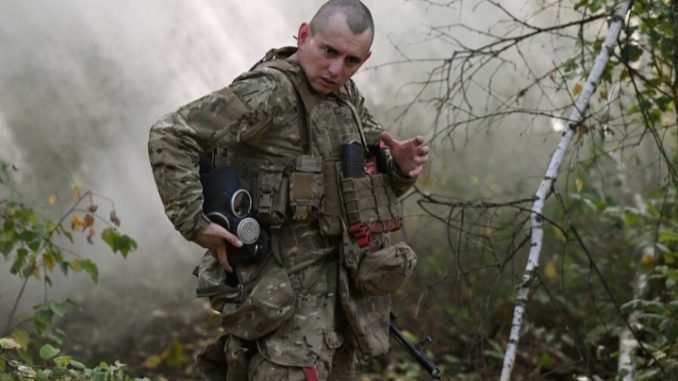
A Russian serviceman of the 83rd Separate Guards Air Assault Brigade of the Sever (North) Group of Forces takes part in tactical medical training in the Sumy sector of the front line amid Russia’s military operation in Ukraine. (AP)
Reported by:

Cherry Meigh Timbol
News Content Editor
Published September 29, 2026
Russia is increasingly turning to foreign recruitment to replenish its military manpower, with recent reports identifying at least 18 Americans who have joined Russian forces in the war against Ukraine.
According to reporting by the New York Post, Russia is offering U.S. recruits a signing bonus of about $26,000, along with approximately $2,000 per month in salary. NDTV separately reported the same compensation figures, citing the Post’s investigation.
The reports have renewed attention on how Moscow is using social-media recruitment and financial incentives to attract foreigners to its military as the war enters another prolonged phase.
Americans Among Russia’s Foreign Recruits
The New York Post reported that Ukrainian security officials have identified nearly 29,000 foreign nationals from 135 countries fighting for Russia, although Ukrainian officials believe the actual number could be higher. The reported foreign recruits include people from countries such as North Korea, Kenya and Ghana, as well as Americans.
The recruitment effort reportedly uses advertisements and contacts on platforms including Facebook, TikTok and Telegram.
The Post identified Seth William Baker, a former U.S. Marine from Arizona, as one American who joined Russian forces. Baker reportedly died after approximately three months on the front lines.
Earlier reporting by Task & Purpose confirmed that a man identifying himself as Baker appeared in a video claiming to be a former Marine. Marine Corps officials confirmed that a person with Baker’s name had served as a lance corporal, although the service said at the time that it could not independently confirm that the person in the video was Baker.
Financial Incentives Are a Major Recruiting Tool
The reported compensation illustrates the financial appeal Moscow can use to attract people from outside Russia.
According to the reports, American recruits are generally offered:
• $26,000 signing bonus
• About $2,000 monthly salary
• Russian military service and associated benefits under the terms of their contracts
The New York Post reported that recruitment agents allegedly receive money for bringing foreigners into the Russian military, creating another financial incentive for recruiters to seek potential candidates online.
For people experiencing financial difficulties or searching for military employment, such payments can represent a substantial incentive.
However, accounts cited by the Post describe a very different reality after recruits reach Russian military units.
Reports of Foreign Fighters Being Sent to the Front
Ukrainian officials and people interviewed by the New York Post alleged that many foreign recruits are eventually sent to combat positions.
Vitaliy Matvienko, who heads a Ukrainian state project dealing with Russian soldiers who surrender, told the Post that Russia has difficulty replacing battlefield losses and therefore increasingly relies on foreigners.
The Post also reported allegations that some foreign fighters have experienced physical abuse, discrimination and pressure from Russian commanders or fellow soldiers.
These allegations are based largely on Ukrainian officials and accounts reported by the New York Post; they are difficult to independently verify in the conditions of an ongoing war.
The Case of Michael Gloss
Another American associated with the Russian military was Michael Gloss, the son of a senior CIA official.
Gloss was killed in 2024 in the Donetsk region while reportedly attempting to assist an injured Russian soldier during an artillery attack. His death received significant attention in both Russia and the United States.
According to the New York Post, Russian President Vladimir Putin subsequently recognized Gloss’s actions with a medal, which was presented to U.S. special envoy Steve Witkoff for delivery to Gloss’s family.
The case has also demonstrated how individual American recruits can become useful to Russian state media and messaging.
Why Americans Have Propaganda Value
The presence of Americans fighting for Russia carries significance beyond the battlefield.
The New York Post reported that American recruits have been featured in Russian media as evidence that some people in the United States support Moscow’s position.
A similar concern was raised in 2024 after the appearance of the video involving Baker. Military publication Task & Purpose quoted Russia expert Olga Lautman as saying the Kremlin could use Westerners who join Russian forces to promote the narrative that some Americans reject U.S. policy toward the war.
That makes American recruits potentially valuable not only as soldiers but also as propaganda subjects.
U.S. Citizens Face Significant Risks
The U.S. State Department advises Americans not to travel to Russia for any reason, citing risks including wrongful detention and limited U.S. government ability to provide assistance.
For Americans who voluntarily enter Russia’s military, the risks extend beyond combat.
They can potentially face battlefield death or injury, contractual restrictions, detention, and difficulties returning to the United States.
The legal circumstances surrounding individual Americans can also differ depending on how they entered Russian-controlled territory, their contracts and their activities.
A Broader Manpower Problem for Moscow
The recruitment of Americans is part of a much broader foreign-recruitment effort rather than an indication that Americans represent a major component of Russia’s military.
The figures cited by Ukrainian officials suggest that Russia has recruited thousands of foreigners from numerous countries.
The New York Post attributed the recruitment drive to Moscow’s continuing need for manpower after years of intensive fighting. Ukrainian officials cited by the newspaper estimated extremely high Russian casualties, although battlefield casualty figures from the war remain disputed and difficult to independently verify.
Russia has continued expanding recruitment efforts while attempting to avoid the domestic political consequences associated with a large-scale new mobilization.
What Happens Next
The recruitment of foreigners is likely to remain an important component of Russia’s effort to sustain its forces as long as the war continues.
The cases involving Americans also highlight a growing battlefield-information problem: social-media advertisements can blur the distinction between legitimate employment opportunities and military recruitment for an active war zone.
For U.S. citizens, the State Department’s warning about Russia remains a significant indicator of the risks involved.
🧩 Bottom Line:
Recent reporting indicates that Russia is offering substantial financial incentives to recruit Americans and other foreigners into its military. At least 18 Americans have been identified in reporting as having joined Russian forces, while Ukrainian officials say the broader foreign contingent numbers in the tens of thousands.
The reported cases show how money, online propaganda and personal circumstances can intersect with Russia’s continuing demand for soldiers. But the available information also comes largely from Ukrainian officials, media investigations and individual accounts, meaning some claims about recruitment practices and battlefield treatment remain difficult to independently verify.