Reported by:

Cherry Meigh Timbol
News Content Editor
Published September 3, 2026
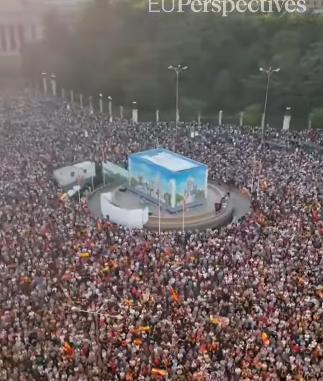
Thousands of demonstrators have taken to the streets of Madrid and Spain’s North African enclave of Ceuta, condemning the government’s handling of a migration crisis that has placed unprecedented pressure on local authorities and intensified an already bitter political battle over immigration.
The demonstrations come after a massive influx of migrants into Ceuta in July, when more than 72,000 people crossed from Morocco, according to Reuters. The crisis has left thousands still in the enclave and triggered growing anger among residents who say the central government has failed to adequately protect the territory or provide a workable solution.
The protests have also become a wider political confrontation over Prime Minister Pedro Sánchez and his Socialist-led government.
Madrid Protesters Demand Government Action
In Madrid, demonstrators accused the government of mishandling the Ceuta crisis and called for stronger border controls and the removal of migrants from the enclave.
The ZeroHedge report described the demonstrations as a major political backlash against Sánchez, with protesters using increasingly hostile language toward the Socialist government.
The demonstrations reflect growing frustration among opponents of the government’s migration policies, particularly as the crisis has continued weeks after the initial border surge.
The conservative People’s Party has used the crisis to demand tougher immigration enforcement, while the right-wing Vox party has also pressed for stronger measures against irregular migration.
Ceuta Residents Demand Calm Amid Rising Tensions
In Ceuta itself, thousands of residents demonstrated on the enclave’s national day, demanding that Madrid address the continuing migrant crisis.
Reuters reported that roughly 10,000 migrants, including minors, remained in makeshift camps or elsewhere around the city at the time of the protests. Residents called for migrants to be expelled while also expressing anger over what they regard as an inadequate response from the national government.
Counter-protests have also emerged, with demonstrators condemning xenophobic and Islamophobic attacks against migrants.
The competing demonstrations illustrate how the crisis has divided public opinion between those demanding tougher border enforcement and those warning against hostility toward migrants.
Sánchez Rejects Claims Morocco Orchestrated the Surge
The political controversy intensified Thursday when Sánchez told Spain’s parliament that there was no concrete evidence that Morocco’s government deliberately organized the mass migration surge.
His comments came despite a Spanish police report that raised questions about the conduct of Moroccan security forces during the border crisis.
Reuters reported that more than 70,000 people crossed into Ceuta during the July surge. Sánchez acknowledged that Moroccan police allowed crossings for roughly 10 hours on July 30 but questioned whether this reflected deliberate inaction or an inability to control the border.
Morocco has denied allegations that its authorities deliberately facilitated the crossings, instead pointing to social media, traffickers and confusion surrounding immigration rules.
A Crisis That Has Spread Beyond Immigration
The Ceuta crisis has evolved into a broader political and diplomatic dispute.
Spanish authorities have requested assistance from Frontex, the European Union’s border agency, to help manage the migrant population. Reuters previously reported that between 5,000 and 8,000 migrants remained in Ceuta after the initial influx.
The government has also faced criticism over its coordination with Ceuta’s regional authorities, while Madrid has pledged emergency financial assistance to help stabilize the enclave.
Sánchez has additionally accused Russia and Israel of spreading disinformation about Spain’s migration policies—claims that both Moscow and Jerusalem have rejected.
🧩 Bottom Line:
The protests in Madrid and Ceuta reveal how quickly the migration crisis has transformed from a border emergency into a major political test for Pedro Sánchez’s government.
For residents of Ceuta, the issue is deeply personal: thousands of people remain in an enclave with limited space and resources, while communities are demanding that Madrid restore order and provide a clear long-term solution. For Sánchez, the challenge is more complicated. His government must address legitimate concerns about border security and local capacity while preventing the crisis from becoming a catalyst for anti-migrant violence or further polarization.
The dispute with Morocco adds another dangerous dimension. Until Spain can establish greater control over migration flows and reach a clearer understanding with Rabat, Ceuta is likely to remain at the center of Spain’s immigration debate—and a powerful political weapon for the opposition.
SOURCES: ZEROHEDGE – “Save Us From Our Traitor Gov’t”: Massive Madrid Protests Erupt Over Socialist Regime’s Handling Of Ceuta Invasion
REUTERS – Thousands protest in Ceuta as Spain rallies over enclave’s migrant crisis