Published April 19, 2026
NEW YORK — What used to be one of the simplest joys of childhood — picking out a book at a school fair — is now at the center of a growing national debate, as critics question whether major publishers are pushing complex social topics on young readers without enough parental input.
At the center of the controversy is Scholastic Corporation, the longtime education publisher behind thousands of school book fairs across the country.
📚 From Storytime to Social Themes
For decades, Scholastic book fairs were known for:
- Adventure stories
- Mystery series
- Fun, easy-reading children’s books
But critics say that has shifted.
Some of the books now being highlighted include themes like:
- Gender identity
- Race and “anti-racism”
- Social justice topics
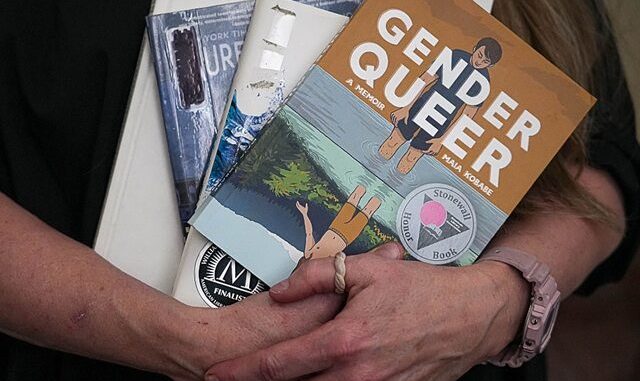
One commonly cited example is Melissa, a middle-grade novel centered on a transgender child — a book that has been both praised and criticized since its release.
Supporters argue these books reflect the real world and help children understand different perspectives.
Critics argue the topics are too complex for younger audiences — especially without clear guidance.
🎒 How Book Fairs Became a Flashpoint
School book fairs aren’t just retail events — they’re embedded in the education system.
That’s what makes this issue more sensitive.
- Books are brought directly into schools
- Children browse and choose independently
- Parents often aren’t present
Critics say this creates a situation where:
Kids are exposed first — and parents find out later.
Some also point to curated collections and themed book lists, arguing that certain viewpoints are being emphasized more than others.
👨👩👧 Parental Awareness and Control
One of the biggest concerns being raised is transparency.
Parents in some districts say:
- They don’t receive full lists of available books
- Content summaries aren’t always provided
- Opt-out systems can be unclear or inconsistent
In everyday terms:
You can’t guide what your child reads if you don’t know what’s being offered.
That’s where frustration is growing.
🏫 Schools Navigating a Tightrope
Teachers and administrators are now caught between competing expectations.
On one side:
- Pressure to promote inclusivity and diversity
- Access to publisher-provided materials
On the other:
- Parents demanding more control
- Communities with very different values
This puts schools in a difficult spot — trying to satisfy everyone, while avoiding controversy.
💼 The Business Side of the Debate
Beyond education, there’s also a commercial angle.
Scholastic Corporation is a major business, and book fairs generate:
- Millions in annual sales
- Revenue for both schools and the company
- Incentives tied to book selection and promotion
Critics argue that when social topics become part of product offerings, it raises questions:
- Are these decisions educational — or market-driven?
- Is there balance in what’s being promoted?
🌍 A Nationwide Pattern
This isn’t just happening in one school or one state.
Across the country, similar concerns have been raised about:
- Curriculum materials
- Library book selections
- Classroom discussions
School book fairs are simply the latest front in a broader cultural debate over what children should be taught — and when.
🔍 Critical View: When School Book Fairs Stop Being Simple
At its core, this issue isn’t really about one book or one company like Scholastic Corporation. It’s about something more basic: what kids are being exposed to — and who gets to decide.
For a lot of parents, the concern is straightforward.
School used to focus on reading, writing, and simple stories kids could enjoy. Now, some of the books being offered bring in topics like identity, race, and social issues that many families see as complex — and deeply personal.
📚 Too Much, Too Soon?
One of the biggest worries is age.
Kids around 9 or 10 are still learning the basics. Critics argue that introducing heavy topics too early can:
- Confuse rather than educate
- Raise questions kids aren’t ready to process
- Push conversations that families may want to handle at home
In simple terms:
Just because a topic matters doesn’t mean it fits every age group.
👨👩👧 Parents Feeling Cut Out
Another major issue is control.
When books are brought directly into schools — especially through fairs — kids can access them without parents knowing exactly what’s inside.
That leads to a basic concern:
Parents are being put in a reactive position instead of a leading one.
Instead of guiding the conversation first, they’re catching up after the fact.
🏫 Schools Crossing Into Family Territory
Schools have always had a role in education.
But critics argue there’s a line between:
- Teaching basic knowledge
- And introducing values or viewpoints on sensitive topics
When that line gets blurry, it raises a bigger question:
Is the school educating — or stepping into areas that families should handle?
💼 Not Just Education — Also Business
There’s also a practical side to this.
Scholastic Corporation is a business, and book fairs generate real money.
So critics ask:
- Are these books chosen purely for educational value?
- Or are they part of broader trends that also drive sales?
Because when sensitive topics become part of a product, it changes how people view the intent behind it.
⚖️ Balance or One-Sided?
Another concern is whether there’s real balance.
If certain viewpoints are highlighted more than others, even indirectly, it can feel like:
- One perspective is being promoted
- While others are left out
For many families, that’s not about being against any group — it’s about wanting a more neutral, age-appropriate environment for young kids.
📊 Simple Breakdown (What Critics Are Saying)
- Topics may be too advanced for young kids — possible
- Parents don’t always know what’s being offered — common concern
- Schools may be stepping beyond basics — debated issue
- Business and messaging may be mixed — question being raised
👥 On the Ground: What Parents and Kids Are Actually Experiencing
In theory, school book fairs run by Scholastic Corporation are supposed to be simple: kids walk in, pick a book, get excited about reading, and go home happy.
But on the ground, what people are seeing feels more complicated than that.
🎒 Inside the School Book Fair
For many kids, it still looks fun on the surface:
- Colorful booths
- Posters and displays
- Popular series mixed with newer titles
But some parents say that when they actually look closer, they notice books dealing with topics like identity, race, and other social issues that they didn’t expect to see in a school setting.
The concern isn’t just that these books exist — it’s that they are sitting side-by-side with regular children’s stories, with no clear separation.
👨👩👧 Parents Finding Out Late
A common frustration is timing.
Some parents say they only discover what their child picked after the purchase is already made.
That creates a simple problem:
- The child chooses
- The school approves
- The parent sees it later
For families who want to guide what their children read, that feels backwards.
📚 What Kids Are Actually Reading
In real life, kids don’t analyze books the way adults do.
They see:
- Covers
- Characters
- Simple summaries
They don’t always understand deeper themes until they start reading — which is exactly where some parents say the issue begins.
The concern is not just exposure, but understanding without guidance.
🏫 Teachers Caught in the Middle
Teachers often say they’re just following what’s available through approved book lists.
But in practice, they’re stuck between:
- Keeping book fairs engaging
- Following publisher selections
- And responding to parent concerns afterward
That puts them in a difficult position where they’re expected to manage a debate they didn’t create.
💬 What Parents Are Saying on the Ground
In plain terms, the feedback sounds like this:
- “I didn’t know these books were there.”
- “Why is my 10-year-old seeing this?”
- “Can I see the full list before it’s offered?”
It’s not always about rejecting certain topics — it’s about wanting awareness before decisions are made for them.
📊 Simple Breakdown (What’s Happening Day-to-Day)
- Book fairs still look fun for kids — yes
- Content is more varied than before — also yes
- Parents don’t always see everything in advance — common complaint
- Schools are trying to balance multiple expectations — difficult reality
⚖️ The Real-Life Tension
On paper, everything is about “diversity” and “modern learning.”
But on the ground, the question is much simpler:
Should kids be making these choices on their own inside school — or should parents be guiding those choices first?
🎯 The Final Word:
At the end of the day, most parents are not against reading or learning — they just want to know what their kids are being exposed to and have a clear say in it. School book fairs run by Scholastic Corporation were meant to encourage reading, but many families now feel they’ve become a place where more complex social topics are slipping in without enough transparency. The main concern is simple: schools should focus on teaching the basics and keeping things age-appropriate, while parents should be the ones guiding children through heavier topics at home, where those conversations can be handled with care and context.